A Difference of Opinion

liberty 2

Last week I went to see the film, Suffragette. I thought it was understated and moving, and it reminded me of the debt that we all owe to the brave women who fought for a fairer society. The film ends with the death of Emily Wilding Davison who threw herself in front of the King’s horse at the Epsom Derby in 1913. But that was not the end of the fight; this particular battle for equality was protracted and fierce—it took until 1928 for women in Great Britain and Northern Ireland to be granted equal voting rights with men.

At the end of the film, the audience is reminded that this was an international struggle, and many countries were slower than the United Kingdom in giving women the vote. The International Woman Suffrage Alliance was formed in 1904 but it took until 1971 for Swiss women to be granted suffrage, and Saudi women have only, this year, been promised the vote.

statue of liberty

The film also reminded me of something I learned when I visited the Statue of Liberty a few years ago. Her official name is ‘Liberty Enlightening the World’, and she was donated to New York by the French in recognition of the friendship that was established between France and America during the American Revolution. The dedication ceremony for the statue took place in 1886, but despite the overt femininity of this symbol of liberty, women were banned from attending. Outraged suffragettes responded by hiring boats and bellowing through megaphones that even if Liberty were able to get off her pedestal, she would not be allowed to vote in either France or America. American women got the vote on equal terms with men in 1920, but their French sisters had to wait until 1944.

pork pie hatAnother story that is not referred to in the film is that of The Women’s National Anti-Suffrage League. This was formed in 1908 by women who opposed women getting voting rights. Over the next ten years more than a hundred branches were established throughout the UK and there were large demonstrations where women protested that they did not want the vote. The League depicted suffragettes as ugly and masculine, and with a tendency to wear unflattering pork-pie hats. Surprisingly the League garnered support from some women who were active in extending other kinds of female rights. These included Elizabeth Wordsworth, the founding Principal of the Oxford women’s college, Lady Margaret Hall. Anti-suffrage campaigners were content for women to get the vote in local elections as these were concerned with feminine-friendly issues such as education. But matters that were debated on a national platform, such as international relations and war, were considered outside the acceptable scope of feminine influence. The fear was that women would become masculinised if they were to become involved, and then men would be unwilling to marry them.

It seems to me that whatever you think, there will be someone who disagrees with you; politics, religion, philosophy, history, human rights, you name it—there are many potential angles. And the life blood of culture is that its interpretation is subject to opinion. Fashion, for example, thrives on pushing boundaries and provoking debate. Molly adores clothes and used to love reading what we called the ‘Poor Thing’ column; a regular fashion article in a national newspaper which took six women and put them in various ‘stylish’ outfits. Almost always, we would look at these women and say that if we saw them in the street dressed like that we would feel very sorry for them. This is how it came to be called the ‘Poor Thing’ column.
fashion

Book groups, too, thrive on disagreement. I’ve belonged to several groups in the past and on occasion I’ve admired and loved a book so much that I couldn’t imagine that anyone would dislike it. Rohinton Mistry’s, ‘A Fine Balance’ was a case in question. A rich tapestry of Indian society, it captivated me, but sure enough whilst some in the group shared my view, there were others who thoroughly disliked it. And then there was Iris Murdoch’s, ‘The Sea The Sea’ which I found intolerably tedious. That got high ratings in the group.

I am soon going to be at the critical coalface myself, as my book ’31 Treats And A Marriage’ is in the final stages of preparation and will be published at the end of the Spring. I shall have to harden myself to criticism. I hope that many people will like it but there is no getting away from the fact that some people will not. It’s just the way things are.

Dorothy Parker

But at least I won’t have to face the humiliation of being reviewed by the acerbic Dorothy Parker, pictured above. In 1925 she started writing book reviews in the New Yorker under the name ‘Constant Reader’ and they were said to delight everyone except the unfortunate authors. She found A.A. Milne’s,,’The House at Pooh Corner’ sugary, and wrote that ‘Tonstant Weader Fwowed up’ after reading it.

Undeterred by these concerns, I’ve enjoyed the process of writing my first book so much that I’ve recently started on my second one. This combines visits to English cities with the stories of women who for a range of reasons have had to push against the constraints of society. It’s still open to debate but I think there will be a suffragette somewhere in there.

suffragette sophia singh

‘What’s your blog about this time?’ asked Molly’s boyfriend.                                                ‘Disagreement’, I replied. ‘Whatever you say there will always be someone who disagrees.’               ‘No there won’t,’ he said with a naughty grin.

Enhanced Eating

brandenburg gate

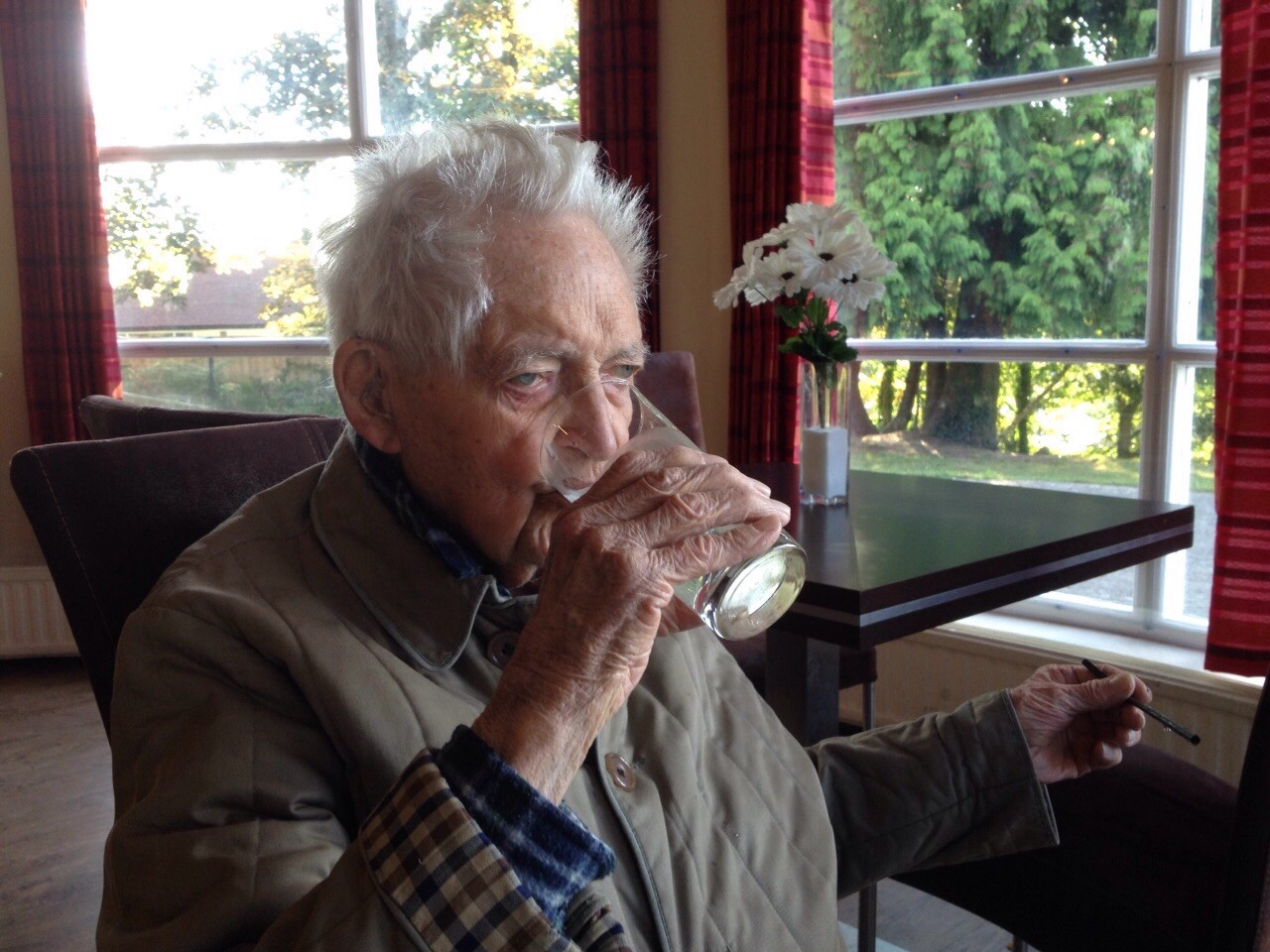
In a previous post, The Old Man and the Pea, I mentioned that a 95-year old gentleman named Frank has recently moved into my house. It’s quite a change in lifestyle for him, and also for me. But so far things are going well. He seems to have no regrets, and nor do I.

However, it was sobering to realise recently that he has reached a stage of life where he has no plans. For him life is in the moment and small pleasures have to suffice. He can’t see or hear well enough to go out alone but he enjoys family life, sitting in the garden, trips to the pub, and listening to tapes about British history. He never turns down a biscuit or a gin and tonic and he generally eats whatever we put in front of him, quite cheerfully. We try to remember to tell him what it is but in the flurry of getting everyone’s food on the table this sometimes gets overlooked. There have been many times when he’s got to the end of a meal and said that he has no idea what it was, but it ‘tasted nice’.

frank gin and tonic

In contrast, I’m still at the stage of life where I’m able to have a head full of plans for the places I want to go and the things I want to do. I love my list and one of my favourite treats so far has been a visit to Berlin two summers ago with Mike and my two youngest children, Henry and Molly. I expected it to be both vibrant and affecting, and so it was. I was impressed by the candour with which Berlin’s terrible history is recounted. And it was fascinating to see the remains of the Wall and to read stories of the people who were affected by it. But those are tales for another day as recently I’ve been remembering the holiday for a different reason. Our trip to a dark restaurant.

The first dark restaurant opened in Zurich in 1999 and there are now a number scattered throughout the world. The concept behind it is to take away your sense of sight so that your other senses are heightened. Some of these restaurants provide blindfolds to their customers but most create a dark environment. The one that we visited makes the enterprising claim that it is 32% darker than all other dark restaurants.berlin skyline

We went at the end of a busy day of sightseeing and were shown into a dimly lit bar where we ordered drinks. The barman gave us menus and told us to choose between five options; beef, poultry, fish, vegetarian and surprise. Mike chose vegetarian, Henry and Molly opted for fish and my choice was poultry. We could see from the printed menus that we would be having four courses but there was no clue what the food would be. Mike’s starter was described as ‘a taste of Aztecan masculinity on wavy green and voluptuous red bedding’, and I was already looking forward to my dessert which promised ‘a dark beauty, illuminated by the delicate seduction and admiration of her rosy companions’.

Our blind waiter, Ben, came and introduced himself and told us the two basic rules. We were not to move around the restaurant without a guide, and we must carry no light source of any kind including lighters, mobile phones and watches. Then he instructed us to form a conga line with him in front and he led us round a corner until the outside world was left behind and everything went black. He took us to our table and explained where the chairs were. I couldn’t tell if I was standing in front of the chair or behind and had to ask.

berlin black

I shall never forget the next two hours. Ben arrived periodically with a tray and talked to us carefully as he gave us our food. ‘Now Mike, I am passing the soup to you. Pass it on to Henry’. ‘Imagine that your place setting is a clock. Your spoons are at twelve o’clock.’ At first we were quiet as we ate. The food was delicious but perplexing and it required concentration. We sought clues in the texture and smell as well as the flavour. I could tell that my starter included satay sauce, but other ingredients were elusive. Then we started offering one another samples and debating what they might be. We could hear other people talking but they seemed to be some distance away. At one point a bottle smashed to the ground.

black square

There was a longish break between the first and second course and to pass the time, I started a game. I asked everyone to name a place that they love and to say why. Molly’s was Chatsworth which we’d recently visited together, Henry’s was New York because of the jazz and the bustle, Mike chose Johannesburg for its vibrant modern African culture and mine was Monterey in California. I have memories of sitting in an oceanside shack restaurant at Fisherman’s Wharf. As I ate clam chowder I watched pelicans bobbing on the water and sea otters and dolphins playing in the distance. When we’d all had our turn we had another couple of rounds with music and films. I learned new things about my companions and realised that I was listening wholeheartedly whereas normally my attention would be diluted by looking at people around me. Their clothes, what they were eating, how they were relating to one another…

At the end when we went back into the light I saw a big red stain down the front of my dress. The ‘rosy companions’ were clearly some kind of red fruit. We did find out what we’d been eating before we left but I won’t spoil the surprise in case you ever decide to go. I highly recommend it. You can find details by clicking here.

We really enjoyed the food even though we didn’t know what it was. Nor did we know what our surroundings looked like. They could have been anywhere on a scale from opulent to minimalist. We had to be accepting of what was provided to us. And without distractions we focused on the moment with nothing to anchor us other than the people around us. I’ve thought a lot about this experience recently. I wonder if it gives a bit of insight into how mealtimes feel for my 95-year old future father-in-law.

plate

For Molly

birthday

Molly is the youngest of my four children, and Thursday was her eighteenth birthday. It was a landmark for both of us. For over twenty-seven years I’ve been responsible for the care of one or more children. That is no longer the case.

Although I’ve loved having a family, it does seem to have been going on for a very long time, and has not been without its challenges. A notably low point came during one of Will’s birthday parties. Emma was two, Henry was just a few weeks old, and I was only thirty-four but felt ninety-four as I’d been up most of the night. I hid in the downstairs loo hyperventilating, crying and soggy as a horde of five-year olds marauded through the house.

There were many years, too, when the biggest trial was the children’s endless squabbling. Each jostling for prime position. Then I was given one of the best pieces of advice I’ve ever had. Just say ‘sort it out yourselves.’ Realising I could tell them this and walk away was a great discovery. And when there was no parental audience to annoy, they always did sort it out.

chicks

I want to reassure my children that I’m fully committed to being their mother for the rest of my useful life. But hopefully there will now be fewer occasions when I’m called on to transfer money between bank accounts at short notice, and to provide lifts in the middle of the night. I did a rough calculation the other day and realised that I’ve been a parent at nineteen schools and playgroups, bought about fifty-two pairs of school shoes and organised seventy-two birthday breakfasts.

I can truthfully say I love my children equally, which seems a miracle as they’re such different characters. I heard recently that ‘very few parents love one child more than the other, but at different times in raising children, favouritism is unavoidable.’ Mine have certainly all tried my patience at times, and have each had the honour of being the most and least favoured child an equal number of times. Or so it seems to me. I hope they remember it the same way.

My two sons and two daughters have given me many positive things. My life has been enriched immeasurably by their interests and quirks. From blues music and tennis to theatre, travel and politics, and most recently, Molly’s experiments with photography. And they’ve unintentionally pushed me to find out what I can do, and also what I can’t. I’ve had to learn patience. That’s been a struggle and there have been times when I’ve scraped up a last little bit from somewhere. There have been many occasions when I haven’t managed it.

It’s easy too, to talk about the selflessness of parenthood. The times when you have to do things you really would prefer not to. But there has to be a bit of selfishness too. You have to make some time for yourself and to keep sight of who you are. Otherwise you disappear down the plughole. That’s why the treats have helped me so much.

plughole

Another of the great things about the children is that they’ve made me laugh and Molly as the youngest has taken a highly individual approach to life. She preferred to get inside the duvet cover and regularly experimented with sleeping upside down. At the theatre she sat with her back to the stage. And when she was six, she packed her older brother’s ‘Never Mind the Bollocks’ CD in her satchel for ‘show and tell’ at school. With two older brothers and a sister she’s been desperate to keep up and has been ready for university since she was ten.

blue mima

Her approach to cooking also bends the rules. Recently we had a family meal in the garden and she made a banana cake for pudding. As she carried it out she whispered to me. ‘If it’s not nice, could you say you made it.’ The first indications were promising. It looked good – a perfect loaf shape, sitting on the plate all ready to be cut into tempting slices. Luckily it tasted delicious, too so we asked how she made it. ‘I followed the recipe for chocolate chip cookies’ she said inscrutably.

biscuitsbanana loaf

And on this occasion, the final words are for Molly. In the week in which you finally join your brothers and sister as adults, I send you a great deal of love and want to pass on just a few tips:

  • Remember that life is an adventure. You never know what each day will bring.
  • Make your own happiness. Anything that other people provide is a bonus.
  • Eat salad.
  • Enjoy the sunshine but when it rains dress warmly, and try to enjoy that too.
  • Keep your sense of humour, your curiosity about life and your open, loving heart.

And lastly, be adaptable and don’t worry too much about following a recipe for life. Sometimes the chocolate chip cookies come out as cookies and sometimes they come out as banana cake.

It’s just the way things are.

mimsy

The Plots inside the Coats

train station

Standing on the train station, early the other morning, I looked around at my fellow travellers. It was the first properly autumnal day of the year and they hunched quietly against the rain and the cold wind. All with a similar purpose, waiting for the train to arrive, but each with their own unique life. Inside those coats every one of them held, and continues to hold, the plot for a novel, like a board game with an infinite number of variations. Love, loss, illness, parenting, childhood experiences, ambitions, frustrations, feuds, the places they’ve lived, the lessons learned…

coat

The French writer, Georges Polti, proposed in 1895 that there are thirty-six different dramatic situations such as ‘obstacles to love’, ‘daring enterprise’, and ‘ambition’. Later, Christopher Booker used a Jungian approach to argue that there are just seven basic plots. These include ‘rags to riches’, ‘the quest’, ‘comedy’, and ‘overcoming the monster’. Some literary experts have embraced this classification whilst others have decried it. However, regardless of arguments over how many basic plots exist, there are today 7,369,713,000 people alive and by tomorrow that figure will have grown by about 228,000. Add to that the 107 billion people who have ever lived and that’s a lot of stories.

I’ve come across plenty of entertaining people in my life so far. But I’m always keen to hear new stories and getting people talking round a table is an excellent way to find out about them. My fantasy dinner party list currently includes four guests. There are many who might merit an invitation because they are good, clever or brave but I’m opting instead for eccentricity, wit, intrigue and starry dazzle.

dinner table

I can’t resist a bit of eccentricity so my first guest would be Florence Foster Jenkins, the American socialite who had an unwavering belief that she could sing. In reality she couldn’t hold a tune and had no understanding of pitch or rhythm. She would hire the Carnegie Hall and trill arias, daintily and tunelessly, whilst the audience stuffed handkerchiefs in their mouths. Her performances were enhanced further by the costumes that she designed herself. Tinsel and wings featured prominently. On one occasion she was riding in a taxi when it bashed into the car in front and she let out a loud scream. She was convinced that this helped her to sing a “higher F than ever before” and sent the cab driver a box of expensive cigars. You can listen to her massacring Mozart’s Queen of the Night aria by clicking here.

Florence_Foster_Jenkins

Next to Florence I would seat Quentin Crisp – The Naked Civil Servant – who also lived in New York. He would be waspishly witty with her, and could also help to assuage the guilt I feel at hating housework. He didn’t clean at all and claimed that “after the first four years the dirt doesn’t get any worse”. I wonder, too, whether during the evening he might own up to his real name – Denis Pratt.

Quentin Crisp by GrahamColm at the English language Wikipedia

Quentin Crisp by GrahamColm at the English language Wikipedia

I’m not sure what my next guest, Thomas Becket would make of this very twentieth century gentleman. But I’d be keen to hear his take on medieval politics. In particular I’d like to understand how it was that he was ordained as a priest in 1162 and then the very next day had an accelerated promotion to archbishopdom. He might, too, be able to shed some light on his murder by four knights in Canterbury Cathedral, although the account of a bystander does suggest that he won’t remember much about it. “…The crown of his head was separated from the head in such a way that the blood white with the brain, and the brain no less red from the blood, dyed the floor of the cathedral”.

becket

And then there’s my final guest – Dame Judi Dench. I could rely on her to charm everyone and put them at their ease. I confess to having been in love with her for many years and ever more so now, having heard her on Desert Island Discs this week. There’s something elusive about her, like a deer that’s easily startled. I discovered during the course of the programme that she likes to learn a new piece of information every day and also how her late husband used to say that she is “very nosey and has to know about everybody”. This revelation makes me feel better about my own nosiness.

“Judi Dench at the BAFTAs 2007” by Caroline Bonarde Ucci.

In fact it’s this high level of nosiness that has prompted the new project that I’m starting in this week’s blog. I’m hungry to talk to people and hear interesting stories. So I’m doing a chain interview. My first interviewee will introduce me to someone that they admire who is willing to let me interview them. And so on, each one leading on to another. It’s an experiment. I want to see where it takes me and what kind of people I meet.

I did the first interview a few weeks ago. It’s with a young artist named Kirsti Davies. I met her at a birthday party on board a Thames riverboat and was immediately impressed by her strong values and unusual creative ideas. You can read more by clicking here. Watch out for future chain interviews. They’ll appear from time to time and  I’m hoping to discover some surprising and inspiring stories. With 7 billion people to choose from there should be no shortage of those.

chain

Missing the Titanic

A year ago this week, I packed up my house and moved a hundred miles, leaving my old world in commuter-belt Kent to start a new life in Southampton. Twelve months on, the boxes are unpacked, the pictures are hung, there’s an impressive layer of dust and I can, at last, make my way from home to the city centre and back, without finding myself accidentally heading along the M27.

This week I have another anniversary, too. It’s four years since I started my sixty treats. That first one was a visit to Tate Liverpool and has been followed by many others, including gambling at the races, planting old-fashioned roses, Berlin, New York, and Glastonbury. I’ve had fun, learned new things and made some unexpected discoveries about myself. And there’s another three and a half years to go until my next big birthday. By then I hope to have got to the end of the list. In amongst the remaining treats are New England in the Fall, getting to know the entire works of Jane Austen and Alfred Hitchcock, acquiring a clock with a nice tick, and walking the South West Coastal Footpath. There’s plenty to keep me busy.

new york

I’ve also been busy getting to know my new area; the New Forest pubs, the narrow, dappled Itchen River, the industrial landscape of the docks, big city shops, pub jazz and nearby ancient Winchester. And I’ve enjoyed a bit of university life. Recently, I saw a board outside a café on campus saying ‘Breakfast served from 11.30am to 3.30pm’. You can be sure you’re in a student city when you see that.

southampton

There’s a lot of history to absorb in Southampton. It boasts the world’s oldest surviving bowling green, dating from 1299. But I find the links with the Titanic more interesting. At Sea City Museum I learned about three brothers named Bert, Alf and Thomas Slade. Like many local residents they had signed on to work as firemen on the great ship’s maiden voyage. But unlike most of the others, they stopped off for a final drink at The Grapes pub on Oxford Street. They stayed there till the last possible moment and as they tumbled out, a docks train passed along the road and they had to wait at the level crossing. By the time the gate was lifted, the gangplank on the ship had been raised. They  must have spent the rest of their lives wondering about this twist of fate.

titanic

When I sat down to write my treats list, four years ago, I had no idea how the experiences would come to life. And the unexpected separation and divorce that came soon after, meant that none has worked out how I imagined. Life has been full of surprising twists and turns, not least of all those that led to my decision to move to this city. A phone call one morning that resulted in me meeting someone many miles away…who introduced me to someone else…who then did a bit of clever matchmaking. That innocuous phone call changed not only the course of my life but that of my daughter, Molly who moved with me.

I can’t help wondering what would have happened if I’d done something different. I feel responsible for all the poor little babies who won’t be born in the future because my simple action has influenced fate and means that their parents will never meet. Plenty of films and books explore these ideas; Sliding Doors, Back to the Future, Kate Atkinson’s Time after Time, Lionel Shriver’s The Post-Birthday World, and Laura Barnett’s recent debut novel, The Versions of Us. ‘What if?’ is a great literary device. But much as it’s entertaining to play with these different paths, the unromantic truth is that they’re unrealistic. Whether you take comfort in religious ideas of predetermination or adopt an atheistic stance, then the alternative route will never exist. By the time you’re able to reflect on it and ask the question ‘What if?’, then it’s already history.

There is just one path. And that’s the one that happened.

dice

Bert, Alf, Thomas and I can all be grateful for that.

Going to Work

September is nearly here. The new school year is starting and this year’s batch of graduates are looking for jobs and inspiration. But how many, I wonder, will end up doing something that they really love?

Sometimes it feels like we’re all in the wrong boxes. I know a dentist who longs to be an astrologer, a lawyer who would prefer to be an architect, and a computer scientist who thinks it would have been fun to be a historian. And even though I’m on my fifth career I’m still not sure which box I should be in.

find job

A recent job that I did, involved writing profiles of over 800 jobs. Fish farmers, crane drivers, Macmillan nurses, dog groomers, ergonomists, orthoptists, orthotists, transport planners, legal executives, mastic asphalters, animators and astronauts were all there. And with such wide exposure to the world of work I used to wonder about what else I could have done. Long-distance lorry driving has a certain appeal. I like the idea of being out and about with plenty of time to think and listen to the radio. But on the other hand, all that sitting down and those unsocial hours might make it less than perfect.

Or perhaps I’d like to have been a lexicologist wading through words and definitions. That might have suited me just fine. Typical work involves identifying words that have recently come into common use and deciding which ones are significant and likely to stay the test of time. But then I read something this week that made me reconsider. The Oxford English Dictionary has just approved its latest batch of 1,000 new words. I don’t like to be reactionary but adding words like awesomesauce, mkay, bitch face and manspreading would be painful. You can read their definitions at the end.

word cloud

When you’re young then anything seems possible. One of the youngest children ever to join Mensa was 3 years 9 months when she was accepted and said that she would like to be “a ballet dancer, a lady doctor or a mermaid”. Changes of direction get harder with age and I was feeling that perhaps it’s too late for me to become a lorry driver or lexicologist when I read about Mary Hobson. At the age of 56, which is exactly what I am now, she had to spend some time lying on her back in hospital after an operation. Her daughter gave her a copy of War and Peace and she decided that she wouldn’t be able to fully appreciate it until she could read it in the original language. So she went to university to study Russian and graduated in her 60s. She got her PhD when she was 74 and went on to win the Pushkin Gold Medal for Translation.

pushkin

If you’re in a job where you’re happy then you’re lucky, and this week I met a man who really loves his work. He told me the story of how a specialist interest led to a whole new life on another continent and a type of work that he could never have envisaged when he was growing up. You can read my interview with David Tucker here.

Definitions

Awesomesauce: Excellent

Mkay: Non-standard spelling of OK, typically used at the end of a sentence

Bitch face: Typically used for women whose natural expression is scowling

Manspreading: When a man on public transport sits with his legs apart in such a way as to encroach on neighbouring seats

Find out how new words are added to the OED by clicking here.

← Back

Thank you for your response. ✨

The Old Man and the Pea

painting

I was supposed to be doing my art treat with artist, Claire Jackson, this week but I’ve had to postpone it. Hopefully this delay won’t be for more than a few weeks as it’s something I’m keen to do. But the reason for the change is that life has intervened in an unexpected way and suddenly I have new responsibilities to navigate. An elderly gentleman named Frank has come to live with me.

There is plenty of disagreement about the age at which someone becomes old and even more so about when they become elderly. In order to be eligible to be treated by a geriatrician you need to be at least 65. But whether someone is ‘elderly’ or not is largely dependent on whether they have health problems. However, in the case of my new housemate, Frank, there is no room for doubt. He is 95 and that is pretty old. When he was born in 1920 only half of male babies could expect to live beyond the age of 64.

Frank grew up in Walsall in the Midlands but in 1948 he emigrated to South Africa with his wife, and together they raised their family there. Eventually he was widowed and for the past few years he’s been living in a care home in Johannesburg. Although he didn’t complain, it was clear that he would love to end his days in England so that is why he has come to live in my house. And he’s not just any old 95-year old gentleman. He is soon to become my father-in-law.

Macular degeneration has rendered him almost blind and he has significant hearing loss. However, his memory is good and he is witty and wry. Inevitably there have been adjustments for all of us involved. We have to do things more slowly and our diaries are padded with medical appointments. Finding things to entertain him is a challenge as he can’t see a television and he hasn’t expressed much interest in music or the radio. But I’m determined that he’s not going to go the way of my old boyfriend’s granny who was nearly blind and lived in a care home. Every day she would sit knitting dishcloths. As soon as she’d finished one, the staff would unravel it and they’d return the wool so she could start all over again.

granny knitting

People are quick to mention the hard work involved in caring for older people and that is undeniable but they rarely mention the positive aspects. A friend who is in a similar situation said that whilst it curtails spontaneous trips for him and his wife, there is an enormous pleasure in seeing his mother-in-law enjoy good food, laugh at jokes, read poetry, and watch the garden. And most of all to know that she feels loved and safe. We are very lucky that Frank is polite, funny and appreciative. He gets frustrated with his limitations and given all he has to contend with he has every right to be grumpy. But he’s rarely that. He’s a gentleman.

i

© Tomasz Sienick 2005

As a child I was fascinated by Hans Christian Andersen’s story of The Princess and the Pea. A young woman turns up at a castle and begs a bed for the night. She claims to be a princess but her hostess is unsure whether to believe her. So she puts a hard pea on the base of the bed with twenty mattresses and twenty eiderdowns on top. The guest climbs to the top of her unusual bedding arrangement and in the morning complains that the bed was lumpy. This is all the proof that is needed that she is a true princess. Now, is there an equivalent test for a true gentleman, I ask myself?

I think I found the answer to this a few weeks ago when my partner and I took Frank out for lunch in a cafe. It’s a popular place so I was pleased to find a table just inside with three empty seats. Perfect. We got Frank settled and ordered our drinks. But as we were ordering the food we realised that it was cold by the window. So we asked the waitress if we could move to another table. She gathered up our cutlery and drinks and we all trooped off with Frank holding onto his walking stick and my arm. We settled down again. My food arrived and it looked delicious. A roasted butternut, pumpkin seed and feta salad.

butternut squash salad

But as we sat there waiting for the rest of the food we gradually became aware of a terrible stench. It drifted across and whereas most awful smells pass, this one didn’t. It was musty and grew increasingly difficult to ignore. Four rather trendy young men were sitting laughing a couple of tables away. They may all have been cheerful but one of them had clearly not aired his clothes. So, we asked the waitress to find us another table, making the excuse that the background noise was a bit loud for Frank. We trooped off to uncharted regions whilst the waitress followed with our drinks, cutlery and food. We settled down again, and all enjoyed our meal. But the respite was short. When we were waiting for our coffee, my partner shouted “I don’t believe it” and darted off to the one corner of the café that we hadn’t yet explored. After a couple of minutes I was curious so I took his coffee over to him, complete with nice little whirly shortbread biscuit on the side. I found him chatting animatedly with an old university friend that he hadn’t seen for forty years. “Come and join us” he said, “and bring Dad”. We shuffled over.

Later when I apologised to Frank for the lunch in which he had sat at four different tables he said graciously that he “hadn’t noticed”. I decided there and then that like the princess and the pea, this is the equivalent test for a true gentleman.

cafe

Parkus Interruptus

reading

I’ve been feeling out of sorts recently. Nothing too awful but just a bit overwhelmed and exhausted. And one of the most bothersome symptoms has been ferocious belching. I looked this up on the internet and found a list of 198 potential causes. The one that immediately caught my eye was Asiatic porpoise poisoning.

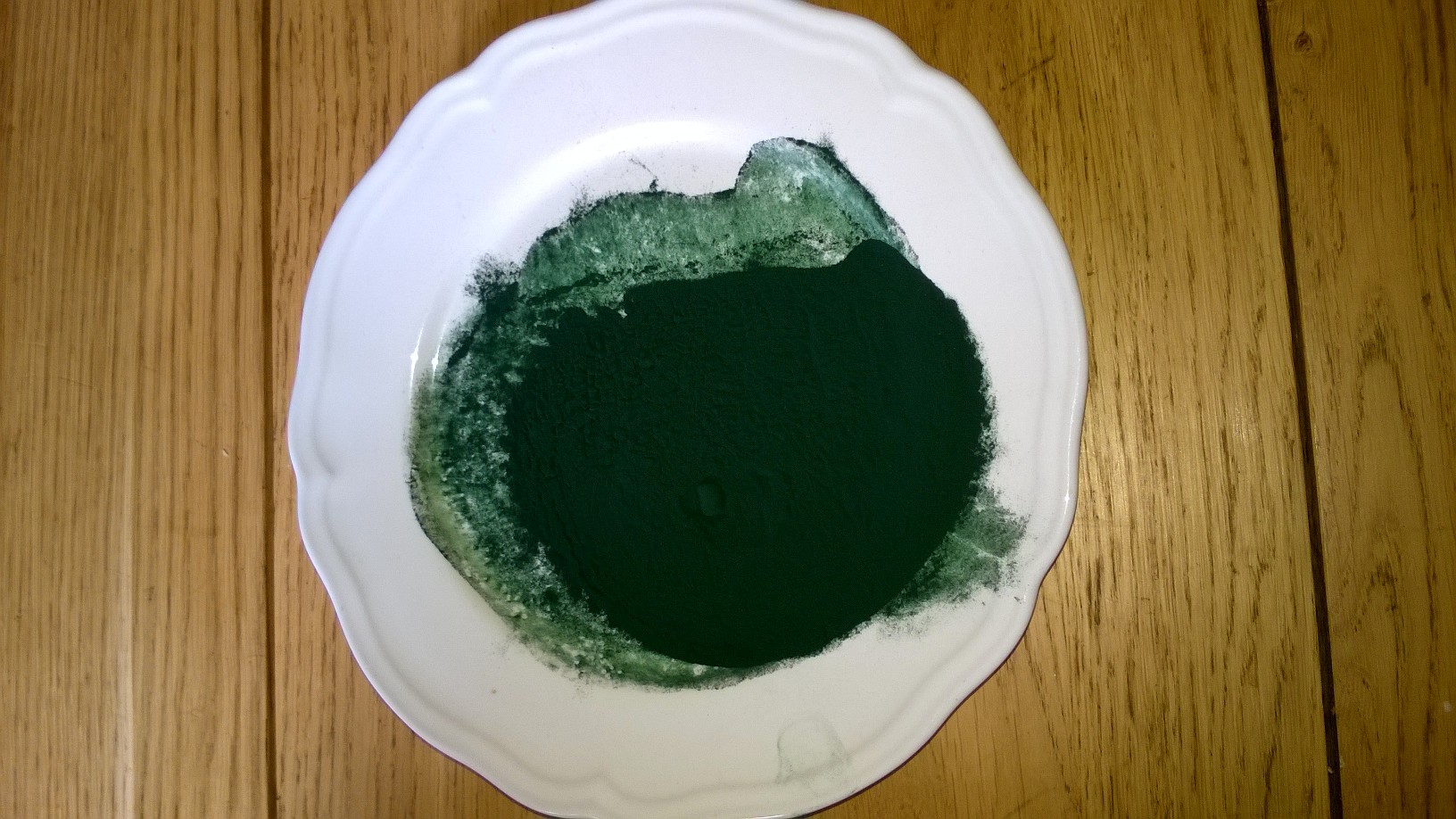
That wasn’t much help, but fortunately I had other resources to draw on. I decided to do a detox. This has worked several times in the past when I’ve felt low and as well as cutting out caffeine, wheat, dairy and sugar I thought I’d try a few supplements. An internet article suggested a cocktail of vitamins and minerals, and also spirulina. I’d never come across this substance before but discovered that it’s dried blue-green algae and is rich in protein. It’s said to be terribly good for you. My fatigue was so bad that I didn’t have the energy to question it – I just went out and bought everything that was recommended.

vitamins

I started the diet on Friday morning and within a few hours I had a caffeine withdrawal headache which just goes to show how much coffee I usually drink. By Sunday I was starting to feel better and my daughter, Emma, came to visit. After lunch, I disappeared into the kitchen to make some peppermint tea and decided to tackle the algae. I stared at the contents of the packet, which were intensely indigo and as fine as talcum powder. Since I’d mislaid my glasses there was no hope of deciphering the instructions so I plunged in with a teaspoon and took a mouthful. That was a very big mistake. The superfine powder clagged all over the roof of my mouth and trickled down my throat in sticky lumps. I gagged and tried to get my breath whilst producing squeaky choking noises. Then Emma called  “are you alright Mum?”  Even though I was about to expire, the primitive desire to protect my offspring remained strong. She would be traumatised if she found me gasping with blue teeth, and green foam dribbling from my nostrils.  I concentrated on grunting reassuringly and then rushed to the bathroom where I spent the next five minutes spitting. I cleaned my teeth and returned to finish making the tea.

The next day I was making a hot drink when I remembered it was time to take some more of the dreadful stuff. It was so expensive that I didn’t want to waste it, so I stirred two teaspoons into my liquorice tea. It was bearable but very much like drinking a swamp. On Tuesday I tried stirring it into some soya yogurt. It was like eating indigo-coloured poster paint. On Wednesday I tried to cheer it up by adding some banana, but it was still vile. Like indigo-coloured poster paint with lumps in it.

spirulina

When I stop and think about it, then it’s probably not surprising that I’ve felt drained recently. We each have our own hand of cards that the game of life deals in middle age. Only a lucky few avoid bumps in the road. In the past decade my bumps have included a husband with a life-threatening condition who nearly died three times, redundancy, financial ruin, five house moves, training for a new career, divorce, and the inevitable ups and downs that four children bring. Thankfully my divorce is now a scar rather than the gaping wound it was, and I’m fortunate to be happy with my new partner. But there’s one frustrating problem that remains. I can’t read.

road humps

Until my separation I was an avid reader and wouldn’t leave the house without a novel in my bag. I devoured book reviews and adored browsing in bookshops. Now I’ve fallen out of love. I read but I don’t engage. And this is a particular problem as one of my sixty treats is to read all six of Jane Austen’s novels. I liked Emma, Sense and Sensibility, and Pride and Prejudice. But Mansfield Park came after my marital bombshell and unlike the others it left me unamused, unmoved and uninterested. I made three attempts but each time made little headway. It may not be her best but I know the problem lies with me, not the writer, and that previously I’d have enjoyed it. I’ve decided for now to put it on one side and to think instead about how to heal my literary indisposition. These are supposed to be treats after all.

Recently I appreciated The Rosie Project and Kate Atkinson’s Time After Time. But I didn’t truly care whether I finished them or not. This disengagement is a loss. I know what it’s like to love books but for over three years, I’ve felt numb about reading. When friends ask about this, all I can do is shrug my shoulders. A bit of me is broken and I’ve no idea how to fix it. I can’t find any helpful advice though I have discovered that reading for pleasure is called ludic reading. Derived from ludo, the Latin for ‘I play’, this discovery is pleasing if only because I will now feel etymologically smug whenever the game of ludo is mentioned.

ludo

I’ve wondered about going to see a bibliotherapist such as the ones at the School of Life. These specialists guide readers towards literature that ‘enchants, enriches and inspires’. I think my situation might present them with a challenge but it could be interesting to explore. In the short-term, though, I’m about to go on holiday and I hope this will give me time to read. Before I leave, I’m going to spend an hour browsing at my local bookshop. Maybe a different genre, author or subject will provide the key to my literary emptiness. One thing’s for sure, though. I’m leaving Mansfield Park at home.

summer book

Royal Cowbells

alpine cow

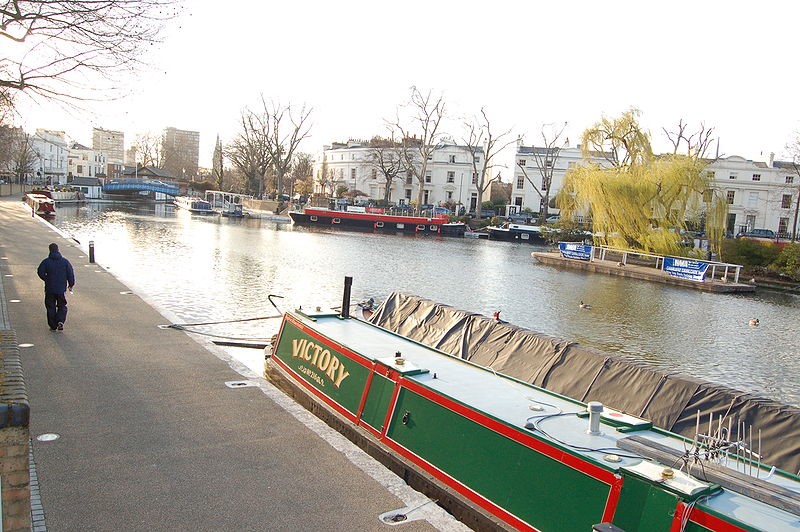
Last Sunday morning I had an enchanting walk around Hampstead in the company of a group of strangers and an erudite guide. I’ve enjoyed a number of these London walks over the years and so it was that one cold January afternoon in Little Venice I learned about the history of the Regent’s Canal and enjoyed peering nosily through houseboat windows. On another walk I explored the quirks of upmarket Notting Hill, and a walk around Chelsea revealed intricate treasures from the Arts and Crafts movement. But Hampstead is definitely my favourite walk so far, with its panoramic views over London and streets so steep they have handrails.

maida vale

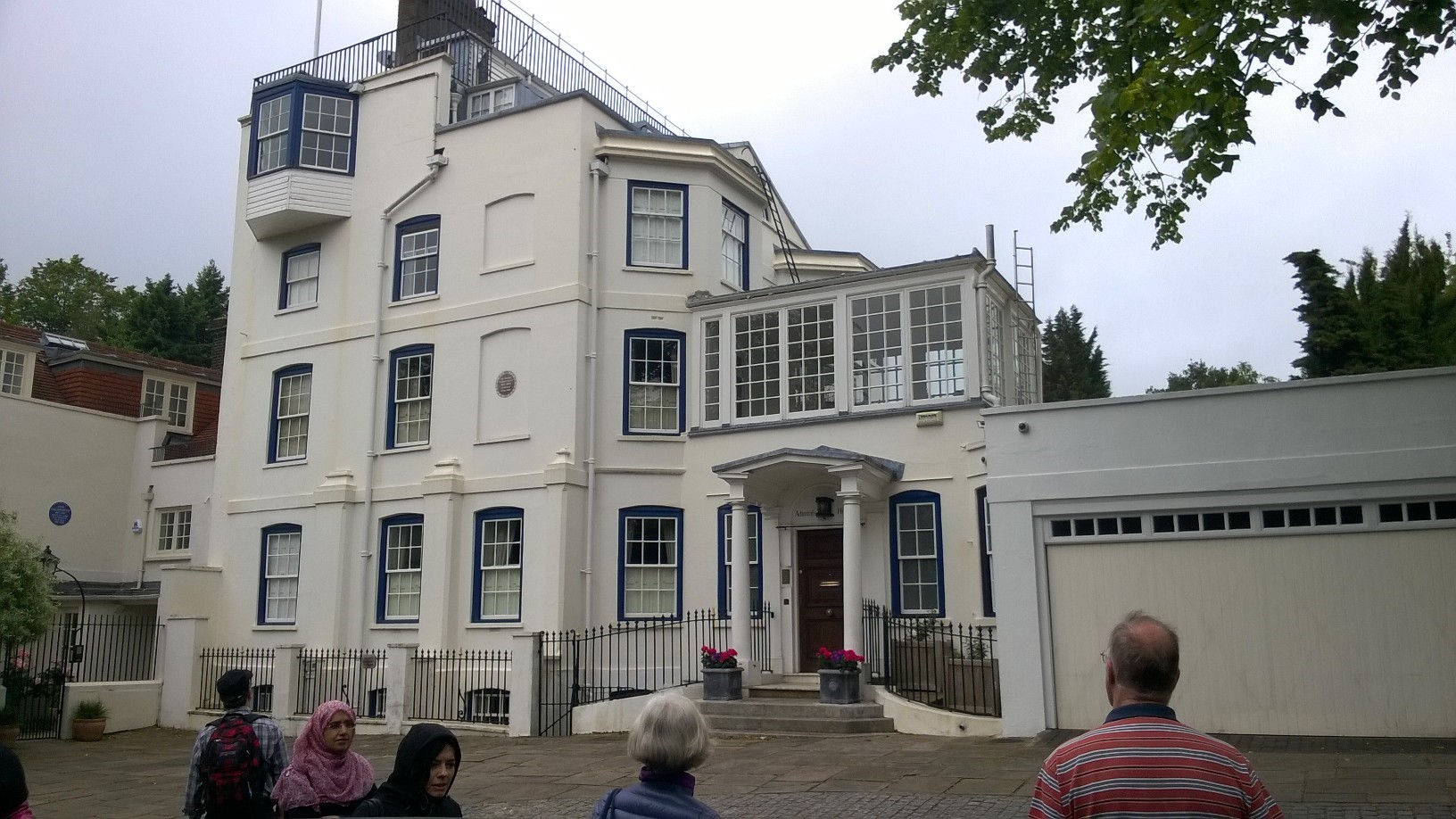
Our morning provided two hours of entertainment coupled with a bit of exercise as we puffed up and down the hills. Church bells rang and if I hadn’t known better I’d have thought I was in a Hampshire village. It’s so high that we would normally have had views stretching way into the distance over the City, the docklands and out to the Dartford Crossing. But it was misty and we saw nothing. Despite this, there were plenty of figurative high points. We touched on the edge of wild Hampstead Heath which made me think dreamily of highwaymen, and I was charmed by the preposterous eccentricity of the Admiral’s House with its quarterdeck. It sits like a ship, improbably run aground on the hills above the city. It was built in the eighteenth century for a lieutenant with aspirations. According to local legend, he kept a cannon on the roof and would fire it to celebrate naval victories. My pleasure was complete when I learned that in the twentieth century it was the inspiration for Admiral Boom’s house in Mary Poppins.

admirals house

Our guide also showed us a very different building, tucked away at the end of a quiet road. It’s one of his favourites in the whole of London. The exterior of Klein House made me catch my breath. It’s sleek and white and Modernist. The South African client who commissioned it wanted to be able to float in his indoor swimming pool and look at the sky. The planners started out insisting that this plot should house a Georgian recreation but eventually they were won over by Rick Mather’s design which blurs the distinction between the inside and outside. And it won the RIBA National Award in 1993 when it was known as The Priory, despite being up against the design for the new British Library. Click on this link to see pictures of its imaginative design with glass floors and a glass staircase.

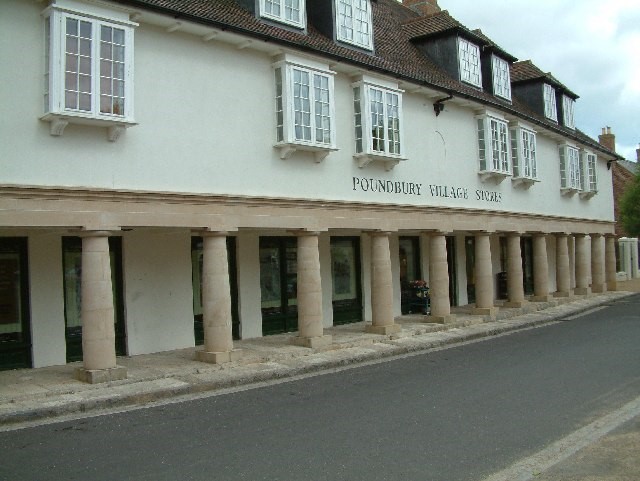
This Hampstead walk wasn’t one of the treats from my list of sixty. It was just an extra unlisted pleasure, but it did make me think of another architectural adventure, which was a treat from my list. A couple of years ago I made a visit to Poundbury in Dorset; Prince Charles’s experimental new town on the outskirts of Dorchester. The idea of developing a town from nothing intrigued me and I wanted to see it for myself. A main aim of the development is to create a community with housing, shops and businesses where people don’t have to rely on driving. Other princely principles include architectural harmony, local building materials, traditional regional styles, avoidance of unnecessary signs, and size on a human scale. The overall plan was created in the 1980s by Leon Krier, an architect from Luxemburg, and building began in 1993. It continues today with the ultimate intention of having 2,500 houses and a population of 6,000.

Richard Dorrell [CC BY-SA 2.0 (http://creativecommons.org/licenses/by-sa/2.0)], via Wikimedia Commons

Richard Dorrell [CC BY-SA 2.0 (http://creativecommons.org/licenses/by-sa/2.0)%5D, via Wikimedia Commons

One of the first things that struck me when I arrived was that the mock Georgian houses have bricked-up windows in deference to the real old buildings and their attempts to avoid paying a tax on windows. But why are they here in Poundbury? The other thing that surprised me was the silence. It was broken by just two sounds. We heard a child’s screams coming from inside a dental surgery. And the pavements are covered in pebbles which made a pleasing Georgian crunch as we walked on them. This rich auditory nostalgia was what I liked best about my visit.

I felt I should admire the harmonious proportions and the streets which run at angles to one another but somehow I just found it all rather dull and imperfectly perfect. It was a relief to spot a building that had signs of weathering. Never have I been so pleased to see walls with spreading rust marks and damp. They made a little corner of the town look real. I can appreciate that Prince Charles has followed heartfelt principles but my overriding reaction is that it doesn’t matter how well-built it is, or how good the materials and craftsmanship…it feels inauthentic.

“Poundbury Village Store – geograph.org.uk – 25553” by Stuart Buchan. Licensed under CC BY-SA 2.0 via Wikimedia Commons

I wonder about the point of it. There’s plenty of the real past in England. Where is our future monarch’s confidence in modern architecture? It’s all nostalgia, nostalgia, nostalgia and I contrast this with Hampstead’s exciting Klein House.

I was reading about nostalgia recently and discovered that it was originally considered a medical condition. The term was first used in 1688 by Johannes Hofer, a medical student who observed a strange condition amongst Swiss mercenaries fighting in France and Italy. They frequently became ill with symptoms such as indigestion, fainting, fever, and a deep longing for the mountains of their homeland. The explanation for the affliction suffered by these soldiers was that their brains and ear drums had been damaged by the constant clanging of cowbells in the Swiss mountains. Hofer wanted to give it a label and at first considered philopatridomania. In the end he settled on the more pronounceable ‘nostalgia’, which was derived from ‘nostos’, the Greek for homecoming, and algos, meaning an ache.

I’m glad that I visited Poundbury. It made me think and that was a treat in itself. But ultimately I found it irritatingly retrospective. I wonder… has Prince Charles spent a lot of time in Switzerland?

swiss alps

Crimson lake

claire - still life

In June 1936, Salvador Dali appeared on stage in London at the International Surrealist Exhibition. He wore a deep-sea diving helmet, and held a billiard cue in one hand. In his other hand was a leash. This had a pair of Afghan hounds attached to it. Speaking in Catalan, he launched into a lecture about a philosophy student who survived for a month by eating his way through a mirror-fronted wardrobe. Unfortunately, a few minutes into the address some of his audience noticed that he was turning puce and slowly suffocating. A poet was dispatched to find a spanner but in the meantime a quick-thinking member of the audience managed to prise open the window of his helmet. He took a few deep breaths and then carried on with his lecture. It was reported that some of the slides were upside down, but whether this was because of discomfiture or surrealist contrariness, history does not recount. It does record, though, that the audience loved what they saw and thought that it was all a well-rehearsed act.

dali

I want to produce a piece of art. Not performance art. What I want is something tangible. Call me mundane but I want something I can frame and hang on the wall. The problem is that I can’t draw. Or perhaps the problem is that I believe I can’t draw. That’s the message I got from my parents and teachers from when I was small. But despite this I loved messing about with my little tin paintbox with the thin dimpled lid. The names of the colours were mystifying but also exotic and fascinating. Crimson lake…burnt sienna… ultramarine…I want to play with these again and to challenge my view of myself as a non-artist.

paintbox

The good news is that according to research carried out by psychologists at University College, London, then anyone can learn to draw. But most people don’t practise enough. Like me, they’re put off by being told that their early attempts don’t look anything like they’re ‘supposed to’. It’s true that some lucky people are blessed with a better visual memory than others. This makes it easier to remember the relationship between lines and angles and to transfer them to the page, authentically. The research also says that it’s important to be able to ignore the surroundings and to focus on the detail.

Each of my sixty treats has had its moment and recently I’ve been pondering how I’m going to make this art one come to life. Then, just as happened with my crossword treat, I realise that I’ve found what I need. A friend who can help me, and who in spending time with me will turn it from an activity into a true treat. Claire.

Not only does Claire paint portraits and still lifes, but she’s also an experienced art teacher. And luckily for me, she’s got a special interest in helping people who don’t think they can draw or paint. She gets them to think of vivid childhood memories and when they try to capture them on paper, they forget their inhibitions. I ask if she could help me to do my project and am thrilled when she agrees. We’ve fixed a date in August when I’m going to go and stay for a couple of days. In the meantime she’s given me a smart hardback notebook and instructions to think about childhood memories and to gather relevant images but not to start drawing anything yet. So I’m immersed at the moment in recollections of my childhood where the river met the sea in Devon. Of slipping about on the seaweedy steps that led from the embankment to the water where I’d catch tiddlers in my stiff little nylon fishing net. Of the smuts and sulphurous coal smoke as the steam train puffed by full of lobster-red tourists. And of the ferry that crossed the river with a cormorant sitting motionless on the prow. So much is coming back to me that I haven’t thought of for years…

dartmouth smaller