What Have I Done?

Happy New Year—

Back so soon and once again here I am, trying to ignore the ingrained feeling that I should think about the year ahead and make some resolutions. 

I’ve posted before about how I used to come up with eighteen resolutions every New Year’s Eve. Three in each of six different categories. I know… it’s embarrassing! My only defence is that it gave me a purposeful glow and for those few hours each year I felt in control of my life. 

Then two years ago I wrote that I had at last recognised the folly of all those broken promises to myself and was planning instead to focus on a couple of themes for the coming year. Balance maybe. Nuance? Trains? Being kinder? All flexible and open to interpretation. But I quickly realised that even this tame affair was too controlled. So I decided I would just get on with trying to enjoy things for their own sake. No goals. 

As an approach it’s gone quite well and I’ve managed not to make any New Year resolutions for some time now. It’s a kind of anti-achievement. Nonetheless however much I try to eschew the idea of commitments the start of a fresh new year does feel symbolic. It’s an opportunity for something. So this January I’ve turned my previous habits upside-down and instead of thinking about the year ahead, I’ve thought back over the past year. Rather than making it about what I want to do, it’s about what I’ve done. Given the speed with which past resolutions have crumbled and got forgotten, it’s vastly more reliable. It’s interesting, too, because there’s an element of surprise. 

Last year brought quite a few things that evolved without much planning, and which turned out to be enjoyable and worthwhile. I visited new places, read satisfying books, spent happy times with friends and family, and did some more coastal walking. Those things were all individual events but meanwhile behind the scenes other less definable, diffuse goings-on were having a significant impact. Two in particular, were important although they would never have made it onto my resolutions list because I wasn’t aware of their value until I lived them. 

One was discovering that I don’t care what other people think, anything like as much as I used to. I don’t know how that happened. But it did. I became aware of it earlier in the year when I had to give a talk and realised that for the first time ever, I didn’t feel tortured by self-doubt. I gave it my best and hoped that some people would like it and find it interesting. But I also knew there was a chance that some people would find it boring or even irritating. It’s just the way it is. You can’t please all the people all the time. I’ve got a friend who says she can’t stand David Attenborough. Yes, David Attenborough. Even Jane Austen—St Jane— hasn’t captured all hearts. Mark Twain thought her “…entirely impossible. It seems a great pity to me that they allowed her to die a natural death. Every time I read Pride and Prejudice I want to dig her up and hit her over the skull with her own shinbone.”  

The development of my insouciance has been invisible to all but me but it has had a physical manifestation—it’s coincided with a change of hairstyle. For my entire adult life, I’ve peered out through a fringe and much of my face has been hidden behind it. My forehead has not been seen for decades but earlier this year, quite out of the blue, I decided that I’m through with that. I want to look at the world with less fear and accept how others see me, for better or for worse. At the moment every day is a bad hair day as my former fringe is growing out and can’t seem to sit happily in any position. It’s anyone’s guess where my parting will end up but despite knowing that my hair looks a bit weird and dishevelled, I really don’t care. It’s a symbol of my new mindset.  

The second thing that took me by surprise this year, is living through a creative block. If you’ve read this blog before then you might remember that for about four months, I lost all interest in writing despite being part-way through my third book. Somehow I managed not to panic. I even accepted that I might never write again and found myself thinking about that famous line from the Serenity Prayer—“grant me the serenity to accept the things I cannot change, the courage to change the things I can, and the wisdom to know the difference.” Then one week in July, as unexpectedly as it had disappeared, the desire to write returned. From that point on, I whizzed along and by the end of November the book was more or less finished. It’s currently with an editor. 

Once this stage is done, I’ll decide what to do next. No goals. No expectations. 

I’ll let you know what happens. 

Festival Takeaways

books

Two years ago in ‘Parkus Interruptus’ I wrote about how I had lost all pleasure in reading. Since then, several friends have described how grief has affected them in a similar way. I’ve had many suggestions for what might help me regain my enjoyment but perhaps the most helpful has been to focus on non-fiction. I manage to read quite a lot by doing this, but where I once had a hearty appetite and a mixed diet, I’m picky these days and only occasionally snack on fiction.

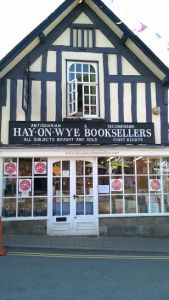
This week, though, I’ve been immersed in the world of books at the Hay Festival. This tiny Welsh town with its population of 1,600 and thirty bookshops, has just hosted its thirtieth annual literary festival and its global reputation means that it can attract the biggest names in literature, the arts, politics, broadcasting, and science. Over the course of ten days there were more than six hundred events. I was there for a week and went to twenty-three of them. Mostly they were entertaining, informative and thought-provoking. I’m left with a random collection of snapshot memories, odd facts and the beginnings of a better understanding of topics ranging from Islamic fundamentalism to medical sniffer dogs, time, the early days of London Zoo, and carpe diem. And now that I’m home, I can reflect on what I’ve taken away.

hay bookshop

As with so many things in life, some turn out to be different from what you expect. Last Saturday afternoon I sat packed into a tent along with hundreds of other people, all waiting to hear the actress Charlotte Rampling talking about her life—and it must have been a jolly interesting life. But she was quite determined not to share any of it with us, and so instead the event turned into an uncomfortable but fascinating tussle. The interviewer was charming and asked reasonable questions but his interviewee’s answers were unhelpful. She either arched her elegant eyebrows or said, “It’s in the book,” without elaborating. The interviewer persevered but was clearly relieved when after forty minutes he was able to invite questions from the audience. “We’ve got about fifteen minutes—let’s see if you lot can do any better” he said, with feeling.

By contrast, Harriet Harman was generous with her anecdotes, and talked poignantly about her mother who had studied law at Oxford—one of only three women in her year. She qualified as a barrister but then gave up her career to bring up four daughters. Her hard-won horsehair wig and black robes were consigned to the girls’ dressing up box.  Harriet and her three sisters all became solicitors and when she entered Parliament in 1982, there were more MPs named John, than women MPs.

Alan Johnson was another engaging raconteur. “So…” said the interviewer, “…you’ve been Minister for Health; Shadow Chancellor of the Exchequer; Minister for Education; Home Secretary, and Minister for Trade and Industry. And all of this with you protesting in your book that you had no ambition. Can you imagine how far you’d have gone if you had been ambitious?” The interviewer was Sarfraz Manzoor, the same one who had tried so hard with Charlotte Rampling. He looked much happier this time as his interviewee showered us with political anecdotes, comments on the election campaign, and readings from his latest memoir.

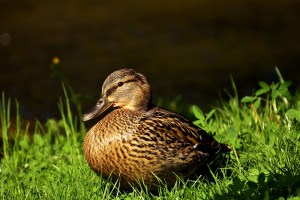
duck

There was a surprise at the talk given by the gardening writer, Alys Fowler. I’d expected to hear about the wildlife that she discovered whilst canoeing around the canals of Birmingham. But instead of ducks and dandelions she talked about something more personal. The solitude of being alone on the water, pushed her into the realisation that after fourteen years of marriage she had fallen in love with a woman. On the one hand it was a moving story and on the other, her joy at paddling around the canals was infectious. What I took away from that one, was a wish to do some canoeing myself. It’s going on my list.

One of my favourite events was Artemis Cooper talking about her latest biography. She opened by saying “We all contain within ourselves some level of inconsistency. And none more than the novelist, Elizabeth Jane Howard.” By the end, we the audience, had heard of her relationships with a multitude of well-known twentieth century men including Cecil Day-Lewis, Kingsley Amis, Kenneth Tynan, Arthur Koestler, Laurie Lee, and the naturalist Peter Scott. “The puzzle,” said her biographer, “is how she had such a turbulent personal life, but wrote so insightfully about relationships.” Hilary Mantel recently called Elizabeth Jane Howard’s novels “exquisite and underrated”. She tells everyone to read them.

Jonathan Safran Foer talked about his new novel but began by saying what a thrill it was to be at Hay. “It’s like a story I would tell my kids,” he said. “Once upon a time there was a little town. And in the town there were lots of shops. And all the shops were bookshops…” I’ve come home from that little town with a big reading list. You might notice there’s nothing on it by Charlotte Rampling but it does include Harriet Harman’s ‘A Woman’s Work’, Alan Johnson’s ‘The Long and Winding Road’, Alys Fowler’s ‘Hidden Nature: A Voyage of Discovery’, Isobel Charman’s ‘The Zoo’, and Artemis Cooper’s ‘Elizabeth Jane Howard: A Dangerous Innocence’. Then there are a few fictional dishes to tempt my finicky appetite—all of Elizabeth Jane Howard’s novels. I enjoyed them many years ago and now I plan to reread them. And all of that should sustain me quite well until the next Hay Festival.