Take My Breath Away

Apologies if today’s title gives you an earworm but this is something I’ve wanted to write about for a long time and until now, I haven’t known what to say. It has evolved very, very slowly because it concerns something rare and elusive. That’s why it’s so special and it happened for only the sixth time, a couple of weeks ago when I was on a train. I was looking forward to seeing an old friend, and spent the first part of the journey absorbed in a crossword. It was particularly tricky, so by the time I’d cracked it and took notice of what was going on outside the rather dirty window, we were well into Dorset, with Poole Harbour, misty and wide, filling the view. The train rumbled along, and as we left the water behind and I stared out idly, wondering what my friend’s ‘favourite cafe’ would be like, we passed a hill in the near distance, with sparse, bare trees on it — a wintry scene under a pewter sky. Then suddenly, there amongst the russet bracken, proud at the pinnacle, I spotted a stag standing completely still. It was surveying its landscape, and the sheer beauty of it took my breath away. ‘Oh my, it’s happened again,’ I thought.  It was a moment — a split-second when time seemed to freeze. It was a snapshot of pure wonder. 

The first time I became aware of this phenomenon was about twenty-five years ago. At that time I lived in deepest Sussex and one night shortly after Christmas there was a heavy snowfall. We hadn’t expected to wake up to such a crisp, white world but Harvey, our chocolate Labrador needed his exercise, so I put on my boots and set off with him for our regular walk through the woods. The cover was absolute and pristine. Not a blade of grass could be seen and bare branches bowed beneath the weight of the captured snow. It was a fairytale scene, as quiet as can be and I was lost in daydreams about the coming week. Then something startling happened. An auburn fox raced past about ten yards away running as fast as it could with my dog in hot pursuit. It was a few seconds of silent film. Maybe two. Three at the most. The fox got away but the intentness of the two animals and the stark palette of white, brown and auburn were breathtaking. It knocked me sideways and I knew that moment had been something precious. I didn’t have the words to describe how it made me feel and it took another fifteen years before I had another similarly overwhelming experience.  

That time I was in Worcester for a weekend on my own. The Cathedral is surely one of the loveliest in England and as I walked through the Edgar Tower into the precinct, College Green opened up ahead, an oval of grass surrounded by houses of cream, sage green, and shell pink. There were yellow and violet crocuses under a tree, and frothy blossom above. In the background I could just see the river. Then all of a sudden as I stood there, taking in the gorgeous scene, the cathedral bells started pealing and my mouth literally fell open. It was pure perfection. This time, I recognised the feeling but as before, I couldn’t find the right words to describe it. 

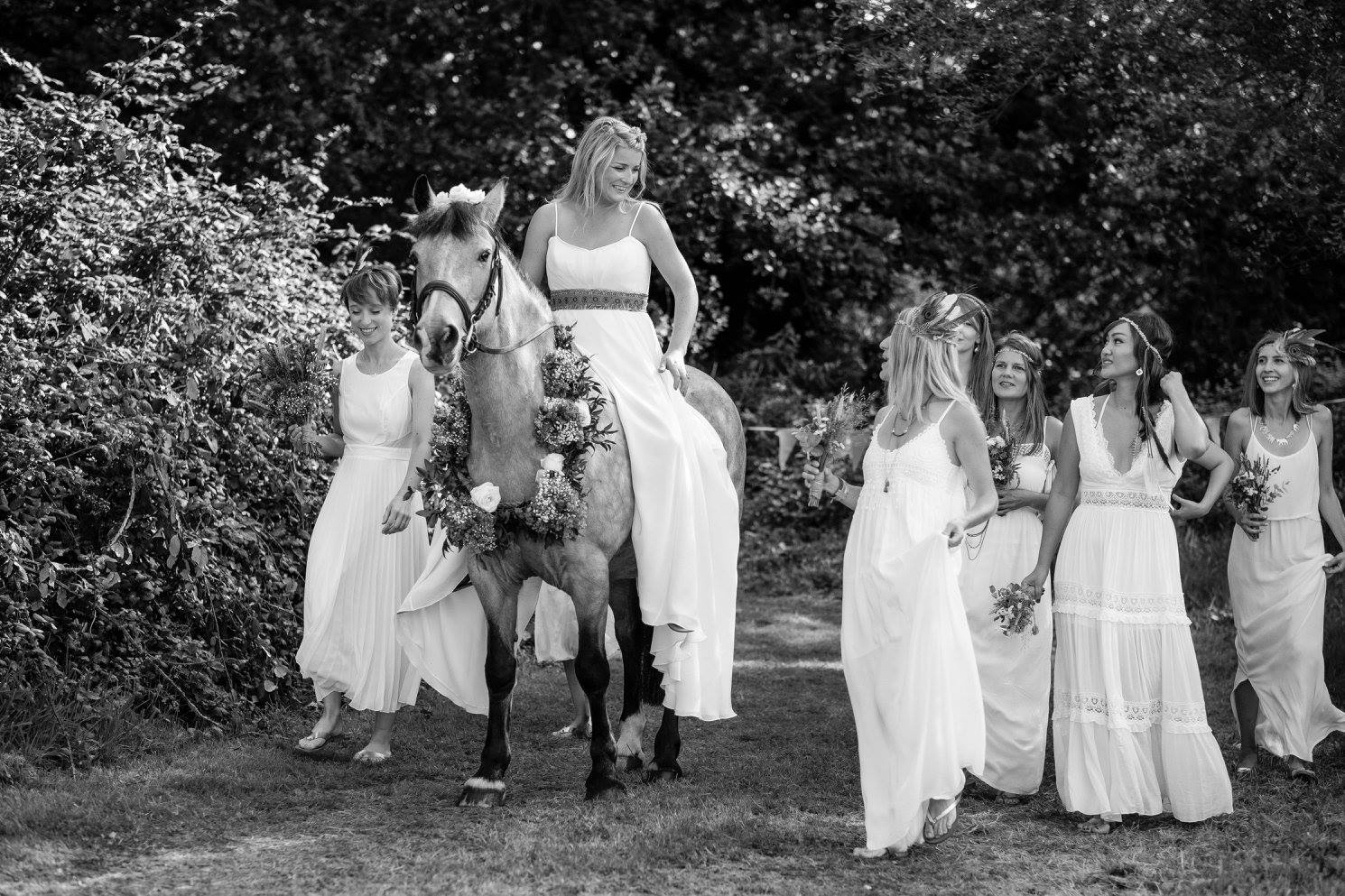
A few years later it happened again. I was sitting on a floral-adorned, straight-back chair in a garden – English greenery all around and a gathering of smartly-dressed people chatting quietly and waiting for something to happen. There was palpable poignancy, too, as so many of us remembered our friend Nicky, mother of the bride, who was no longer with us. She would have loved this. And then a hush, followed by row after row of gasps, as Emma the bride, came into view, in a simple white dress, riding side-saddle on her horse and flanked by woodland fairy bridesmaids. Once again, there was a shiver of magic and time stood still. 
Two years passed until it happened again. I was on a bus in the Japanese Alps and as it spun nauseatingly round bend after bend, I was becoming increasingly miserable. Then… it swung round yet another bend and there in the distance was Mount Fuji. Ravishing and unmistakable with snow drizzling down the slopes like a fancy pudding, and a fluffy garnish of cloud on top. I was astonished to feel so moved by it. It was a gift that took me completely out of myself and I forgot about feeling sick. 

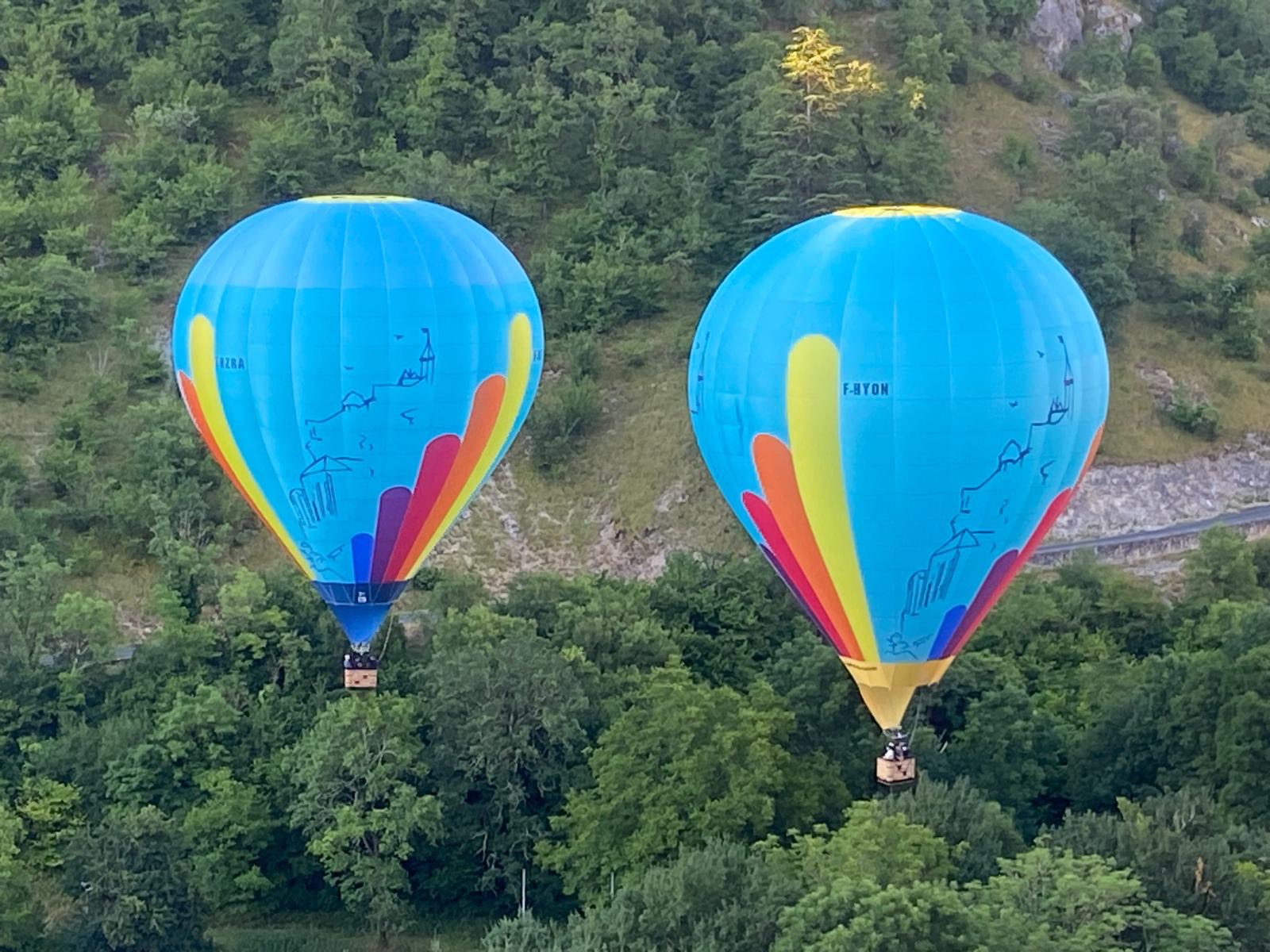
It took six years for the next ‘event’ to present itself. This one happened in France — Rocamadour in the midst of a heatwave, and it was so stifling that we could only walk early in the morning or in the late evening. Our accommodation was just yards from the church of Notre Dame built high in the cliffs above a gorge of the Alzou river, and just after dawn as we yawned and wandered through the ancient building, we heard a whooshing noise. I assumed that street cleaners were out early with their machines, preparing the village for the daily influx of tourists. But as we reached the terrace and looked down over the gorge, we saw immediately where the noise was coming from. Two huge hot-air balloons were drifting past in the cool of the early morning with their gas burners spouting controlled flames and passengers standing rapt in the baskets. That first sight of them took my breath away and we too, stood rapt and watched until they were out of sight.

Ever since it happened the second time, on College Green in Worcester, I’ve been searching for a way to describe the feeling to myself, let alone trying to explain it to anyone else. I’ve tried out various words and phrases – flashbulb moments…an intense moment when the world seems perfect…a sense of being deeply connected to the world…authentic moments…pure joy…intoxication…deep harmony…wholeness…a momentary, complete appreciation of being alive…spirituality… Ecstasy, even but I shy away from that as it sounds religious or a bit carnal. I think that some people might call this awe but I don’t think that’s what I’m struggling to describe. I’ve stood in front of incredible works of art, and been in spectacular places — the Sagrada Familia in Barcelona comes immediately to mind —but I expected those things to be astonishing. What is different about the six ‘flashbulb moments’ is that they all involved something unexpected. I know that I can’t be alone in noticing this sublime phenomenon and over the years I’ve come across other people who have also attempted to describe something that seems similar. 
In his memoir, Chasing Daylight, Eugene O’Kelly refers to the perfect moment he experienced once on a golf course. A hawk swooped down to the lake right next to him, plucked a fish from the water and flew off past his head. And in her memoir, Old Rage, the actress Sheila Hancock writes with passion about an experience she had during the war, as an evacuee child in Dorset. She was holding a friend’s hand and swimming naked in the dark, in a pool by the sea at Dancing Ledge when she was overwhelmed by the magnificence of the sea and love for her friend. ‘It was a moment of complete happiness,’ she writes. But these experiences can’t be manufactured to order and when at a later point in her life, she returned to Dancing Ledge, she found that she could not recapture the feeling. Wordsworth, too, writes about spots of time. Vivid, cherished moments of intense, often natural, experiences that can be revived in the memory and which create a lasting connection between the past and the present. 

Over the years since that first experience, I’ve wondered and wondered. When will the next one happen? Will there be a next one? How can I explain it to anyone else as it’s only by finding the right words that you can share your experiences precisely and find out how life feels for other people. And then just a few weeks ago, it was Sir Michael Morpurgo who gave me the key to understanding my own experiences better. I was listening to his collection of essays — Funny Thing Getting Old – and yes, he writes about getting older, the topic that first attracted me to it, but he also writes about books, peace, war, optimism and gratitude. And most importantly, he writes about nature. It is beautiful writing throughout but one chapter resonated above all the others. In it, he describes how for more than fifty years he has taken a morning walk along the isolated valley of the Torridge where he lives in Devon. As he walks it helps him to come up with the wonderful stories that he writes for children —War Horse, Private Peaceful and so many others — and in all of those years he has seen many herons and ducks, and an occasional kingfisher but never an otter. Then one day, quite out of the blue, an otter popped out from under the water. It stared at him and he, staying perfectly still, stared back. The animal dived back down and to his delight it came up with a fish between its paws. Time and time again – he estimates at least eighty — the otter popped up, sometimes crunching on a mussel, once with an eel. It knew he was there but it didn’t mind. For forty minutes he stood, entranced. Then it was gone. ‘But the thing is,’ he says with characteristic wisdom, ‘…it wasn’t gone because that memory will be with me for the rest of my life.’

And that’s it. That’s exactly it. His ‘otter moment’ lasted longer than any of my experiences but I understand just what he’s talking about. My ‘flashbulb moments’ took my breath away and the memory of each of them will be with me for the rest of my life. Maybe you’ve had similar experiences. Maybe you’ve come up with your own way of describing them. I’d love to hear. Do put something in the comments section or email me on 60treatsandmore@gmail.com and I’ll post it for you. 
Dating – Part Two 

My last blog, Dating – Part One, was all about what to do when you come to the end of a big absorbing project and are not sure how to fill the new void. That’s where I found myself after finishing How I Learned to Stop Saluting Magpies, – in need of a break from writing, and a long think about what to write next. Even whether to write. 

This break has resulted in a surprisingly satisfying uncreative autumn and early winter. Except I suppose it hasn’t been uncreative really because that human drive to create is always there in all of us, even when it’s not actually producing anything that anyone else is aware of. And during these quiet months I’ve had Julia Cameron’s The Artist’s Way by my side. This 12-week programme claims to have helped millions to discover and recover their creative self, whether that’s writing, painting, photography, needlework, music, baking, gardening or any of the many other ways that humans express themselves and explore ideas. I came across it because many of my writing friends have, at some point, tried it. 

I didn’t follow all the suggestions but overall it’s been well worth doing, and I did practise the two main pillars of the programme. One is morning pages – free flow writing about whatever comes into your head. I don’t always have the time to do this but can see the benefit, as unexpected ideas and thoughts pop up, as if from nowhere. The other tool, artists’ dates, has gradually revealed its value. This is when you set aside a minimum of two hours, once a week, for doing something that feeds you. Julia Cameron describes it as an excursion or a play date that you preplan and the key thing is that you must do it on your own. ‘Resist all interlopers,’ she says. ‘And don’t worry if any of the dates seem silly. Creativity is a paradox. Serious art is born from serious play.’

In Dating – Part One I wrote about my first artist date, which was a delight. A slow, solo lunch in a French restaurant, that changed my attitude towards mussels. And now I’ve reached the end of the programme and so that means I have had twelve dates with myself. They’ve included a couple of amateur theatre outings, an exhibition about the background women in Jane Austen’s novels, a guided walk around Southampton, an art study day, a book launch in a Winchester bookshop, and some lunchtime folk music at the local university concert hall. That last one took me outside my comfort zone as I’ve never been into folk but I’m so glad I went, as I really enjoyed it. The only real disaster was a treasure hunt using an app on my phone. Boo to that one. Having paid my fee and got myself to the start of the trail, I couldn’t find the first clue and it refused to let me progress to the next one unless I took some selfies of myself ‘enjoying’ the wonderful app. Boo again to that one.

The ones I particularly enjoyed, were both in London. Neither was the main reason for being in the capital but they were each stimulating and added extra pleasure to a couple of days out.  One was a stroll around Marylebone with a London Walks book. It did an excellent job of guiding me towards charming Georgian squares and pointing out things of historic interest. The other took place on the South Bank. I headed for the BFI (British Film Institute) building and at the entrance I was greeted by a woman in a smart jacket, black trousers and a white shirt, carrying a short-wave radio and wearing an earpiece. ‘Hello,’ she said. ‘Are you here for the summit?’  I wasn’t but it was a reminder that this building is at the heart of the British film world. She directed me down a side road to the BFI cafe where I sipped my oat cappuccino and relished being in a place where everyone looked animated and interesting. But it was the Mediatheque I was there for and it didn’t disappoint. Anyone can just walk in and take a seat at one of the booths which each have comfortable seating, a screen and headphones. There you have a choice of 180,000 items in the BFI Archive and it’s all free. Where to start? I dabbled with the finale of the influential 1950’s science fiction saga, Quartermass and the Pit; a boundary-pushing episode of Armchair Theatre that explored racism in a white working-class family, and a docu-drama about Cromwell’s determination to kill King Charles I. It was wonderful but rather overwhelming so in the end I decided to search for the item that was closest to my birthdate in 1959. 

It turned out to be a documentary that was aired the day after I was born. Reporter, Michael Ingram joined a team of dustmen on their round in Westminster Public Cleansing and Transport Department. There were no wheelie bins then, just the round, dented metal dustbins I remember from childhood. No compressor on the lorry, and no safety gloves for the workers. They were all white, with bad teeth and they spoke deferentially to the posh presenter in his smart overcoat. ‘Yes sir.’ ‘No sir.’

I finished off with a documentary that was shown at the end of 1959. It was an overview of that decade when I was born and which I’m fascinated by – perhaps because I’d been on earth for less than a year when it ended and so I don’t have any of memories of it. Made by Granada TV, it was hosted by Ian Carmichael with shiny Brylcreemed hair and a perfectly knotted tie, and interspersed with upbeat jazzy music. He delivered the good news that for the first time in many years there was nowhere on earth where British soldiers were fighting, and then noted the rise of various personalities through the fifties – Kenneth More, Pat Smythe, Tommy Steele, Stanley Matthews and Princess Grace of Monaco. He called Khrushchev, ‘a dictator with the face of a children’s party balloon.’ ‘We became more real about ourselves during this decade.’ breezed Carmichael, contrasting clips from two films. Spring in Park Lane at the start of the decade – all careful manners and romantic lighting – with rough-edged, sexy Room at the Top in 1959. It was The Dull Decade according to Nancy Mitford, while the Archbishop of Canterbury called it The Selfish Age. It was a fascinating insight into the history of the time but as I had a lunch date with my cousin, I tore myself away. 

The value of these solo expeditions is that they helped to clarify what I’m really interested in. It’s not writing fiction that makes me happy – at least not at the moment – but instead it’s a mix of social history, lots of walking, exploring new areas, and discovering unexpected curiosities and treasures. And where better to do that than London where I lived and studied for years, and which has a claim on my heart. I know I’m happiest when I have a project to get my teeth into. But I also want some balance in my life. So I have a plan. Thirty day trips on my own over the next couple of years. There is a unifying theme, and purpose to it all but I won’t know if that will work until I try it. I expect it will need to be tweaked and it might not turn out how I expect. In fact it almost certainly won’t. But that will be a story in itself. I start tomorrow. Nothing like a New Year for a new project. And I can’t wait. 

Wishing you many good things in 2026 and as always, thank you so much for reading this. 

What Have I Done?

Happy New Year—

Back so soon and once again here I am, trying to ignore the ingrained feeling that I should think about the year ahead and make some resolutions. 

I’ve posted before about how I used to come up with eighteen resolutions every New Year’s Eve. Three in each of six different categories. I know… it’s embarrassing! My only defence is that it gave me a purposeful glow and for those few hours each year I felt in control of my life. 

Then two years ago I wrote that I had at last recognised the folly of all those broken promises to myself and was planning instead to focus on a couple of themes for the coming year. Balance maybe. Nuance? Trains? Being kinder? All flexible and open to interpretation. But I quickly realised that even this tame affair was too controlled. So I decided I would just get on with trying to enjoy things for their own sake. No goals. 

As an approach it’s gone quite well and I’ve managed not to make any New Year resolutions for some time now. It’s a kind of anti-achievement. Nonetheless however much I try to eschew the idea of commitments the start of a fresh new year does feel symbolic. It’s an opportunity for something. So this January I’ve turned my previous habits upside-down and instead of thinking about the year ahead, I’ve thought back over the past year. Rather than making it about what I want to do, it’s about what I’ve done. Given the speed with which past resolutions have crumbled and got forgotten, it’s vastly more reliable. It’s interesting, too, because there’s an element of surprise. 

Last year brought quite a few things that evolved without much planning, and which turned out to be enjoyable and worthwhile. I visited new places, read satisfying books, spent happy times with friends and family, and did some more coastal walking. Those things were all individual events but meanwhile behind the scenes other less definable, diffuse goings-on were having a significant impact. Two in particular, were important although they would never have made it onto my resolutions list because I wasn’t aware of their value until I lived them. 

One was discovering that I don’t care what other people think, anything like as much as I used to. I don’t know how that happened. But it did. I became aware of it earlier in the year when I had to give a talk and realised that for the first time ever, I didn’t feel tortured by self-doubt. I gave it my best and hoped that some people would like it and find it interesting. But I also knew there was a chance that some people would find it boring or even irritating. It’s just the way it is. You can’t please all the people all the time. I’ve got a friend who says she can’t stand David Attenborough. Yes, David Attenborough. Even Jane Austen—St Jane— hasn’t captured all hearts. Mark Twain thought her “…entirely impossible. It seems a great pity to me that they allowed her to die a natural death. Every time I read Pride and Prejudice I want to dig her up and hit her over the skull with her own shinbone.”  

The development of my insouciance has been invisible to all but me but it has had a physical manifestation—it’s coincided with a change of hairstyle. For my entire adult life, I’ve peered out through a fringe and much of my face has been hidden behind it. My forehead has not been seen for decades but earlier this year, quite out of the blue, I decided that I’m through with that. I want to look at the world with less fear and accept how others see me, for better or for worse. At the moment every day is a bad hair day as my former fringe is growing out and can’t seem to sit happily in any position. It’s anyone’s guess where my parting will end up but despite knowing that my hair looks a bit weird and dishevelled, I really don’t care. It’s a symbol of my new mindset.  

The second thing that took me by surprise this year, is living through a creative block. If you’ve read this blog before then you might remember that for about four months, I lost all interest in writing despite being part-way through my third book. Somehow I managed not to panic. I even accepted that I might never write again and found myself thinking about that famous line from the Serenity Prayer—“grant me the serenity to accept the things I cannot change, the courage to change the things I can, and the wisdom to know the difference.” Then one week in July, as unexpectedly as it had disappeared, the desire to write returned. From that point on, I whizzed along and by the end of November the book was more or less finished. It’s currently with an editor. 

Once this stage is done, I’ll decide what to do next. No goals. No expectations. 

I’ll let you know what happens.