It started last November with all the ingredients for my favourite kind of morning – London, an artisan café, autumnal weather, and most important of all, excellent company. On this occasion, Mike’s oldest schoolfriend from Cape Town, and his wife Gaby, who were over on a visit to their daughter. I’ve got to know them well on recent trips to South Africa and it was a joy to see them.
‘We’ve got a booking for the Kalahari,’ they said as we drank our coffee and divided up the cake. ‘In March. We’ll be away for three weeks. It’s a two day drive from Cape Town at either end and the rest of the time we’ll be camping in the desert. Do you fancy joining us?’ Mike’s face lit up. One of the world’s great wildernesses, rich in wildlife and hardly touched by humans. He’s often said wistfully that he would love to see it. None of us doubted what his response would be but he, ever considerate, held back. So all eyes turned to me and I, with my profound dislike of hot weather, terror of snakes and spiders, and no experience of roughing it in the wild, found myself saying ‘That would be really lovely. Thank you.’ Mike looked over the moon. And a little surprised. ‘We’ll get you a special UV torch,’ said Andries, ‘For night-time. So you don’t tread on any scorpions,’ he added comfortingly.
Three months and several Zoom calls later, we arrived in Cape Town. We were armed with a bag of books, powerful binocs and Mike’s new telephoto lens, and over the next few days we shopped for light clothing and enough provisions for the entire trip. Most of the desert camps have a shop but they’re so remote that they carry only basic stock. On Friday evening our friends packed their 4×4 and trailer with mathematical precision. They’ve had countless African adventures and know exactly how they want things done but as I stood around trying to be useful, I came up against the first challenge of the holiday. I remembered how much I hate feeling like a spare part, not knowing what to do.
We set off on Saturday morning and by Sunday afternoon we had crossed stupendous mountain passes and driven across hundreds of kilometres of valleys and plains dotted with orange and grape farms, leggy ostriches and occasional small towns. We shopped at Upington, the nearest big town to the Kalahari, to top up on perishable fruit and veg, and by now I was attempting to refer to our destination as the Kgalagadi which is the term used by the Tswana people, and the preferred name in post-apartheid South Africa. I was hampered though by my English reserve, which was making it tricky to produce the phlegmy, throat-clearing sound required for authenticity.
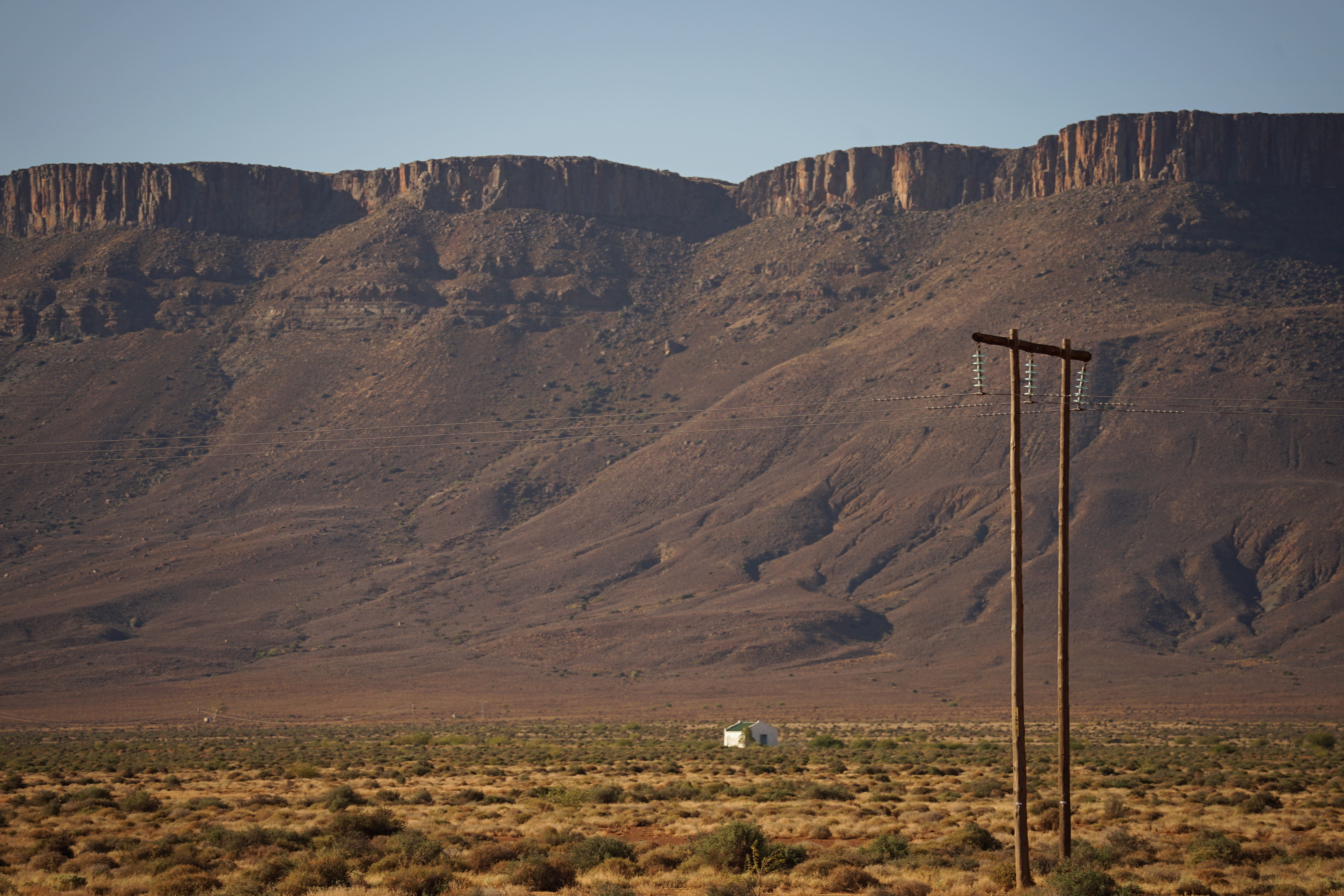
About three hours and over two hundred kilometres out of Upington we were rolling along, chatting easily about this and that, and AI, and modern Shakespeare, when a young chestnut horse cantered out of the deep undergrowth and straight into our path. Time slowed down and I remember us all screaming as there was a loud bang, and the horse bounced sideways, then rolled into the road beside us.
For a minute or two, it lay there, surely dying, as we stared in horror, absorbing what had just happened and wondering what to do here, in the middle of nowhere. Then slowly, the horse got up and ambled off, stopping by the side of the road to nibble some grass. As for us, our radiator grille was caved in and the bonnet severely buckled. There was no way we could carry on.
By pure luck on such a quiet road, two locals came past at that moment and stopped, offering kind words and calling the police. Ten minutes later the duty officer turned up in Sunday shorts and flip-flops with his four children in the back of the car. ‘This often happens here,’ he told us. ‘You were v-e-ry lucky,’ emphasising very — drawing it out in an African lilt. ‘On Friday, a man and a horse died here. If you’d been going faster… We learned later that these horses are not wild but the owners do not want the expense of fencing. Nor do they want to admit liability for accidents.
‘The best thing you can do is to go to the lodge up the road, stay there the night and sort things out in the morning, ‘ advised the policeman. So, processing very gingerly — fortunately the radiator wasn’t leaking but there was a loud clanking sound — and accompanied solicitously by all of our new friends, including the children, we rattled our way to a smart, thatched lodge hotel with manicured grounds, palm trees, a turquoise swimming pool, and a small camping area. Hot, exhausted and dispirited, we dredged up the energy to pitch our tents and to prepare a meal, all the time aware that things could have been much, much worse.
Andries spent most of the next day on the phone to his insurance broker, repair garages, recovery services, and every car hire company in the area. Things were complicated by our remote location and the dearth of 4x4s with a tow bar but he stayed admirably calm and by 4pm a suitable vehicle had been driven up from Upington and delivered to us. We took down the tents, folded up our chairs and tables, emptied the original car and packed everything into the new one. Our friends said a sad farewell to their beloved car, which would later be assessed by the insurers as not worth the cost of repairs, and we set off for the Kgalagadi Transfrontier Park which is roughly the size of Switzerland, incorporates part of Botswana to the east, and borders Namibia to the west.
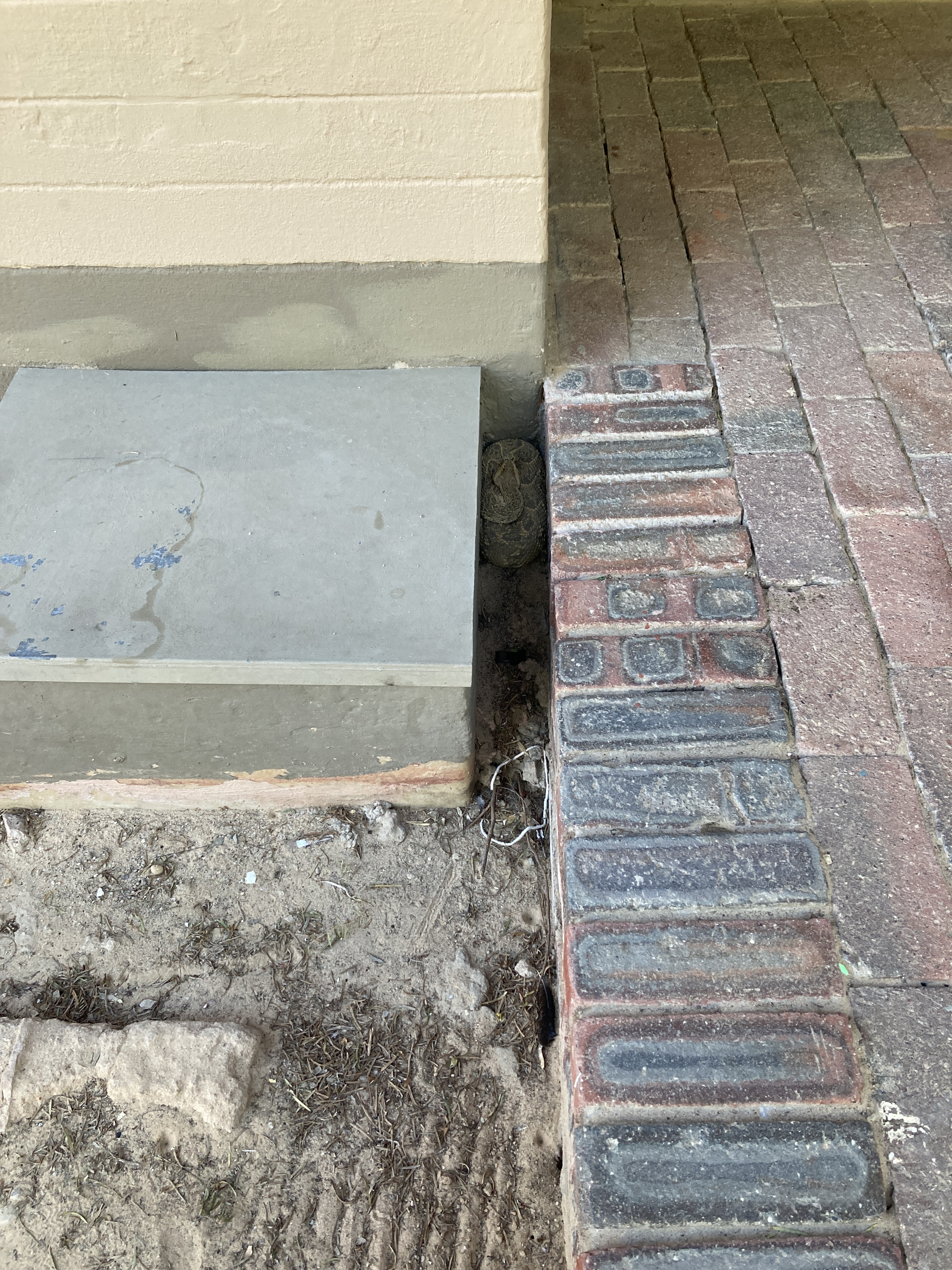
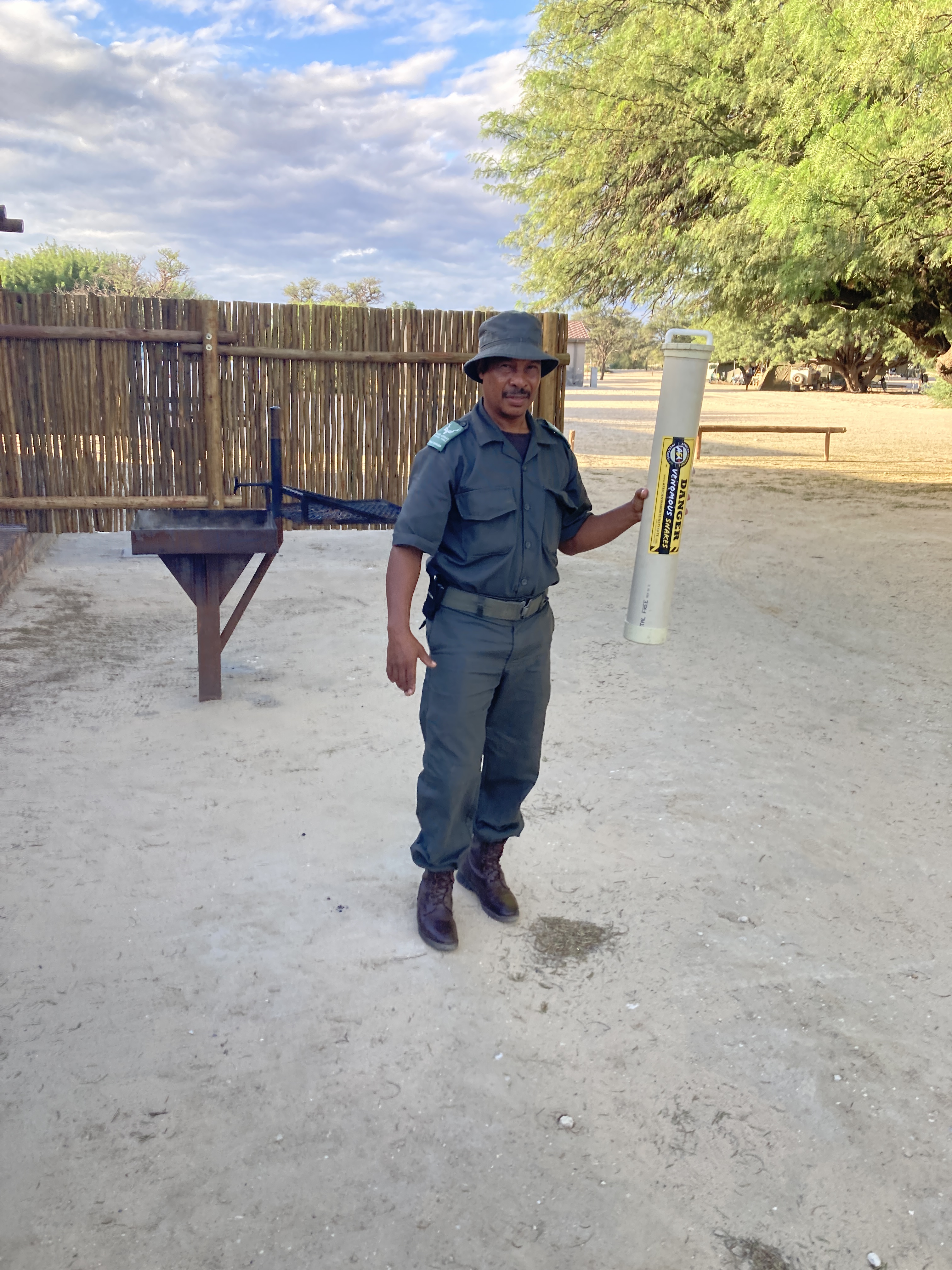
Our first camp was on the Botswana border, and we slept very well but woke up the next morning to find several uniformed staff examining the ground around our tent with forensic care. ‘A puff adder, ‘ said one, pointing to a clear trail in the sand. ‘Look, it went right past your tent.’ ‘Do they bite?’ I asked. Serious nods. ‘H-i-gh-ly venomous. But don’t worry. We’ll find it.’ And they did. Half an hour later, a ranger beckoned me over, and pointed at a zig-zag-patterned snake curled up in a gap next to a concrete step. The snake-catcher was summoned and used a long grabbing device to guide the animal into a plastic carrying tube but not without a fair bit of cautious jumping about and shouting from other park staff as the snake vigorously objected to being disturbed. Once in the tube it was driven off to be released at least twelve kilometres away.
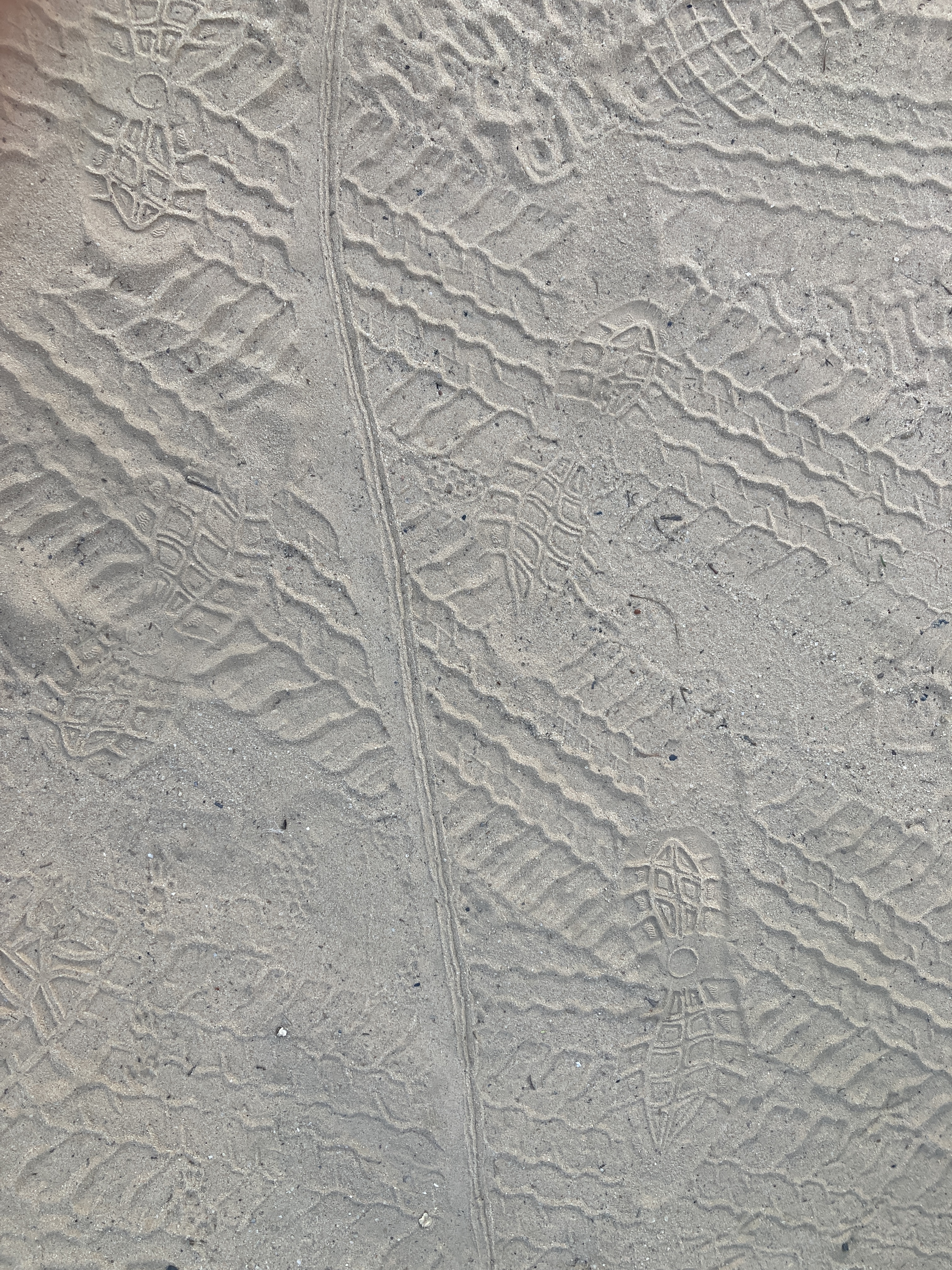
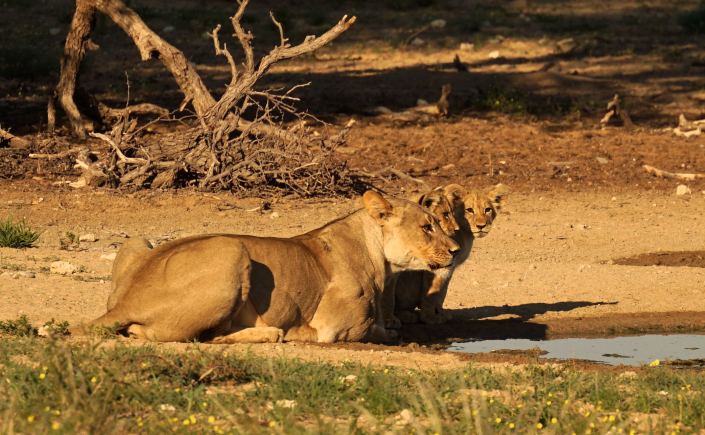
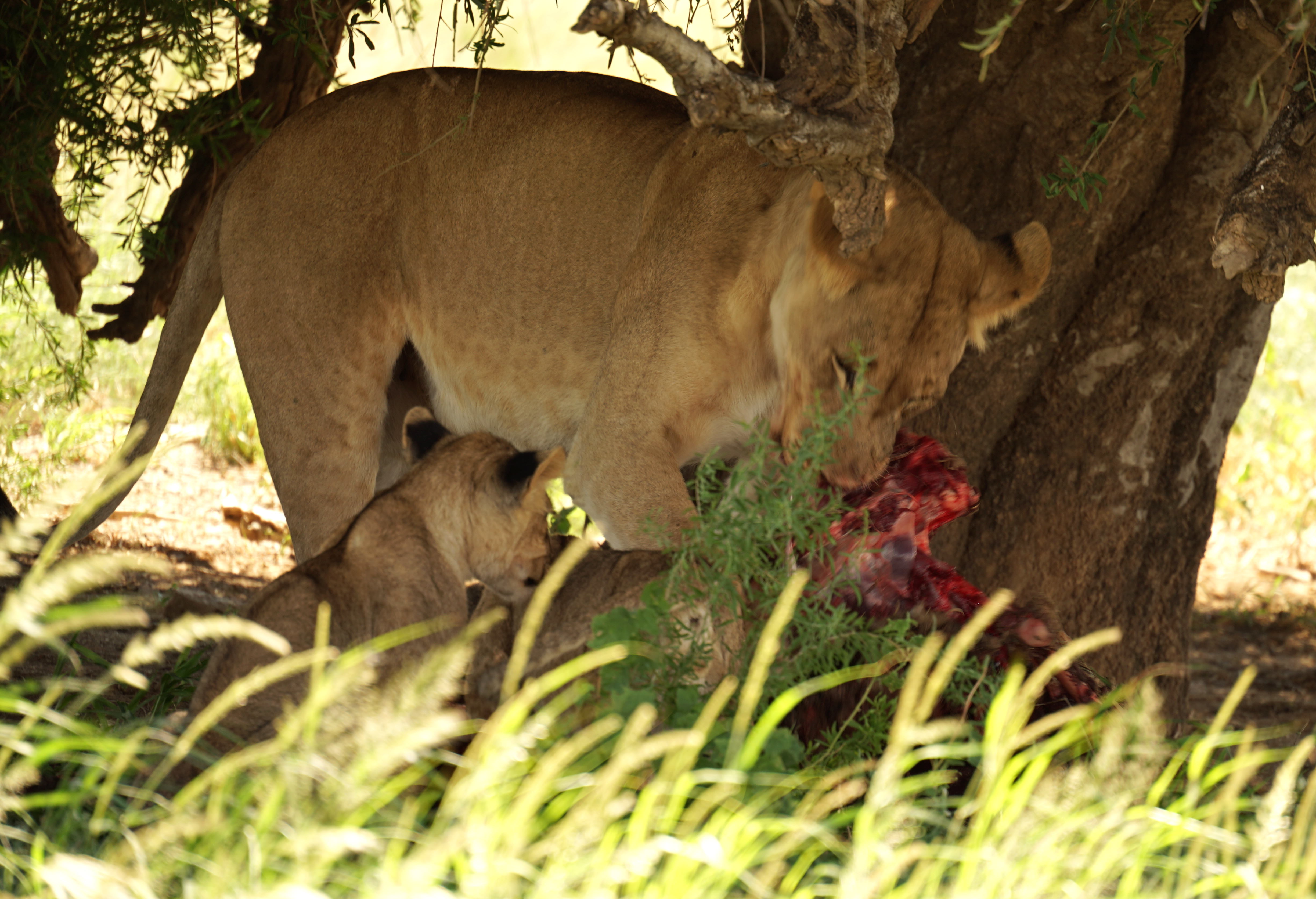
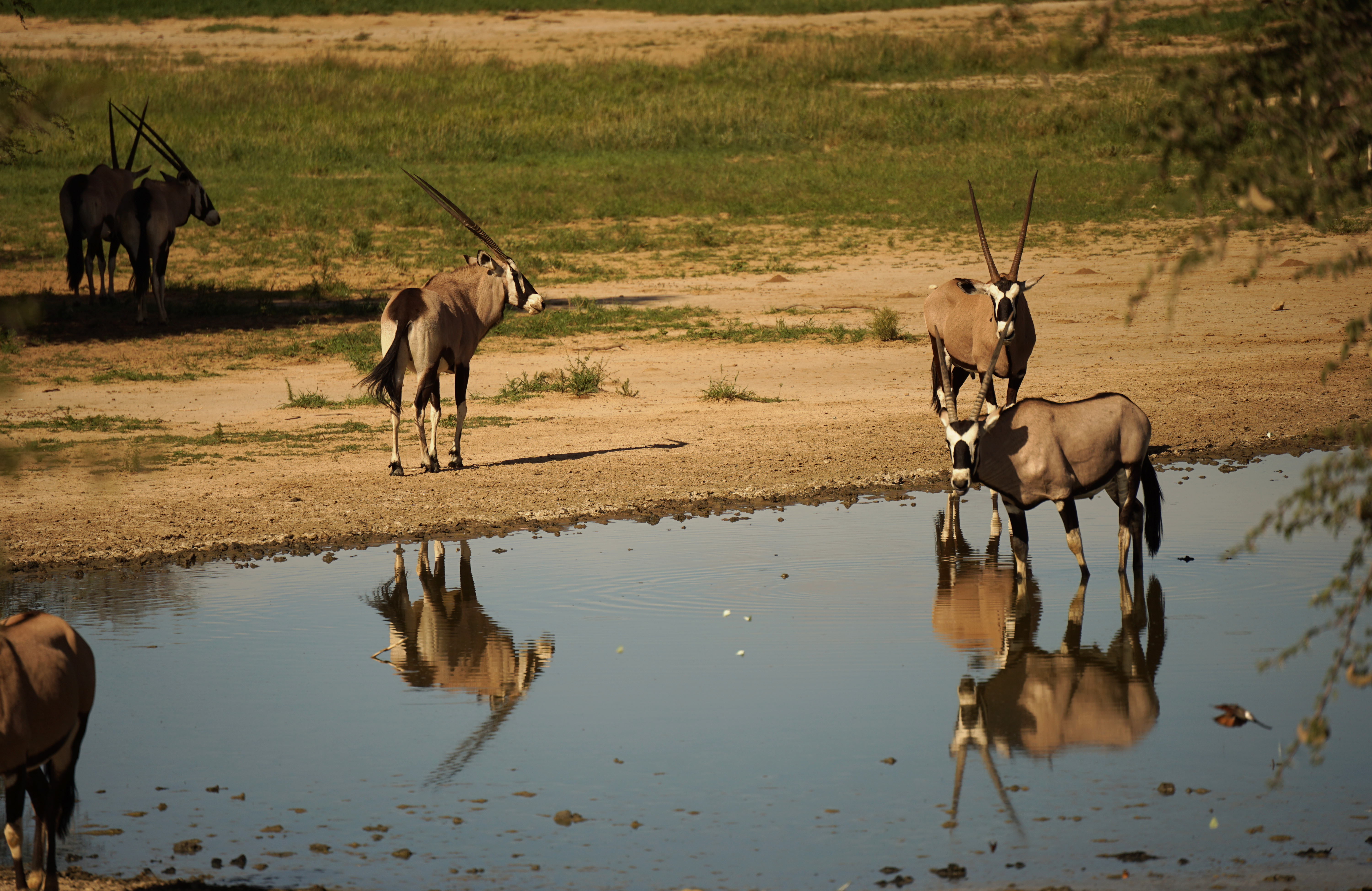
The Kgalagadi sand makes it particularly easy to spot animal tracks. That’s an invaluable way of identifying which animals are nearby and later that day we made use of a different type of clue — animal behaviour. We pulled up next to a waterhole as two red hartebeest came trotting along. It was a hot day and they were clearly looking forward to a cool drink but suddenly they stopped, stood stock still, and made off in the opposite direction. Something had upset them and then we spotted two lionesses in the shade of a tree. They were tearing at a fresh kill — probably another hartebeest — and with them were three cuddly-looking cubs who were tucking into the feast with equal enthusiasm. A jackal hovered nearby, warily awaiting its turn, and vultures circled above.
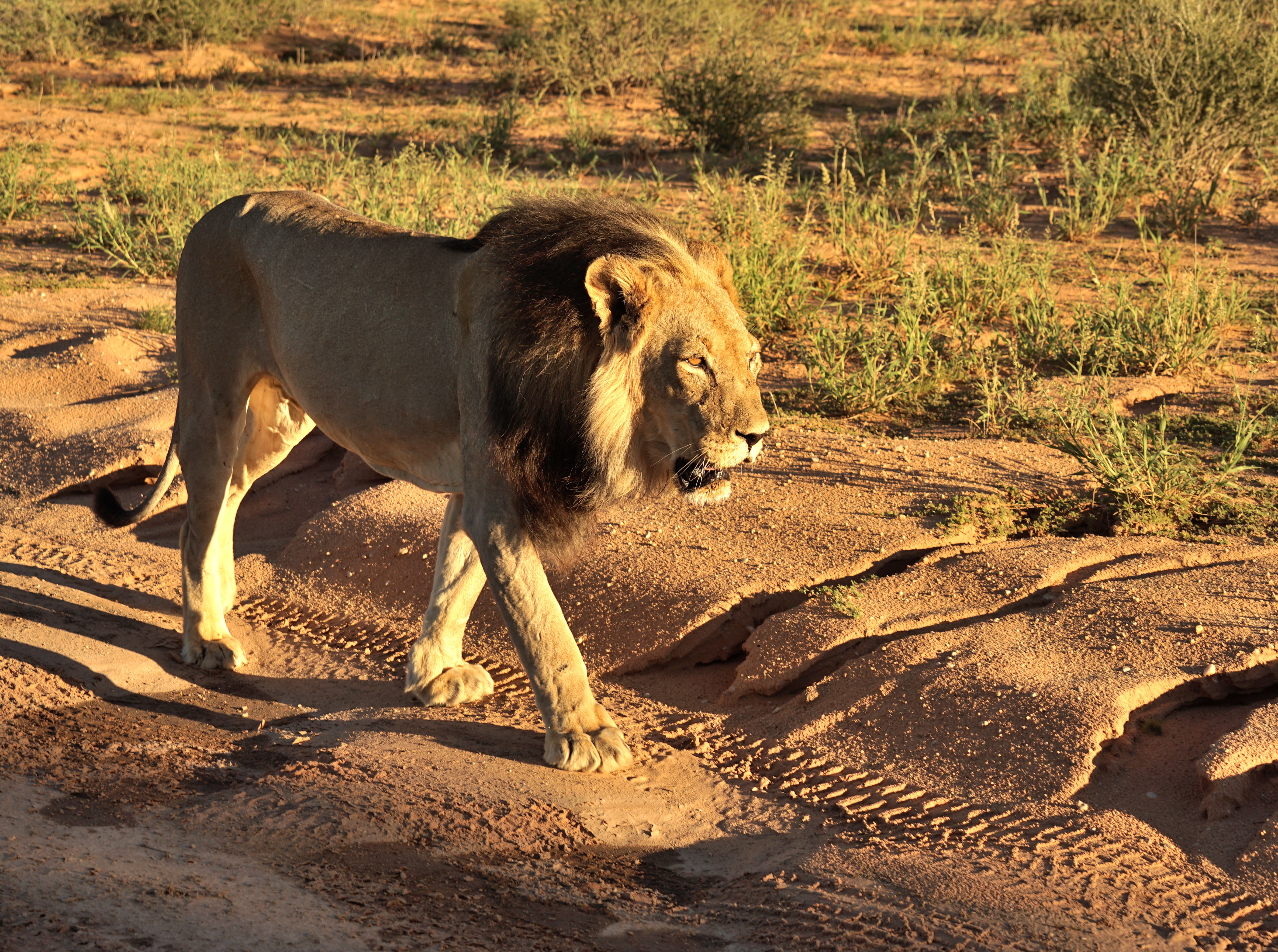
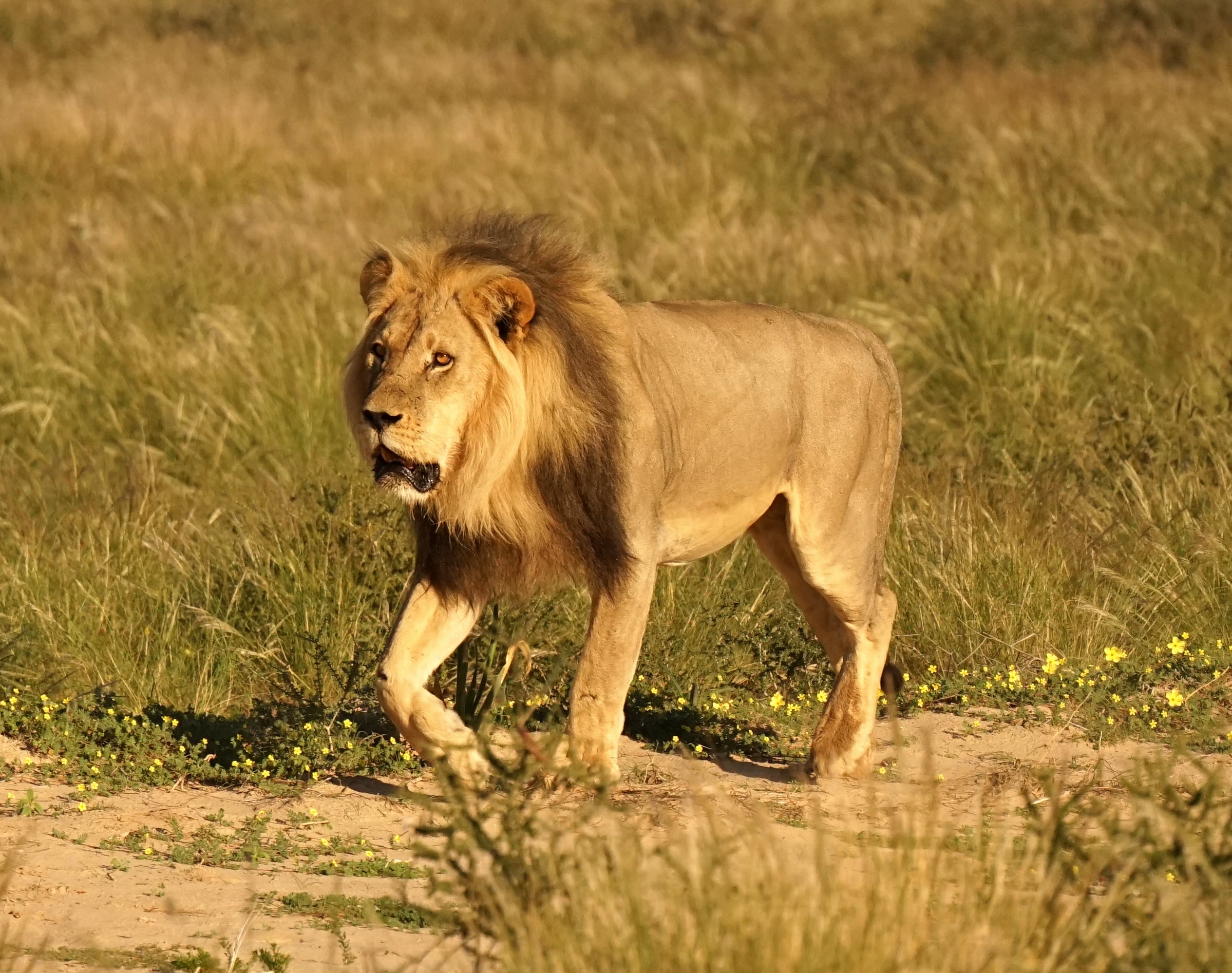
That evening we came across a male lion, possibly from the same pride and we stopped the car and watched as he plodded regally along the road towards us, stopping now and then to mark his territory with a great shower of urine. As he walked past my window I looked into his yellow eyes. He was entirely indifferent but for me it was a moment of pure magic.
Today, nearly two weeks later, I’m writing this on the verandah of our penultimate stop. We’ve pitched our tents and set up our kitchen six times now and since I know better what to do, I’m feeling much less like a spare part. Instead of finding these in-between bits tedious and longing to get them over as quickly as possible, I’m close to enjoying the process. Taking down the tents on moving days, packing up the trailer, then doing it all again at the opposite end of the day. Washing up in the communal scullery and chatting with other campers from all over South Africa and Europe. Swapping tips and stories of what we’ve seen. Some are only interested in the big cats, hunting them down with huge telephoto lenses. Others talk enthusiastically about the great eagles, the silent swooping owls, and the clouds of yellow canaries.
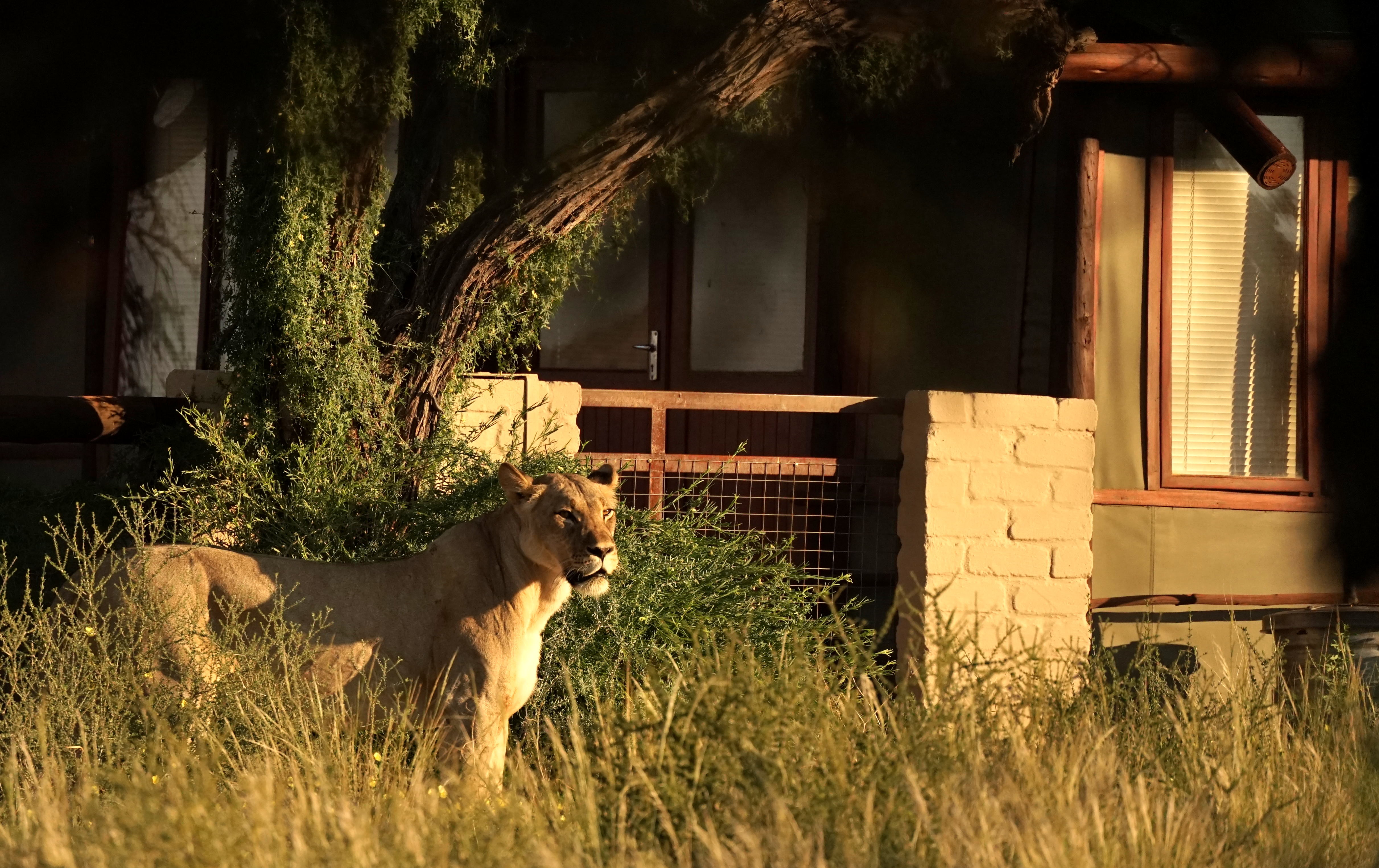
This four-day stop is our reward at the end of some very long drives, hard work and discomfort. We are at one of the smallest, most remote wilderness camps. There is one warden and four chalets for visitors. They are simply constructed from sandbags and canvas but with proper beds and linen, our own bathroom and a small outdoor kitchen. Best of all, we are very close to a waterhole with just a four-foot high fence between us and the animals. We are supplied with whistles which we can use to summon the warden but really there is nothing but common sense to keep us safe. A previous resident did not heed the warden’s instructions to shut their front door, and found a Cape cobra in the bathroom. They might equally well have found a lion curled up on the bed. There is great demand for these chalets and our friends were thrilled to get this booking. It’s certainly a special place.
The others have gone out for a drive today but I want to sit and think about what I’ve seen. I’ve got a striped tree mouse and a couple of black lizards for company, darting about in the sun, and I know there are pale-green geckos sleeping in cracks in the walls. They come out at night, scurrying around in the kitchen and sticking themselves to the outside of the windows where they give masterclasses in moth-hunting. Creep close. Lurk like a statue. Dart. Gulp.
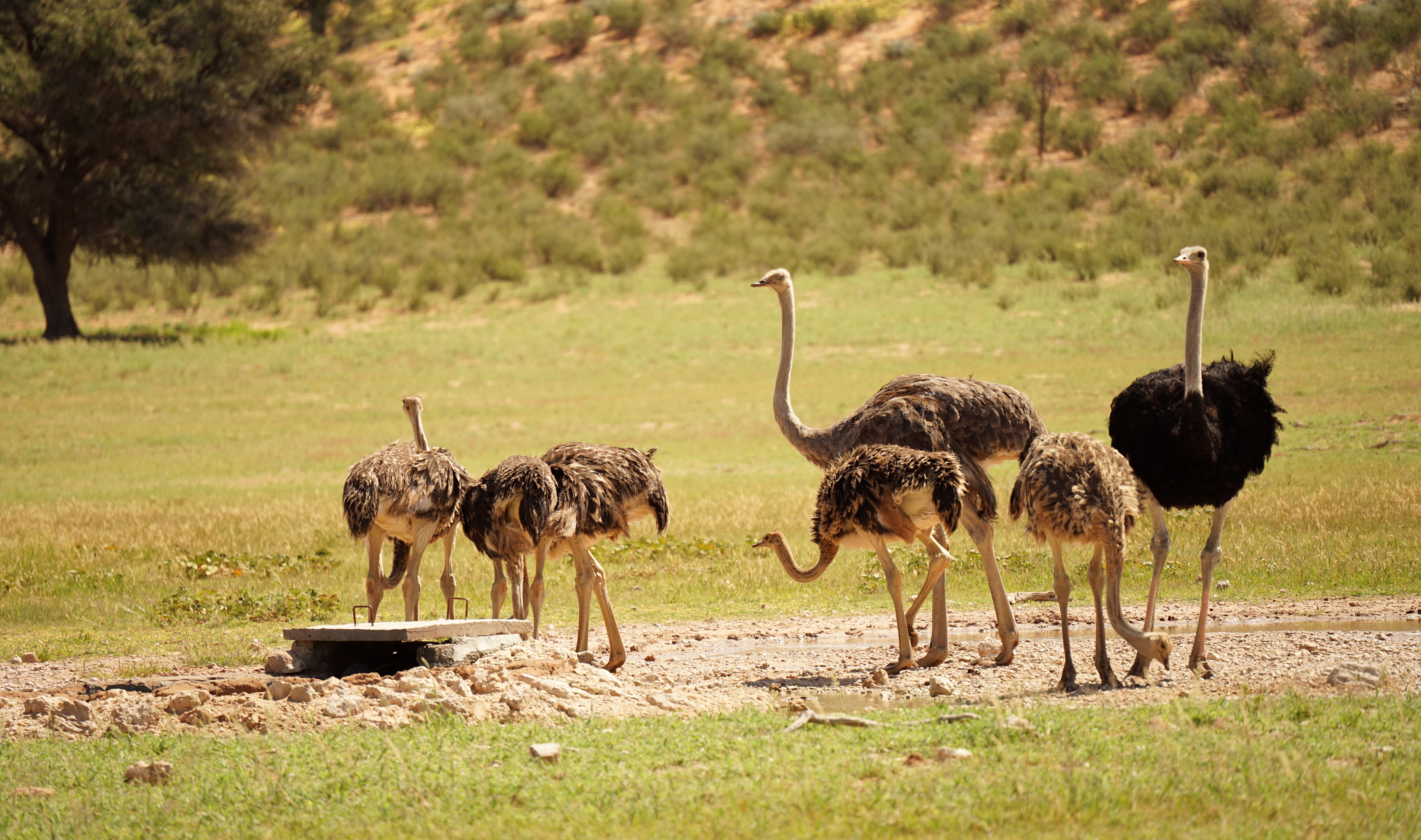
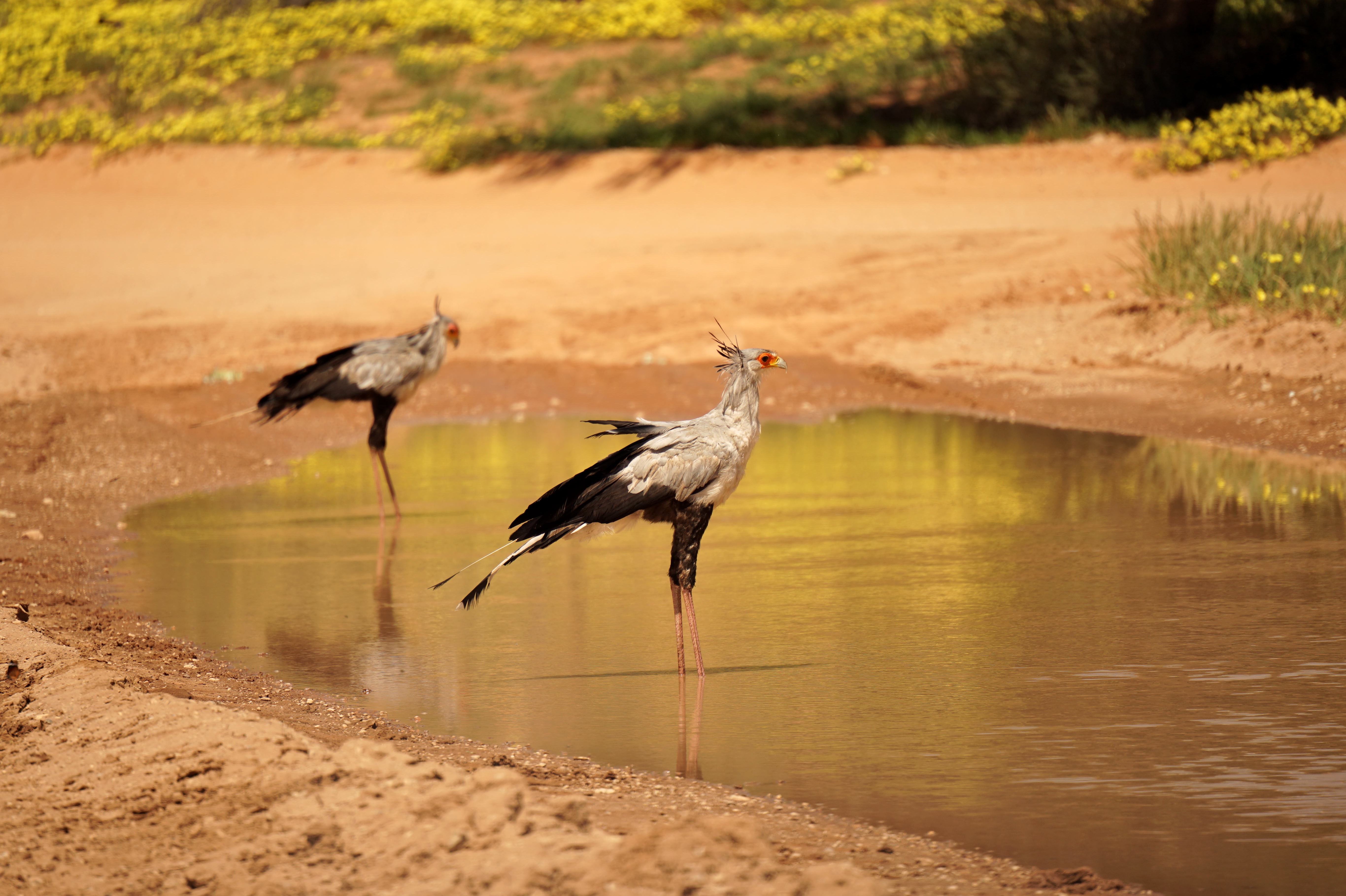
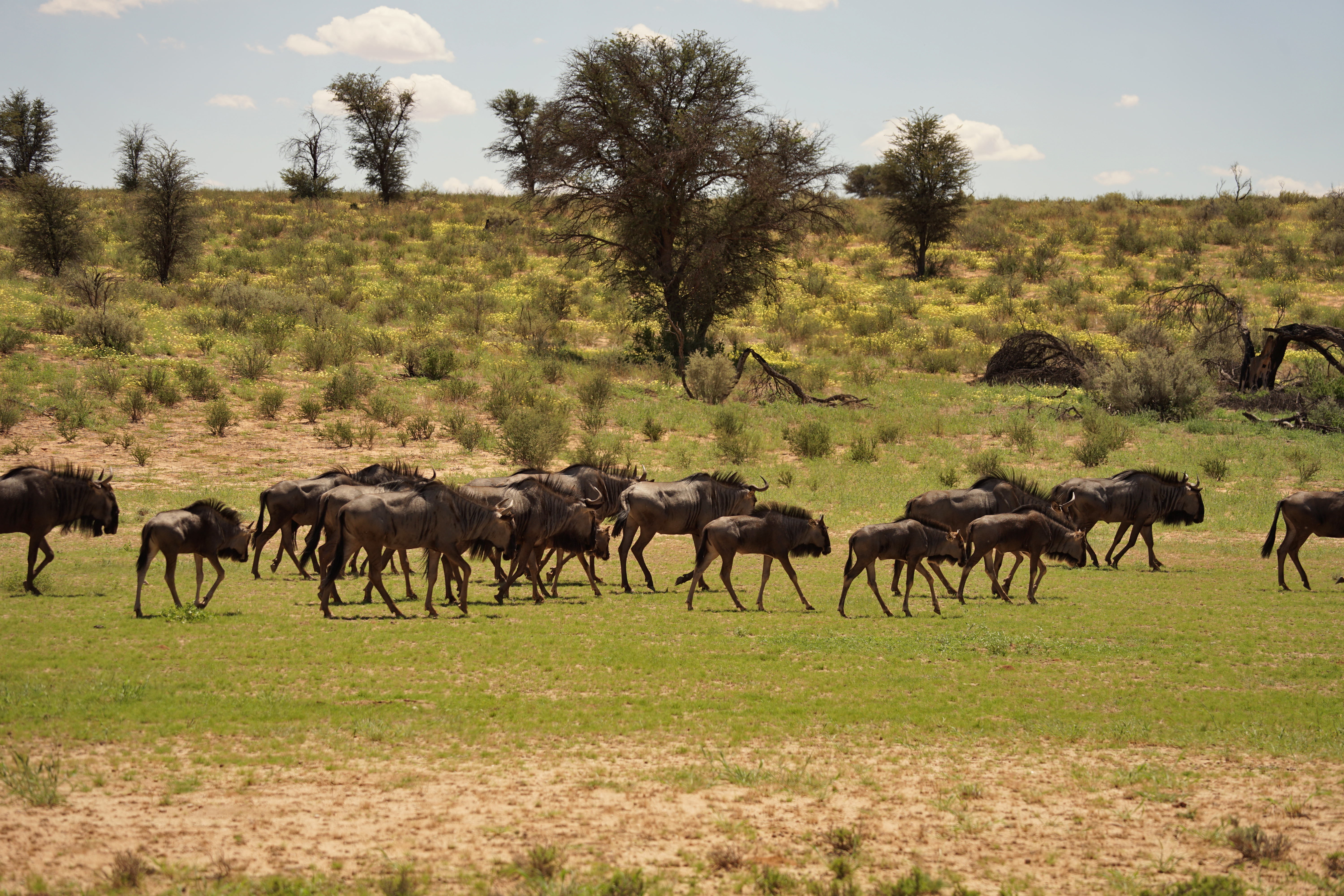
Whenever I look up there’s a different combination of animals at the waterhole. Some balletic ostrich parents with a clutch of teenagers, then a couple of secretary birds dunking their heads for a drink before setting off in a perfect illustration of their collective noun — a stride of secretary birds. Long-paced and intent. Next two wildebeest, and then a herd of them. Several days ago we saw a similar herd chasing around in big circles on the plain. On first sight they looked completely crazy but as we watched more closely, we decided that they were training the young ones to make the handbrake turns that confuse their predators.
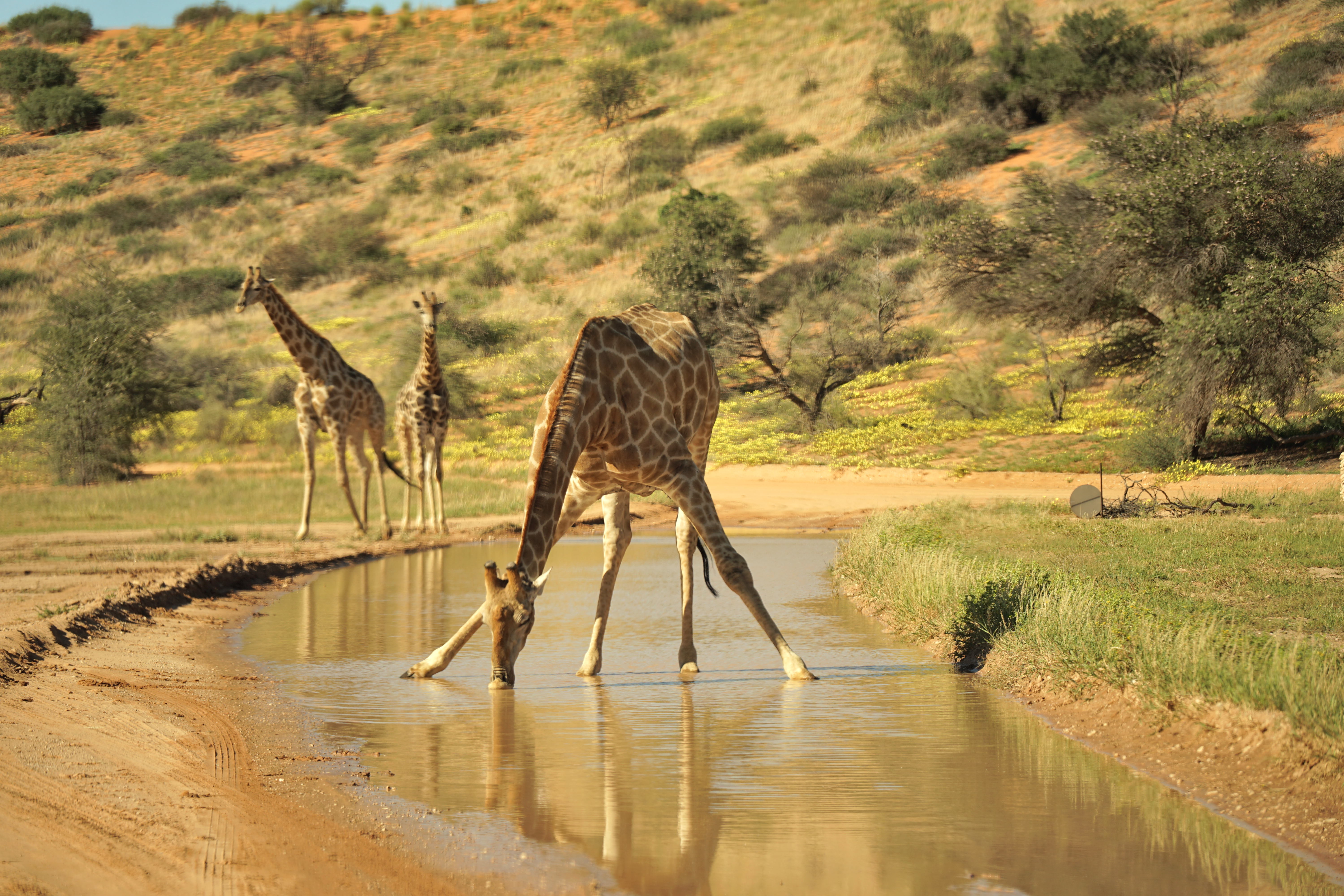
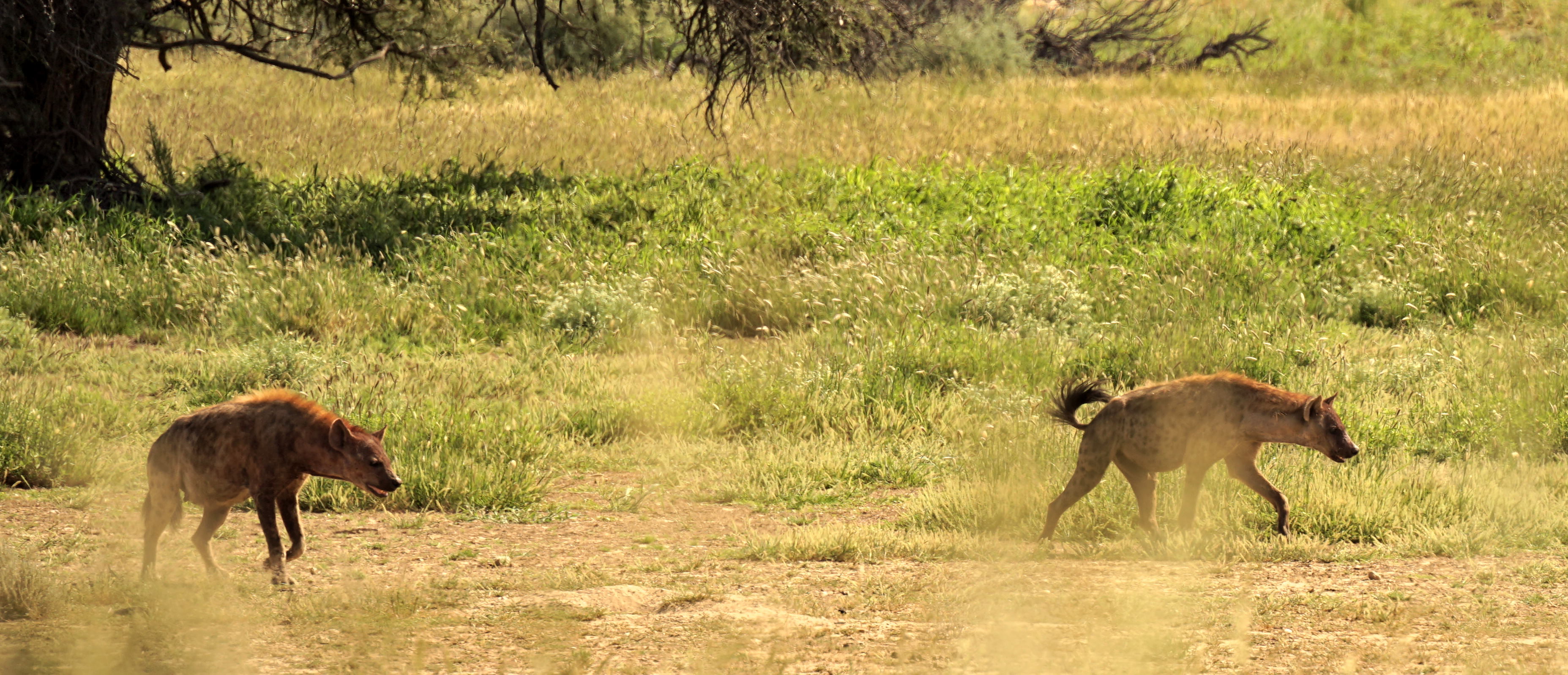
No giraffes yet but we’ve seen plenty on other days, managing to look both elegant and ungainly as they splay their legs and bend to drink. Every animal is beautiful in its own way. Spotted hyenas are often described as ugly but it was a thrill to see a pair marching across the plain. Thuggish and sinister, it is the females who are the most intelligent and lead the pack. They have the strongest jaws of all the predators and a pack working together is capable of killing a lion.
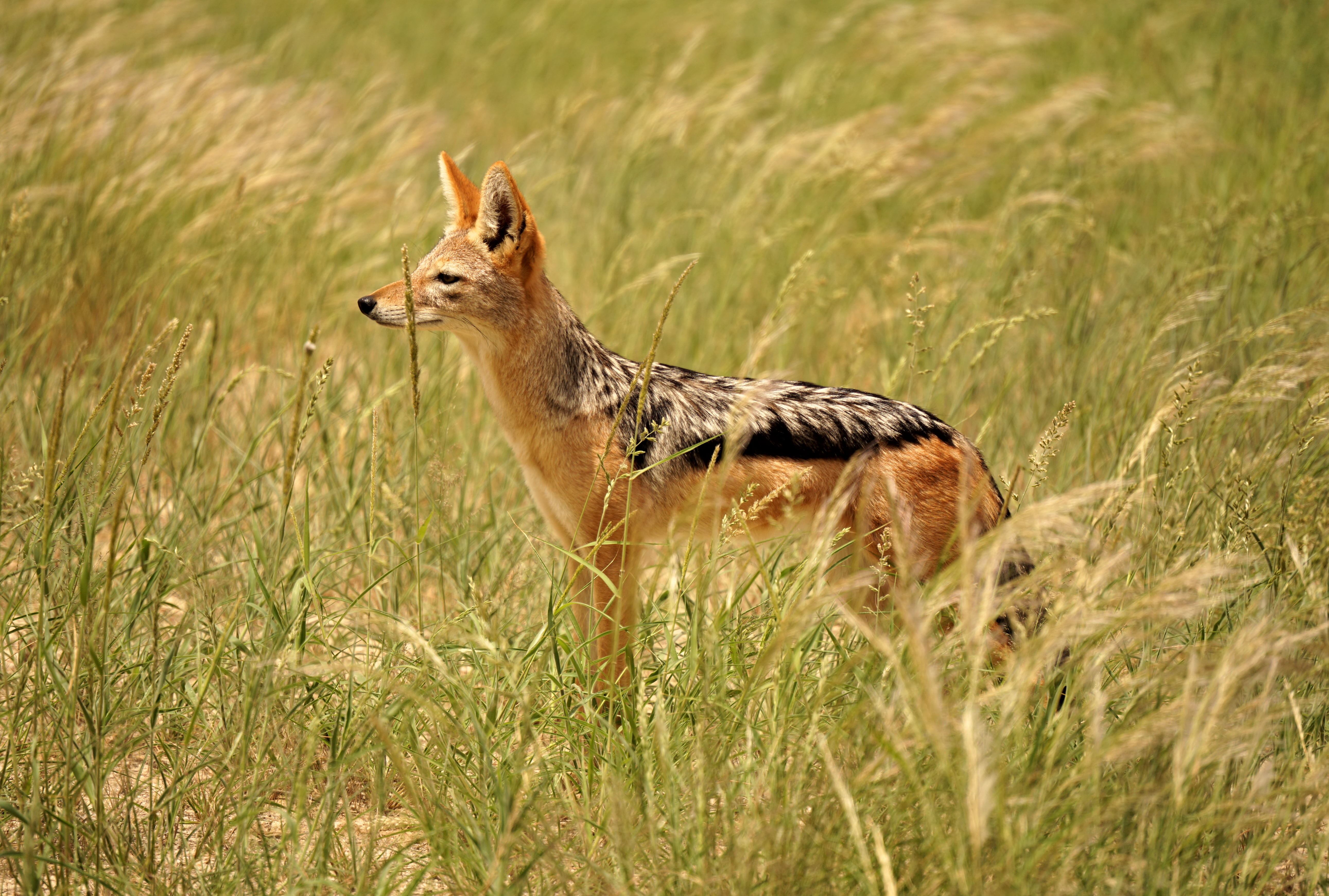
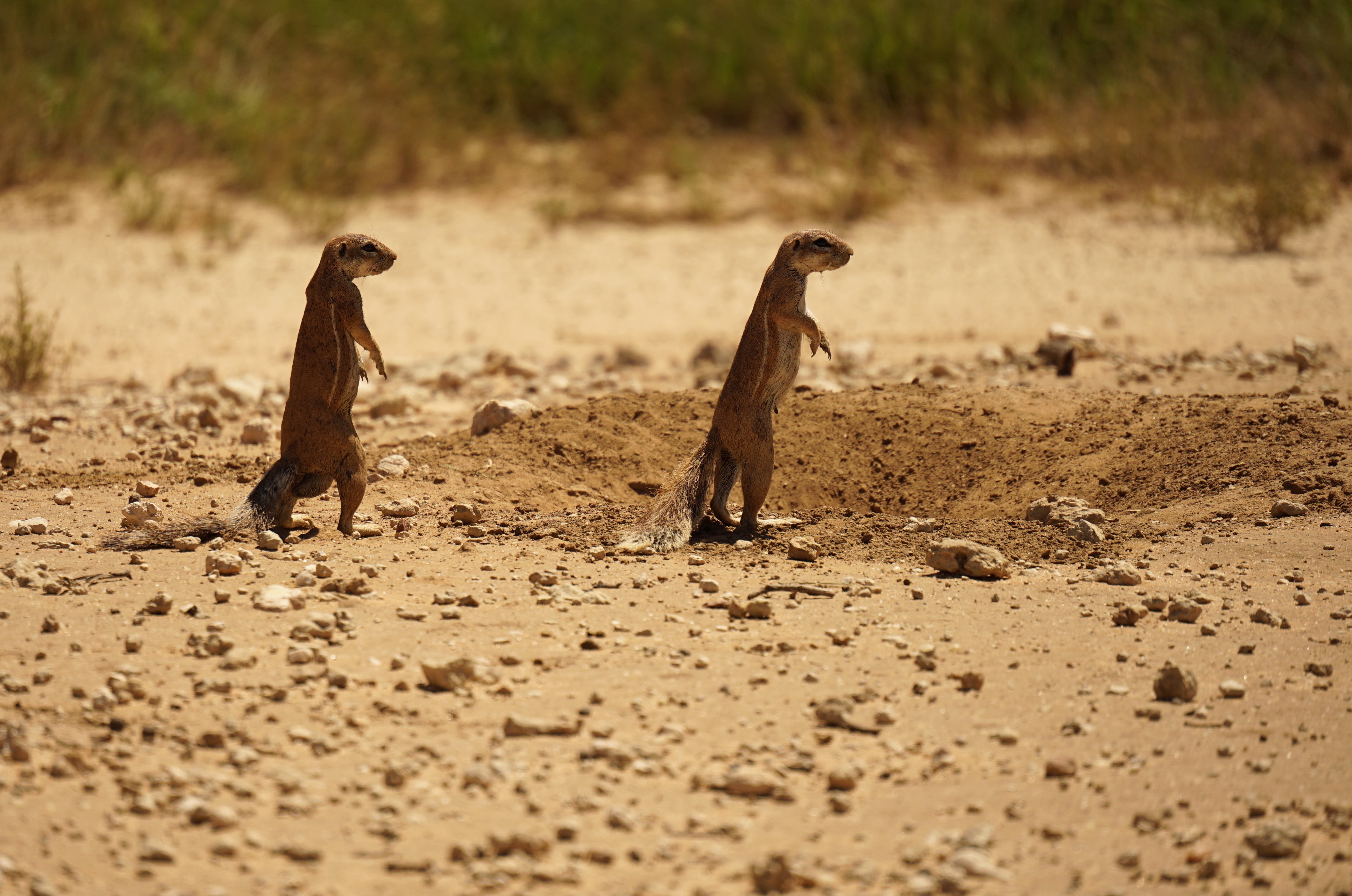
I’m particularly fond of the jackals and we’ve seen them in various moods — demolishing the remains of an old kill, playfighting, and digging in the sand then pulling out something long with evident delight. A ground squirrel perhaps, or a small snake. I love their jauntiness. They bounce along, bumptious and purposeful. Everything about them signals that they have places to go. Things to do. If I return to earth as an animal I might put in a request to be a jackal.
It’s been a wet summer and the desert is mostly covered in lush grass with carpets of yellow devilthorn flowers. Not what I expected but we got a taste of the desert landscape on an evening drive in a 4×4 with a ranger. Up and over steep red dunes. Again and again. We stopped to watch the sun go down. It may be a cliche but African sunsets and sunrises really are spectacular. The storms are impressive too, and one night early in the trip we lay snug in our rain-battered tent as the lightning flashed and great whipcracks of thunder kept us awake.
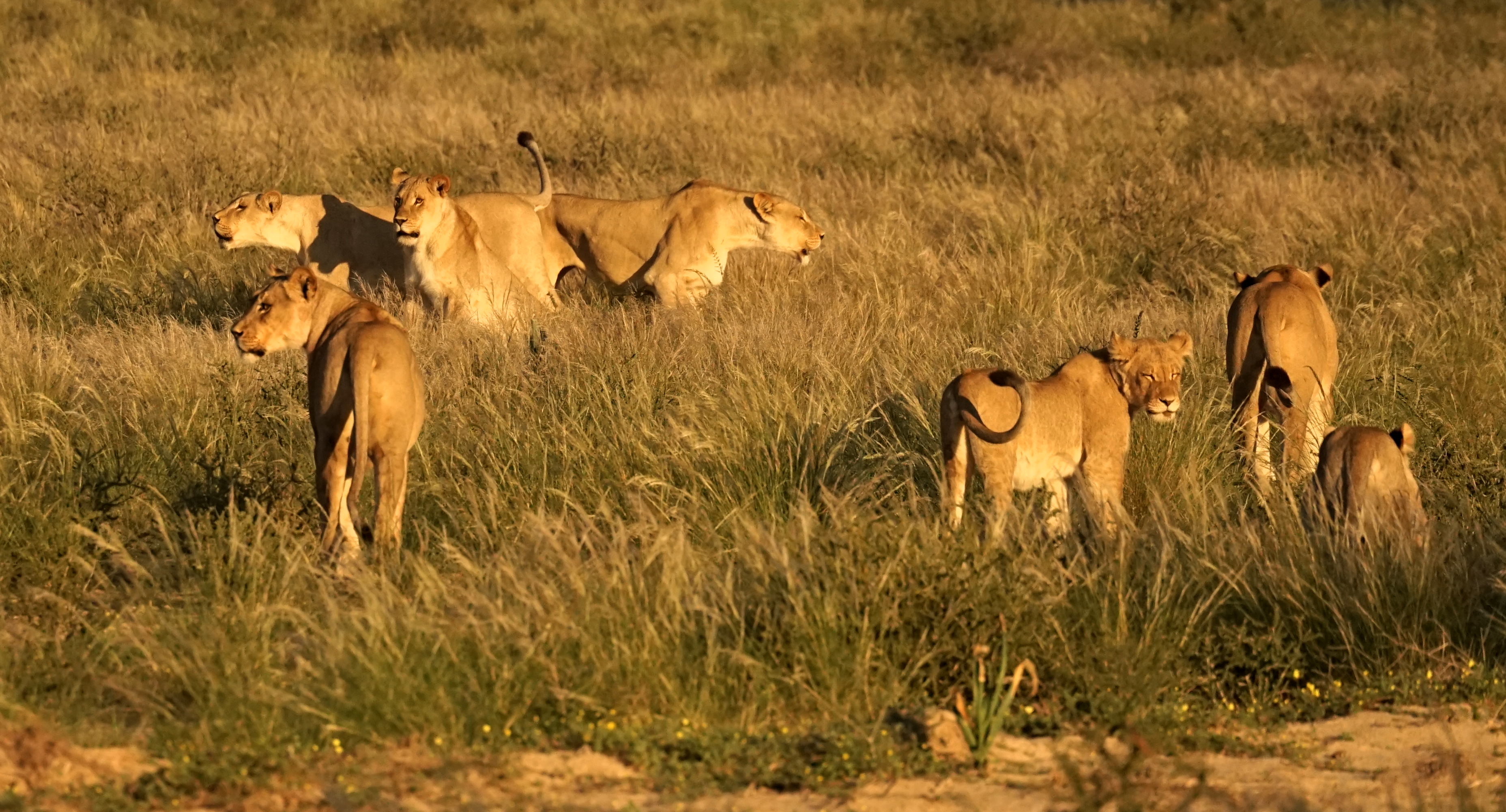
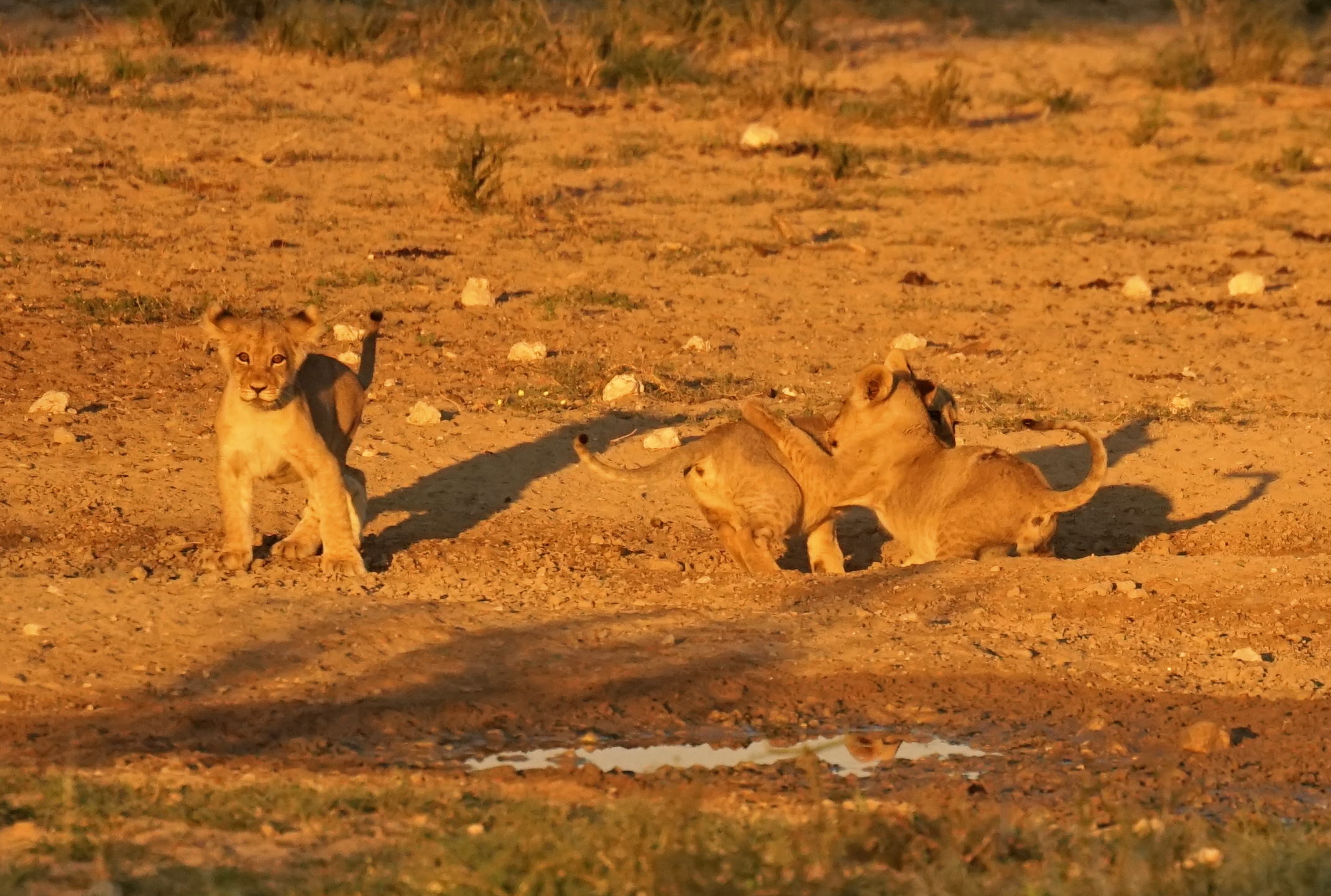
On the evening drive we came across a pride of lions lying in the road. It was dark and as the headlights lit up the road, they were unperturbed. Then they all stood up and wandered ahead of us — a couple of lionesses, two sub-adults and three chubby cubs whose progress was slow as they kept cuffing one another. One was particularly cheeky. A male adult lay in the grass to our right, far too proud to take part in cub-care. We also saw two Cape cobras on that drive. Butter yellow and several miles apart. Gliding along with sleek neat heads, ready to rise up at any moment with their hoods out. By that point I’d witnessed another camp kerfuffle with a snake-handler in pursuit of something black. Possibly a highly-venomous mamba or maybe a mole snake — non-venomous but can inflict a nasty bite. We never found out. This time the snake won the battle and escaped down a hole under a bush. Despite my initial fears, I’ve come to terms with the knowledge that at any point I could be very close to a snake. In fact, I know that right now there is probably a Cape cobra just yards away down a hole at the edge of Andries and Gaby’s chalet. Gaby saw it yesterday and the sand trails show that it has been in and out this morning. Similarly, I am containing my fear of spiders as at our last camp, I had to walk past the biggest, densest spiders’ web I’ve ever seen, on my way to the toilet block. It was strung up like a parachute in the branches of a camel thorn tree. I admired its magnificence but didn’t stop to seek out the residents.
We haven’t seen any scorpions…yet. Apparently they mostly come out when it’s windy.
Staring into the lion’s yellow eyes was a highlight of the trip and another came yesterday morning. We were just waking up when there was an almighty, unmistakable roar that sent us shooting out of bed and for the next few hours, a pride of twelve lions kept us enthralled as we stood on our verandah, sipping coffee and eating porridge. They drank at the waterhole, rested and prowled about. The cubs played, then huddled together keeping out of the way while the adults warned one another with great reverberating roars that shook the warm air. Eventually we had to get on with some everyday activities. Washing my underwear at the outdoor sink while keeping an eye on a lion, was a new experience. Later, as we prepared our evening meal under the starry sky, Andries observed, ‘We’re surrounded by lions.’
This feels a long way from my normal life. And a good place to be when terrible wars are kicking off. It’s a relief, too, to be in a pristine environment with no litter. And no worries about theft. The temperatures make everything harder but at least it’s a dry heat. All four of us are in our late sixties or early seventies and between us we’ve amassed a number of challenges. For me, hearing loss made worse by unfamiliar accents, painful corneal erosion exacerbated by the sand and dust, and the piercing sunlight which despite sunglasses has triggered frequent visual migraines. We’ve learned more about one another through living so closely and have had to navigate one another’s frailties, all the time aware that we want to make the most of what we have while it lasts.
We have two more days of blissful seclusion here and then one more round of tent-pitching at a camp where we are looking forward to joining two other intrepid South African friends. Then it will all be over and we will pass through the heavy metal camp gates for the final time. They will slide shut behind us and I will see the sign Keep gates closed. Dangerous animals. And as we start our long journey back to ‘civilisation’ and all the talk of war, I will wonder yet again which are these dangerous animals. Where are they? And most importantly, which side of the gate are they on?
Photos: Mike Poppleton
Comments are welcome. If you have difficulty posting here then email 60treatsandmore@gmail.com and I’ll post your comment for you.
 Treats and More
Great blog and photos, Lynn and Mike.
But you stopped too soon – like having sundowners sheltering outside the men’s ablutions during a thunderstorm at Tweerivieren 😂
LikeLiked by 1 person
Ha ha – not sure anyone else would have got the peculiarity and delight of that!!
LikeLike
Ahhhh, this has taken me right back there !! Truly a unique spot and experience.
love your writing and thank you 🤗😽
LikeLiked by 1 person
Fantastic African adventure! I am envious – but not of the vehicle/horse collision – thank goodness everyone human and animal walked away from that. Absolutely enthralling.
LikeLiked by 1 person
Beautifully captured with great photos. So happy that you all made it home safely and of course a big shout out to the kindness of strangers and the African wilderness
LikeLiked by 1 person
beautiful writing, capturing all the challenges, but more importantly, the magic and awe, of your extended journey through the kalahari 🤗
LikeLiked by 1 person