Hoarding Stories

stage

In the past ten years or so, I’ve moved house five times and now it won’t be long until I move again. Several of those moves have involved significant downsizing and each time I’ve pruned my worldly goods a bit harder. But now as I edge into a new phase I’ve become even more ruthless. Unless an object is useful, beautiful or of genuine sentimental value, it goes. I’m trying to rid myself of delusions about what I will use, wear, read, watch or listen to in the future.

moving

Fantasies about what we might be or do are a justification for holding onto things but so is the need to leave a trace. Without tangible reminders then there’s no proof that we ever existed. I’ve been thinking about this a lot recently since my friend, Helen, told me a story. She was helping one of her friends to clear some space and found a whole room full of memory boxes, each labelled with a different year. “Let’s look at this,” said Helen, lifting the lid on the one marked ‘2002’. At the top was a Motorola manual. “Have you still got the phone?” asked Helen. “No,” was the answer “but it might come in handy. I’ll keep that”. Then came several dental appointment cards. There were cinema tickets, too. The name of the film had faded past recognition but the fact that they’d been part of an Orange 2-for-1 deal was still legible. “I’ll hang onto those,” said the friend grabbing them, protectively. Next out of the box was a leaflet for the sexual health clinic. “You surely don’t want that, do you?” enquired Helen. The answer was inevitable.

I’ve found a different way to prove my existence to myself; I’ve written a book. Four and a half years ago I set out to have sixty treats before I was sixty. At that stage it was just a way of reconnecting with life. Many things had been on hold while I’d raised children and dealt with a few tricky blips. Each treat sat in the wings of my list like characters in a play and I didn’t know when they would step on-stage. But very soon after the first character, ‘Tate Liverpool’, spoke up, I realised that these were going to be rich experiences. Each was valuable because they were all things I’d longed to do, and I wanted to find a way to pin them down before they slipped back into the dark corners of the wings from which they’d come.

acropolis

Three hundred years ago, young aristocrats on their Grand Tours of Europe would commission artists to record what they saw. Today we rely on photos. But that was never going to work for me as I’m a haphazard photographer. And even when I remember to point my camera in the right direction, they’re only a partial record. Photos can’t recount stories of the people I met, the information I discovered, the smells and tastes I experienced, and the unscheduled branch lines I darted down. Only words can do that. I mostly eschewed souvenirs too. That’s just a further route to ‘stuffocation’. So, what I did was to make some notes.

Then after six months something unexpected and devastating affected my world and I was thrown off balance. It was a great support to have family and friends but I knew that ultimately I had to create my own path through the chaos. So I turned to the characters who were waiting in the wings and like the best of friends, they revealed hidden depths in a crisis. ‘New York’ was a sassy friend who took me out and provided stimulating distraction. ‘Italian cookery’ cajoled me to eat when everything tasted like cardboard and ‘Riding’ provided a moment when the sheer physicality of being on a horse counterbalanced the unhappiness and I tipped into joy.

horse

Throughout all of this I kept jotting down notes and gradually those notes became a few chapters. And somehow by a miraculous process, those chapters grew into a book. We all have certain things that grate on us and mine are the words ‘feisty’ and ‘suited and booted’. I’ve avoided those. Nor have I said anywhere that I’ve ‘been on a journey’ unless I have physically moved from one place to another. And I’ve been authentic to the best of my ability. Blagging only gets you into trouble as the novelist Ruth Rendell discovered. When she was a young journalist she filed a story about a local tennis club dinner and said that everyone there had thoroughly enjoyed it. The problem was that she’d failed to attend and therefore also failed to mention that the after-dinner speaker had collapsed and died half-way through the speech.

Now, at last after many stages the book is finished and next week I’ll receive the first printed copy complete with illustrations by the talented artist, Jo Dalton. I’d be delighted if some of you would read it when it’s published in May. And if you do then I hope that you’ll find something you can relate to from within the mixed hoard of stories.

31Treats_COVER_RGB

Flirt Like a Rhinoceros

valentine heart

I’m always pleased when I learn a new word and this week it was ‘murmuration’. The BBC News website has a stunning video of an estimated 70,000 starlings soaring and swooping in unison over an Oxfordshire nature reserve. It’s described as aerial ballet and the term murmuration comes from the sound of the birds’ beating wings. No-one knows for sure what triggers this phenomenon but there are probably many reasons including grouping together for safety and warmth, and for exchanging information about feeding areas.

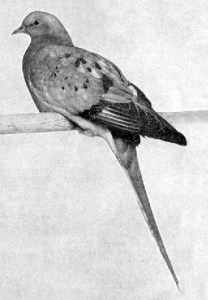
Seeing this video reminded me of the plight of the passenger pigeon. At one time these birds were amongst the most common in North America. The skies above the prairies would turn black and blot out the sun as billions passed overhead. An account from 1855 describes people in Ohio witnessing this event. Children screamed and ran for home, horses bolted and women hurried for the shelter of shops, gathering their long skirts as they ran. Some people knelt down and prayed in fear. Then the seemingly impossible happened: they became extinct—wiped out through shooting, netting and forest fires—with the last one dying in Cincinnati Zoo in 1914.

Passenger_pigeon

I learned about this extraordinary demise from watching David Attenborough’s Life of Birds. This is part of my Life on Earth treat. There are nine series covering all aspects of the natural world from the deepest oceans to the furthest reaches of the Poles and jungles. I wrote about Life in Cold Blood in a previous post—Serpent Tales.

Aside from the passenger pigeon there were a number of other moments that stood out in Life of Birds. As so often happens with treats, they filled in gaps in my knowledge of the world and gave me new things to relate to. Having kept poultry myself, I was particularly pleased to find out about chickens’ eggs. I’d often wondered why they only lay once a day, and now I have my answer. The yolk and the albumen sit in the chicken’s oviduct, and it takes a day for the glands to secrete enough lime to create the hard shell. Then I heard about the kiwi bird whose egg is a quarter of its own body weight; my eyes watered as I imagined giving birth to a baby weighing two and a half stone.

chickens

The grebes were remarkable too. They’re attentive parents and make their chicks eat feathers. These line their little tummies and protect them from being pierced by sharp fish bones.

grebe

The series was filmed in 42 countries and whilst many of the birds seemed unfamiliar and exotic, I was glad that the humble sparrow got a mention. I discovered that they have markings on their feathers, like Army ranks, which denote where they come in the pecking order. There are the privates that have to give way to their superiors, and then there are the colonels with their black bib markings. All ranks defer to them. This finding changed me in one of the small ways that I welcome. Now, whenever I sit at an outdoor table in a café, I’ll enjoy the antics of the sparrows even more by knowing that they’re not as random as they seem.

sparrow

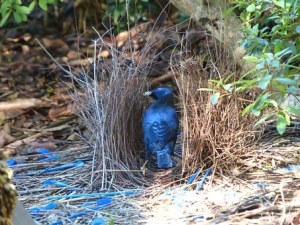
For me, though, the star was the bowerbird, also found in Australia. The male goes to great lengths to attract females. He builds a bower from sticks, positions it vertically, and then decorates the surrounding area with flowers, stones, berries, leaves, and coins or even bits of brightly coloured glass if they’re available. He then spends hours arranging and re-arranging them, whilst various females go from bower to bower, making their choice.

bowerbird

A clip from a different series gives some insight into the romantic preferences of another animal—the rhinoceros. We, the viewers see a male trying his damnedest to win a female whilst she heedlessly ignores him in favour of a bigger animal. She dances about and flirts in a way I don’t normally associate with rhinoceroses. The spurned male disappears for a while and we think it’s all over. Then suddenly there he is again. Back with a set of antelope antlers draped rakishly over his horn. Immediately Ms Rhino is bewitched and she trips off, following him enthusiastically.  I’d like to say that they live happily ever after but unfortunately relationships don’t always work out that way as you’ll see by clicking here.

So, for some that magic ingredient is good taste and possibly wealth. For others it’s individuality.  But if you’re a human looking for a mate then it’s worth bearing in mind an excellent snippet of advice I heard on Radio 4.  Marry someone cheerful. I intend to do that this summer.

Happy Valentine’s Day.

rhino

Animalic Allure

Eddie Redmayne

Eddie Redmayne. Photo by Gordon Correll

Last week I went to see the film, The Danish Girl. It’s based on the true story of the artist Einar Wegener who in 1920’s Denmark became Lili Elbe and had pioneering gender reassignment surgery. Eddie Redmayne gives a superb performance and has been nominated for an Oscar. I hope he wins.

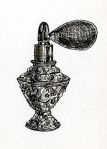
There were many thought-provoking moments in this film and as with all good culture, it changed me. This particular human struggle is one about which I knew very little. Now I know a bit more. And in amongst all of the drama there was a touching scene that made an unexpected impression on me. Lili is working in the perfume department of a smart store in Copenhagen and gives some advice to a customer, clearly relishing that she can at last share in the feminine mysteries of cosmetics. She tells the customer that in Paris, women never apply perfume directly onto their skin. Instead they spray it into the air and walk through it. I’ve taken to doing this ever since and it feels luxurious. It may be a frippery but it’s also a reminder of Lili’s difficult life and of a raw, beautiful film.

Perfume_bottle

I love perfume and don’t feel fully dressed without it. However, I’ve had a few ups and downs in my relationship with various brands. Many years ago when my eldest son, Will, was about six we were in a department store together. As we walked through the perfume section I stopped and casually picked up a tester bottle. It was  plain black glass with the word Poison written clearly in gold across the middle. I was just about to have a quick spray when Will screamed and grabbed my arm. He was already a good reader and had devoured a number of dark fairy tales. ‘Mummy,’ he said bravely and urgently, ‘don’t touch that bottle – it’s got poison in it.’

poison perfume 2

The next perfume blip came a few years afterwards when I was given a bottle of Chanel Allure for Christmas. On Boxing Day I put it on for the first time and my then husband, said in his best flirtatious, husky voice, ‘Darling you smell alluring.’ Unfortunately my hearing is not so good on that lower register so what I heard was the far less flattering, ‘Darling you smell of urine’ but delivered in a perplexingly sexy manner.

Later, when the ‘then husband’ had left and I was on my own I would often wear perfume in bed or spray it on my pillow. Something just for sheer self-indulgence and which made me think of Marilyn who famously said that all she wore in bed was her Chanel No 5.

chanel number 5

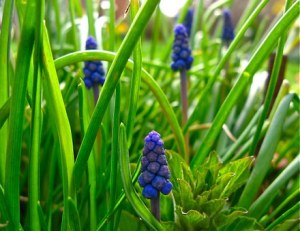
Perfume is powerful and transports us to other times and places, uncovering buried emotions and memories. For me, one of the sweetest examples is the smell of grape hyacinths which instantly takes me back to the Spring when I became a mother. I remember the flower arrangement that was sent to me in hospital and I tune in again to those primitive overwhelming feelings of confusion and wonder. A whiff of the clean, powdery sweetness of Johnson’s Baby Bath and once more I’m in a bathroom twenty years ago with black and white tiles, squealing slippery toddlers and damp-kneed jeans. Most people find that smell is better at conjuring up memories than the other senses and the reason for this seems to lie in the anatomy of the brain. Smells are picked up by the olfactory bulb which is inside the nose and extends along the lower part of the brain, connecting with the amygdala and hippocampus.  These are involved in emotion and memory. The information from sight, sound and touch stimuli does not pass through these areas.

muscari

My fascination with smell led to me putting ‘Learn about perfume‘ on my treats list. In common with all the others I had no idea when or how this treat would come to life, but then I came across a rather fabulous young woman who calls herself Odette Toilette. She organises talks about the social history of perfume, and so I signed up for an afternoon of exploring 1930s scent in the basement of a smart perfume shop in Marylebone.

It turned out to be a lot of fun. When I arrived I was handed a glass of pink Prosecco and then in the company of twenty-three women and one man I spent several hours hearing about the aspirational perfumes of the 1930s. These accompanied the new age of cars and planes and were an antidote to the mass poverty of the 1920s. We had a chance to smell many of them too, as Odette buys up old bottles of perfume from house sales and auctions. Provided they’ve been kept in a cool, dark place they can survive well. Tiny tarts and miniature cakes were handed round at regular intervals. My favourite was a mouthful tartlet filled with passion fruit puree.

orange blossom

For several hours in this London basement the talk was of vanilla, jasmine, lavender, rose and orange blossom. These all sounded charming and innocent but in fact many of the perfumes of the era were marketed with decadence in mind. Some were said to give you strange surrealist dreams if you sprayed them on at bedtime. ‘Taboo’ and ‘Can Can’ were best-sellers and the fashion designer Elsa Schiaparelli produced ‘Shocking’. This was inspired by the Lady Gaga of the day; Mae West who drawled, ‘It’s not the men in your life that count. It’s the life in your men.’ And as we munched on our dainty tartlets and minicakes we were introduced to the animalic tones which are derived from ingredients like civet and musk. Odette said they are so naughty that cats and dogs will follow you down the street if you wear them.

civet

Since then I’ve done a couple of Odette’s other Vintage Scent Sessions with friends. Debs Gone Bad was peppered with tales of the perfumes that various debutantes wore whilst shocking polite society and getting embroiled in scandal. The other was about 1960s perfumes including hippie patchouli and the scents favoured by influential men like JFK and Muhammed Ali. They’ve all been very enjoyable but I’ve been careful to avoid wearing Allure. It may or may not make me smell of urine but with all those cats and dogs waiting outside, I’m not taking any chances.

marilyn-monroe

A Postmodern Mystery

sense

This week David Bowie is nowhere and yet he is everywhere. Countless words have been written about his death, his legacy and his life. There have been reminders of his achievements: album sales of 140 million, the creation of his musical alter egos, and the ability to surprise right to the end with an apparent epitaph in the final album. Historic Dutch church bells rang out Space Oddity in a curiously sweet yet grave tribute whilst the video went viral. And there was an unexpectedly comical moment when a Heart FM Radio newsreader announced that David Cameron had died, before quickly correcting herself.

david bowie

At significant moments there is usually something for those of us who like lists and this was no exception. In amongst ‘David Bowie’s 24 best songs’, his ‘top 100 books’ and ‘the five best David Bowie songs that you’ve never heard’, Glastonbury’s Michael Eavis said that Bowie was one of the three greatest popular artists along with Frank Sinatra and Elvis Presley. The immediate surprise is the omission of the Beatles, but it’s an interesting trio as they represent quite different facets of the twentieth century. You can learn a lot about people’s tastes by asking which they prefer. In my house I was out on a limb. I went for Sinatra, Bowie, Presley. But Bowie, Presley, Sinatra was the favoured ranking.

sinatra

And then there was the comment that made me think more deeply. Will Gompertz, the BBC Arts Editor described David Bowie as ‘the ultimate ever-changing postmodernist’. But what does this mean? Many of the most intelligent people I know, are hazy about postmodernism and Hans Bertens begins his book ‘The Idea of the Postmodern’ with the words: ‘Postmodernism is an exasperating term’. I never had a professional need to get to grips with this particular philosophy so I remained ignorant for many years, getting irritated whenever I heard anyone use the word but never quite summoning the concentration to demystify it. Eventually, though, I worked out that one of the key ideas is that there are many realities within any situation. This contrasts with the previous prevailing belief that science and rationality can explain everything. But even with this simplified explanation, I couldn’t make sense of it. Then I saw an extraordinary theatre production that put at least some aspects into perspective.

crow

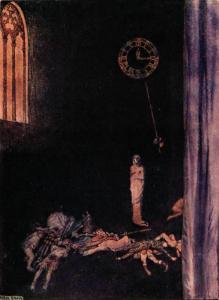
In 2007 the innovative theatre company, Punchdrunk, staged ‘The Masque of the Red Death’. It was based on the short story by Edgar Allan Poe together with several of his other tales. The venue was the rambling Battersea Old Town Hall which was dimly lit and decked out in Gothic style, with sumptuous but faded fabrics, cobwebs and a real inscrutable black cat. Performances took place simultaneously in rooms, corridors and stairways spread over several floors and we, the audience wandered round at will. We dipped in and out of scenes that included a perfumery, opium den, a nineteenth-century music hall, bedrooms and a morgue. The actors moved amongst us and we wore white masks to distinguish ourselves from them. I went with my three eldest children and soon after we arrived, we split up and went in different directions through the building. The result was that we each had a unique experience of the evening. Afterwards we shared our thoughts and realised that our understanding of the production was entirely dependent on which bits we had happened to stumble upon.

masque of the red death

Illustration: Byam Shaw

Suddenly I got what postmodernism was about and its approach seemed applicable to life in so many ways. In any kind of disagreement it’s valuable to remember that each party can only have partial insight into the other’s position. On the one hand this is obvious, but on the other hand it’s all too easy to forget in the heat of the moment.

Postmodernism is also about taking influences from diverse sources and combining them in innovative ways. These influences might be multicultural, historic, fictional or science fictional. This is where the term postmodernist is particularly relevant to David Bowie as he was a mysterious chameleon with a number of incarnations. I may not be a creative genius who can come up with alter egos like Ziggy Stardust, Aladdin Sane or The Thin White Duke but I have gone through a number of selves. We all do. My relatively recent ones have included Animal-Mad Country Mum and Animal-Free Urban Divorcee. I feel significantly different today from the person I was ten years ago, or even three years ago. New experiences and ideas tweak at our identity in subtle ways as we progress through life and we never know ourselves completely because we change. Like David Bowie, we are all mysteries and our reactions are often surprising; not least of all to ourselves. We present different images in different situations and a person, place, book or film that we appreciate at one stage of life may disappoint at another.

david bowie 2

So, in this week when the news has been so full of David Bowie, I’m glad to have revisited my interest in postmodernism and to have got my understanding of it slightly straighter. However, there’s no room for complacency in my philosophical struggles. In reading about it I’ve been dismayed to come across articles like ‘ Postmodernism is Dead’ and worst of all to discover that there’s a new mystery to tackle: after postmodernism comes post-postmodernism. Give me a couple more years and I’ll let you know how I get on with that.

think

Not Guilty

fireworks 2

It’s the beginning of another year and I’ve been wondering what to choose for my New Year resolution. People have been doing this for hundreds of years; the Romans saw it as an opportunity to improve their lives and there was a time when I used to sit down on New Year’s Eve and make eighteen resolutions. Yes—EIGHTEEN—three in each of six categories. Relationships, work, home and health were covered and it’s now so long ago that I can’t remember what the other two were. But I do know that the mere act of creating a list was satisfying; a list brimming with the comforting belief that each item would be addressed comprehensively and effectively. This enthusiasm continues today in the form of my treats list, but looking back now, my resolutions list seems ridiculously earnest and I feel guilty about it.

It was naive, too. A study by psychologist Richard Wiseman looked at the New Year resolutions of 3,000 people and found that 88% didn’t manage to achieve them. These findings echo my own experience as year after year the same general themes would crop up; be a nicer person, be better organised, be more successful, and be thinner and greener. And each year I would review the previous year’s goals and pretty much nothing would have changed.

list

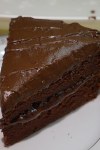
One of the reasons why willpower is so difficult to muster is that we have too many other things to think about. The prefrontal cortex is the part of the brain that deals with purposeful behaviour and an experiment by Stanford University’s Professor Baba Shiv demonstrated how it responds to pressure. He divided 165 undergraduates into two groups and gave them things to remember. One group got two digits while the other group got a sequence of seven digits. They were told to walk down a corridor and go into a room where they were to say these digits out loud. But just before the entrance to the room they were offered a ‘reward’ for their efforts: either a piece of chocolate cake or a bowl of fruit salad. The students who had the longer sequence to remember were more than twice as likely to choose chocolate cake than those who had the simpler task. The fact that this group tended to choose the less healthy food suggests that willpower is significantly compromised by having other things to think about. And with most of us juggling busy lives this has implications for whether we manage to keep to our resolutions.

chocolate cake 5

Perhaps in the past I simply had too many resolutions to work on at once. But I do like the sense of purpose they give and I’m not ready to give up on them yet. This year I’ve resolved to choose just one, so it had better be good and I’ve been racking my brain to think what it could be.

Something health-related is an obvious candidate; I could definitely benefit from a regular exercise programme. This will have to be swimming since I detest getting hot and sweaty and a good resolution would be ‘to swim three times a week’. But on second thoughts I know what will happen. Anyone sensible would make the days go along the lines of ‘swim, no swim, no swim, swim, no swim, swim, no swim’. In my case what will happen is ‘no swim, no swim, no swim, no swim’ and then ‘swim, swim, swim’ all packed into the end of the week. That sounds like a recipe for stress.

Or rather than immersing myself in water, I could decide to drink it instead. We’re constantly being told to stay hydrated but like many things that should be beneficial, I find this difficult. A while ago, I decided to drink two litres of water a day. I kept it up for a couple of weeks and there was no doubt that my skin had more of a glow to it. However, I failed to acquire the promised extra energy as I was exhausted from getting up four times a night to pee.

water

Another resolution could be ‘to have a cleaner, tidier house’. It would be fairly easy to introduce regular dusting into my life. Though, as Molly’s boyfriend pointed out in a recent fit of logic, it should really be called ‘dedusting’. But actually when I think about it, I’m not bothered about a bit of dust and no-one ever said on their deathbed that they wish they’d done more dedusting.

duster

However, there is one thing that I’d like to work on this year. It was prompted by hearing Nigella Lawson on Woman’s Hour, some time ago. She said, ‘Guilt is about me, me, me,’ and I’ve wondered about it ever since. It made me realise that I say, ‘I feel guilty’ about all manner of things like not contacting friends, breaking promises, and being thoughtless. But it’s all too easy to say the words and it doesn’t help anyone, neither the person I say I feel guilty about, nor me. So from now on I’m aiming to avoid this particular sentiment. I’ll try to act on the negative feeling and to be more thoughtful but if I don’t manage it, then that’s just the way it is.

And I take back what I said in that first paragraph above—I no longer feel guilty that I used to make eighteen resolutions. I’ve just done something about it.

happy new year

Christmas Chemistry

chemistry set

This week I was having a quiet soup and sandwich sort of lunch with the 95-year old gentleman who came to live with me earlier this year. I’ve written about him previously in The Old Man and the Pea and Enhanced Eating.

‘What was Christmas like when you were young?’ I asked him.

‘Oh, it was alright,’ he answered, ‘except for the terrible one.’ Then he continued munching his cheese and pickle sandwich.

I waited patiently. ‘You can’t leave it at that,’ I said eventually. ‘You’ll have to tell me.’

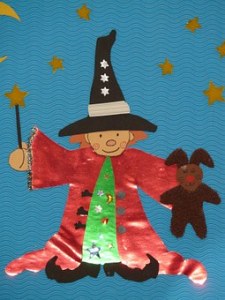
‘Well—’ he began, ‘—I was always keen on the idea of chemistry and when I was about ten I heard that some clever fellow had come up with a toy for children, called a chemical conjuring set. I imagined the test-tubes and how you could put in chemicals and mix them to make different colours. So I asked for one of these and was very excited; I couldn’t wait for Christmas morning to come. But there was a terrible misunderstanding. When I opened my present it just had things in it like a dice and some cards. And there was a silly hat that you were supposed to wear when you stood up and did conjuring tricks for people. It was the most dreadful disappointment.

conjuring

Frank won’t be getting a chemistry set this year either, but I hope he enjoys his chocolate, alcohol and history tapes. And his story reminded me that recently I read about another kind of chemistry: the chemistry of friendship. Some years ago, researchers at UCLA studied the benefits of womens’ friendships and proposed that the hormone, oxytocin, plays an important role. This is released in stressful situations and encourages ‘tending and befriending’ responses. Its effect is enhanced in women, by oestrogen,  whereas in men, its influence is reduced by testosterone. It seems that when stressed, women tend to turn to friends and loved ones, and that this in turn releases more oxytocin which helps to calm them further. Men, by contrast are more inclined to the ‘fight or flight’ response which prepares them to either stand and defend themselves or to run away as fast as possible. Other research has found that the more friends women have, the less likely they are to develop physical impairments as they get older. It’s thought-provoking that friendships and family relationships are such a source of strength, yet they are often the first casualties of busy, stressful lives.

friends

There’s no denying that some of my treats have been precious for being experienced alone. I’ve enjoyed parts of the North Downs Way in contemplative silence, and working my way through Hitchcock’s entire output is a guilty pleasure that I usually indulge when I should really be doing something else. But there are other treats that have been memorable because I’ve shared them. And two years ago, just before Christmas, I did one of these with someone special: my elder daughter, Emma. She joined me for an evening in London at Dennis Severs’ House in Spitalfields.

I’d put this on my list because it sounded intriguing. A Georgian Grade II listed house, it was lived in by Dennis Severs, a Californian who spent the years from 1979 to his death in 1999, turning the house into a still-life set piece. It depicts the lives of an imaginary family of Huguenot silk-weavers through the generations from 1724 to the start of the twentieth century. As a visitor you pass in silence through a series of ten rooms and it’s as though the people who live there have just slipped out of the room for a moment. Things are left casually lying around and there are meals half-consumed. The sounds of the family accompany you but you never see them. It’s like stepping into a painting.

dennis severs housePhoto: Matt Brown

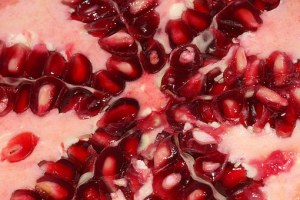
We went on a dark, December evening. There was no sign outside; just a Christmas tree and a lamp burning bright as we knocked at the door. The kitchen was the first room that we came to and it was as though someone had been interrupted whilst in the middle of their festive preparations. On the table was a basket of eggs, and an open pomegranate with red jewel seeds. A phallic sugar loaf stood upright making me blush momentarily and tarts baked on the fire, their sweetmeat smell merging with the spices of a partially stirred Christmas pudding.

pomegranate

Upstairs was the parlour, warmed and scented by a fire. Music tinkled in the background; a dog barked, a clock chimed and as we stood still and silent, we heard the clip clop of horses trotting past outside. Tea was laid with a candied pineapple in the middle. The lady of the house had just popped out leaving her earrings and fan on the table, and weak tea in a bone china cup. It was the most welcoming room I’d ever been in and I longed to stay.

The main bedroom was dominated by a cluttered dressing table and a rumpled four-poster bed. More horses trotted by and I thought how sublime it would be to drift off to sleep to that sound. Then a smaller bedroom with sewing on a side table, and a chamber pot tucked under a chair. There was a puddle of yellow liquid at the bottom. A glossy black cat sat on the bed with its paws tucked neatly out of sight. It was absolutely still and its eyes were closed. We’d been instructed to remain silent, throughout so Emma and I mouthed at each other: ‘Is it real?’ She stroked it and nodded. I did the same and it bit me.

cat

Climbing to the top of the house we reached the cramped servants’ quarters where it was draughty and plain. On the table was a half-eaten meal of oysters and cabbage. There were cracked jugs and a cloth was tacked up at the window in place of curtains. Old bloomers were hung up to dry and a newspaper informed us that William IV had just died. As we stood there it was as if we were time travellers entrusted with the knowledge of what was to come in this new Victorian age.

After we’d stepped outside the paintings, Emma and I went for a pizza. At last we were able to chat and this was an equally special part of the treat. Life was quite stressful at that point but this evening spent together was a happy oasis. Little did I know then that this was because my oxytocin was working overtime. Over this coming week I’ll be doing some more of this by spending as much time as I can with friends and family.

I’m hoping that there will be plenty of Christmas chemistry and no conjuring sets. And I wish you the same.

heart

Buttembly Buttignment

macaroons

A few years ago when I was finding life extremely challenging, I decided to take up some new hobbies. One of the most successful of these was swearing. I incorporated it wholeheartedly into my everyday life and found it very therapeutic.

Then after a while, I started to wonder about it. What are the origins and function of profanity? It’s clearly a useful component of human experience: David Crystal, the linguist, says that nearly everyone swears even if it’s just a polite watering-down of ‘God!’ to ‘Golly Gosh!’ And swearing is found in all known languages. In English, swear words centre around religion, sex and the toilet and are derived from German. They are direct, unapologetic and taboo. The formal, polite versions of these words, on the other hand, tend to have their roots in Latin.

trumpet1

Robert Graves observed poetically that after childhood, tears and wailing are no longer so acceptable. Groaning is discouraged as a sign of weakness and hence swearing fills the gap when silence is impossible—when the nervous system ‘demands a reaction that does not imply submissive acquiescence’. A new word has recently emerged to encapsulate this phenomenon—lalochezia. It’s defined as ‘emotional relief gained by swearing’, and I can vouch for its value.

But observation of its effect does not answer the key questions. Why does swearing carry so much more emotional power than normal language? Why does it release tension? In his award-winning book, Black Sheep: The Hidden Benefits of Being Bad, Richard Stephens says this is probably because swearing is not processed by the brain’s usual language centres, but originates instead from an area of the brain that is close to where emotions are handled in the limbic system.

roses5

Swearing is undoubtedly helpful in letting off steam. However, I found to my cost, one Saturday morning that there’s a time and a place for this. I went for an early swim at the local pool and was getting dressed in the changing room whilst a number of parents were getting their small children ready for their swimming lesson. The air was filled with social niceties and child-focused chatter but as I went to get my clothes out of the locker I banged my head very hard on the sharp corner of the metal door. It hurt and I swore loudly, rudely and involuntarily. There was a shocked silence and disapproval seeped through the room like a bad smell. I should have smiled and apologised but shame pushed me into a defensive silence. No matter that I’d spent hours of my life crooning lullabies to my own children and soothing their torn knees. That one moment marked me out to the assembled mothers as a thoroughly undesirable individual and I slunk out quickly, avoiding any eye contact.

james-stewart

That wasn’t good, but so long as it’s in the right environment, swearing can facilitate bonding. And it’s contagious. My friend, Dot, has a very kind heart and was keen to help me when I was going through my divorce. Her unique contribution was to become my swearing ally. We exchanged regular texts and followed the general principle that there’s no point in saying, ‘having an awful day’ when a couple of profanities would make it so much more expressive. She also helped by inviting me to join the local Rock Choir and offered to give me a lift to the first session. When she arrived I got into the back of the car as she was taking an elderly lady called Sarah, too. We all chatted politely for a while, and then Dot asked how my week had been. The urge to include a few strong words was irresistible and so we explained to Sarah about being ‘swearing partners’. She was very interested and asked us lots of questions.

The singing was fun. I sat with Dot’s alto group and we started with the Bee Gees classic, ‘How Deep is Your Love’. Then we tackled Adele’s ‘Rolling in the Deep’ which was impressively complex. It was all very good, but my favourite bit of the evening came when Dot dropped me outside my house. Sarah jumped out of the car, flung her arms round my neck and said warmly, “Sodding bugger off”.

hiking

Whilst it’s true that swearing is a relatively new hobby for me, I can’t pretend that my lexicon before was entirely pristine. The evidence comes from Molly. Her first words were innocent ones like ‘Mama’ and ‘Dada’ but once she started to combine words into phrases, the rot set in. At that stage life was dominated by our unruly menagerie and the vagaries of her father’s commute to London. Consequently she spent a lot of time muttering to herself about ‘bloody goats’ and ‘bloody trains’.

mango

But even when I’d washed my mouth out and was trying to be an upright member of the community, I fell foul of the cussing problem. When Will, Emma and Henry were young, I was a school governor. It was a charming little Church of England school in a village, and one day I was invited to make a governor’s visit. I sat through assembly and then went to each of the classrooms to see what was going on. When I got home, I wrote up a report feeling rather pleased at having done a good morning’s work. However, the computer refused to accept any mention of my visit to school assembly. Instead of accepting my intentions as community-spirited, the over-zealous filters rejected my foul-mouthed use of the word ‘assembly’. A similar issue has been a thorn in the sides of the residents of Scunthorpe. Back in 1996, many of them were blocked from creating an account with AOL because their address contained an ‘obscene string of letters’. This has led to similar situations being called The Scunthorpe Problem.
Some American anti-obscenity filters automatically replace offensive content with what are deemed to be equivalent words. So instead of being assassinated, Lincoln was rather perplexingly ‘buttbuttinated’.

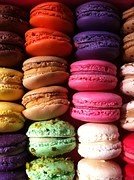
And if you’re puzzled by my choice of photos to accompany this post, then it’s very difficult to represent swearing without causing offence. So instead, I’ve chosen a selection of things that I’m enthusiastic about. I like macaroons, trumpets, roses, black and white films, long walks, mango and flamingos. As you may have realised by now, I also like swearing.

flamingo

It Will Never Come Again

tortoise2

This week I was in the car with Molly. It’s always a good chance to spend some time with her and we started chatting about elderly friends and relatives. She was obviously wondering from the bounciness of youth what it’s like to be old and she asked me what initially seemed like a simple question. ‘Mum,’ she said curiously, ‘Do you feel like you’ve lived a long time?’

This was surprisingly hard to answer. My first reaction was to say, ‘No,’ but that seemed silly as I evidently have lived for quite a long time. Then I realised that this kneejerk feeling comes from the fact that for much of the time, I don’t feel properly grown-up. In my head I’m still waiting to get to that elusive state.

wedding-rings

I clearly have a problem as I read recently that a life insurance provider asked 2,000 people to say what they thought marked the transition into adulthood. The most common answers were buying a first home, becoming a parent and getting married. Other signs of being grown up were paying into a pension, becoming house proud, taking out life insurance, looking forward to a night in, doing DIY, hosting dinner parties, and having a joint bank account. I’m 56 and I’ve done all of these things (with varying degrees of enthusiasm)—but I still keep expecting to be outed as a pretend grown up.

I think that much of my grownupness deficit comes from being a younger sibling. My beloved sister is twelve and a half years older than me, and when, aged twenty-eight and four years married, I told her that I was pregnant, she was noticeably shocked. ‘Do you feel grown up?’ I asked her once. ‘Of course I do,’ she said, briskly.

pramAs time passes, I suppose the reality is that I do get more practice at being grown up, like when Molly was seriously ill, earlier this year. I felt pretty adult then. This, and other snapshot moments force me to adjust my internal age-barometer. But it’s a jolty kind of process rather than a continuous smooth one. A recent blow was discovering that the actor George Cole was 90, when he died, this year. ‘He can’t have been,’ I thought. However, if he was a great deal older than when he played Arthur Daley in ‘Minder’, then the inescapable truth is that I’ve got a great deal older, too.

pink gingham

Some of the most poignant age-related jolts come from reflecting on missed opportunities. I feel sad when I recall things I planned to do with the children but didn’t get around to: I never took them to see a ballet; I got stressed if they made a mess cooking so this didn’t happen as much as it could have done, and the two metres of pink gingham I bought twenty years ago will never be transformed into a cute pinafore dress for my elder daughter, Emma. The poet, Emily Dickinson observed, ‘That it will never come again is what makes life sweet.’

Another jolt is the realisation that there are definitely places that I will never visit again—people I won’t see again—books I’ll never read again, and films that I’ve seen for the last time. Even much-loved ones. When I was young I felt that life would go on forever. But having a husband with a life-threatening illness forced me to accept that life runs out. This is one of the many reasons that my treats list has been so important to me in recent years. If there are things I long to do then I want to get on with them. Now. Somebody once told me that being grown up is when you stop taking things for granted. Maybe I’m more grown up than I thought I was.

I took all these things into account when I finally replied to Molly’s question: do I feel like I’ve lived a long time. I said that I think I’m getting close to feeling that. And I was able to give her a practical demonstration of my grownupness recently after she was given a very smart record player. She, like so many young people, appreciates the charm of vinyl and is building up a record collection, not dissimilar to the one I had at her age. For a while she appeared to enjoy using her new turntable. All seemed to be going well but eventually she emerged from her room, looking very downcast. ‘Everything sounds so fast,’ she said, unhappily. From the benefit of my relatively long life I enlightened her about the all-important difference between 45rpm and 33rpm.

record player

My final word is on someone who is only in her mid-twenties but has already packed a huge amount into her life. Recently I did the second in my chain interview series.  You can read more here.

A Difference of Opinion

liberty 2

Last week I went to see the film, Suffragette. I thought it was understated and moving, and it reminded me of the debt that we all owe to the brave women who fought for a fairer society. The film ends with the death of Emily Wilding Davison who threw herself in front of the King’s horse at the Epsom Derby in 1913. But that was not the end of the fight; this particular battle for equality was protracted and fierce—it took until 1928 for women in Great Britain and Northern Ireland to be granted equal voting rights with men.

At the end of the film, the audience is reminded that this was an international struggle, and many countries were slower than the United Kingdom in giving women the vote. The International Woman Suffrage Alliance was formed in 1904 but it took until 1971 for Swiss women to be granted suffrage, and Saudi women have only, this year, been promised the vote.

statue of liberty

The film also reminded me of something I learned when I visited the Statue of Liberty a few years ago. Her official name is ‘Liberty Enlightening the World’, and she was donated to New York by the French in recognition of the friendship that was established between France and America during the American Revolution. The dedication ceremony for the statue took place in 1886, but despite the overt femininity of this symbol of liberty, women were banned from attending. Outraged suffragettes responded by hiring boats and bellowing through megaphones that even if Liberty were able to get off her pedestal, she would not be allowed to vote in either France or America. American women got the vote on equal terms with men in 1920, but their French sisters had to wait until 1944.

pork pie hatAnother story that is not referred to in the film is that of The Women’s National Anti-Suffrage League. This was formed in 1908 by women who opposed women getting voting rights. Over the next ten years more than a hundred branches were established throughout the UK and there were large demonstrations where women protested that they did not want the vote. The League depicted suffragettes as ugly and masculine, and with a tendency to wear unflattering pork-pie hats. Surprisingly the League garnered support from some women who were active in extending other kinds of female rights. These included Elizabeth Wordsworth, the founding Principal of the Oxford women’s college, Lady Margaret Hall. Anti-suffrage campaigners were content for women to get the vote in local elections as these were concerned with feminine-friendly issues such as education. But matters that were debated on a national platform, such as international relations and war, were considered outside the acceptable scope of feminine influence. The fear was that women would become masculinised if they were to become involved, and then men would be unwilling to marry them.

It seems to me that whatever you think, there will be someone who disagrees with you; politics, religion, philosophy, history, human rights, you name it—there are many potential angles. And the life blood of culture is that its interpretation is subject to opinion. Fashion, for example, thrives on pushing boundaries and provoking debate. Molly adores clothes and used to love reading what we called the ‘Poor Thing’ column; a regular fashion article in a national newspaper which took six women and put them in various ‘stylish’ outfits. Almost always, we would look at these women and say that if we saw them in the street dressed like that we would feel very sorry for them. This is how it came to be called the ‘Poor Thing’ column.

fashion

Book groups, too, thrive on disagreement. I’ve belonged to several groups in the past and on occasion I’ve admired and loved a book so much that I couldn’t imagine that anyone would dislike it. Rohinton Mistry’s, ‘A Fine Balance’ was a case in question. A rich tapestry of Indian society, it captivated me, but sure enough whilst some in the group shared my view, there were others who thoroughly disliked it. And then there was Iris Murdoch’s, ‘The Sea The Sea’ which I found intolerably tedious. That got high ratings in the group.

I am soon going to be at the critical coalface myself, as my book ’31 Treats And A Marriage’ is in the final stages of preparation and will be published at the end of the Spring. I shall have to harden myself to criticism. I hope that many people will like it but there is no getting away from the fact that some people will not. It’s just the way things are.

Dorothy Parker

But at least I won’t have to face the humiliation of being reviewed by the acerbic Dorothy Parker, pictured above. In 1925 she started writing book reviews in the New Yorker under the name ‘Constant Reader’ and they were said to delight everyone except the unfortunate authors. She found A.A. Milne’s,,’The House at Pooh Corner’ sugary, and wrote that ‘Tonstant Weader Fwowed up’ after reading it.

Undeterred by these concerns, I’ve enjoyed the process of writing my first book so much that I’ve recently started on my second one. This combines visits to English cities with the stories of women who for a range of reasons have had to push against the constraints of society. It’s still open to debate but I think there will be a suffragette somewhere in there.

suffragette sophia singh

‘What’s your blog about this time?’ asked Molly’s boyfriend.                                                ‘Disagreement’, I replied. ‘Whatever you say there will always be someone who disagrees.’               ‘No there won’t,’ he said with a naughty grin.

Enhanced Eating

brandenburg gate

In a previous post, The Old Man and the Pea, I mentioned that a 95-year old gentleman named Frank has recently moved into my house. It’s quite a change in lifestyle for him, and also for me. But so far things are going well. He seems to have no regrets, and nor do I.

However, it was sobering to realise recently that he has reached a stage of life where he has no plans. For him life is in the moment and small pleasures have to suffice. He can’t see or hear well enough to go out alone but he enjoys family life, sitting in the garden, trips to the pub, and listening to tapes about British history. He never turns down a biscuit or a gin and tonic and he generally eats whatever we put in front of him, quite cheerfully. We try to remember to tell him what it is but in the flurry of getting everyone’s food on the table this sometimes gets overlooked. There have been many times when he’s got to the end of a meal and said that he has no idea what it was, but it ‘tasted nice’.

frank gin and tonic

In contrast, I’m still at the stage of life where I’m able to have a head full of plans for the places I want to go and the things I want to do. I love my list and one of my favourite treats so far has been a visit to Berlin two summers ago with Mike and my two youngest children, Henry and Molly. I expected it to be both vibrant and affecting, and so it was. I was impressed by the candour with which Berlin’s terrible history is recounted. And it was fascinating to see the remains of the Wall and to read stories of the people who were affected by it. But those are tales for another day as recently I’ve been remembering the holiday for a different reason. Our trip to a dark restaurant.

The first dark restaurant opened in Zurich in 1999 and there are now a number scattered throughout the world. The concept behind it is to take away your sense of sight so that your other senses are heightened. Some of these restaurants provide blindfolds to their customers but most create a dark environment. The one that we visited makes the enterprising claim that it is 32% darker than all other dark restaurants.berlin skyline

We went at the end of a busy day of sightseeing and were shown into a dimly lit bar where we ordered drinks. The barman gave us menus and told us to choose between five options; beef, poultry, fish, vegetarian and surprise. Mike chose vegetarian, Henry and Molly opted for fish and my choice was poultry. We could see from the printed menus that we would be having four courses but there was no clue what the food would be. Mike’s starter was described as ‘a taste of Aztecan masculinity on wavy green and voluptuous red bedding’, and I was already looking forward to my dessert which promised ‘a dark beauty, illuminated by the delicate seduction and admiration of her rosy companions’.

Our blind waiter, Ben, came and introduced himself and told us the two basic rules. We were not to move around the restaurant without a guide, and we must carry no light source of any kind including lighters, mobile phones and watches. Then he instructed us to form a conga line with him in front and he led us round a corner until the outside world was left behind and everything went black. He took us to our table and explained where the chairs were. I couldn’t tell if I was standing in front of the chair or behind and had to ask.

berlin black

I shall never forget the next two hours. Ben arrived periodically with a tray and talked to us carefully as he gave us our food. ‘Now Mike, I am passing the soup to you. Pass it on to Henry’. ‘Imagine that your place setting is a clock. Your spoons are at twelve o’clock.’ At first we were quiet as we ate. The food was delicious but perplexing and it required concentration. We sought clues in the texture and smell as well as the flavour. I could tell that my starter included satay sauce, but other ingredients were elusive. Then we started offering one another samples and debating what they might be. We could hear other people talking but they seemed to be some distance away. At one point a bottle smashed to the ground.

black square

There was a longish break between the first and second course and to pass the time, I started a game. I asked everyone to name a place that they love and to say why. Molly’s was Chatsworth which we’d recently visited together, Henry’s was New York because of the jazz and the bustle, Mike chose Johannesburg for its vibrant modern African culture and mine was Monterey in California. I have memories of sitting in an oceanside shack restaurant at Fisherman’s Wharf. As I ate clam chowder I watched pelicans bobbing on the water and sea otters and dolphins playing in the distance. When we’d all had our turn we had another couple of rounds with music and films. I learned new things about my companions and realised that I was listening wholeheartedly whereas normally my attention would be diluted by looking at people around me. Their clothes, what they were eating, how they were relating to one another…

At the end when we went back into the light I saw a big red stain down the front of my dress. The ‘rosy companions’ were clearly some kind of red fruit. We did find out what we’d been eating before we left but I won’t spoil the surprise in case you ever decide to go. I highly recommend it. You can find details by clicking here.

We really enjoyed the food even though we didn’t know what it was. Nor did we know what our surroundings looked like. They could have been anywhere on a scale from opulent to minimalist. We had to be accepting of what was provided to us. And without distractions we focused on the moment with nothing to anchor us other than the people around us. I’ve thought a lot about this experience recently. I wonder if it gives a bit of insight into how mealtimes feel for my 95-year old future father-in-law.

plate