System Overload

system overload 3

I like my neighbourhood very much but one of the disadvantages of living in a terrace is that it’s rarely possible to park outside our house. We often have to resort to the next street and sometimes this causes problems. Fortunately, our neighbours have dogs and regularly walk to and from the park. They’re impressively observant as several times they’ve spotted Mike or me wandering along vacantly trying to locate our cars, and have pointed us in the right direction.

This week, though, there have been many things to occupy my mind other than parking spaces. The most important of these is that Frank is in hospital. I’ve written before (in The Old Man and the Pea), about this rather wonderful 96-year old gentleman who last summer came to live with us. Five weeks ago he was admitted to hospital with stomach pains and then he got pneumonia. It’s very upsetting for him as he’s almost blind and matters are not improved by the fact that his hearing aid has disappeared. We think it got caught up in his bedding. His beloved talking watch has also gone. It probably went down the same laundry-oriented route. However, he does press the button every five minutes so we can’t discount the possibility that a fellow patient got fed up with the continual updates and disposed of it for him.  We’ve bought a replacement that he can use at home but for now, he is without it.

hospital 1

It’s hard seeing him in hospital as he is so disoriented. The other day I went in just as two nurses were changing him, and he looked so small lying there. I felt compelled to tell them that this frail, confused man once took an engineering maths exam and got the highest result in the whole of South Africa. My comment was no criticism of the staff, incidentally, as it’s been heartening to see the kindness and respect that they show to patients even when dealing with challenging behaviour.
maths

We hope to get Frank home soon but his care needs have increased and we’ve had a number of conversations with the occupational therapy team about new equipment. He needs a pressure-relieving mattress, a special cushion for his chair, a frame to go round the toilet and an alarm to warn us if he gets up at night. There’s a lot to consider.

Something else to think about is our forthcoming move. This should be happening in about three months after the new house is  renovated. Currently it’s a building site. We’ve cleared the overstuffed loft, disposed of the old appliances, and had many, many trips to the tip and charity shop. Now we’re into the stage of constant questions from the builders. It’s exciting but there are so many decisions to make: kitchen units; bannister rails; door handles; sinks; windows, paint—my head feels full.

construction

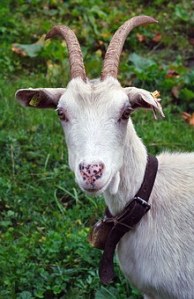
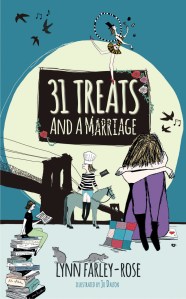
The other big thing that has preoccupied me this week is the birth of 31 Treats And A Marriage; my first book. It was published on Tuesday and is something I’ve been working towards for over four years. That morning my editor emailed and reminded me that I should post something on Facebook. But because of this ‘full head’ problem I couldn’t think what to say. I couldn’t even remember how to put up a post. Then after a bowl of porridge and a strong coffee, I got some perspective. An elderly gentleman, a house that’s a building site, and a book launch are a lot less demanding than previous bouts of juggling. The most challenging memories are those when I had four children at four different schools, a stressed-out commuting husband, an acre of out-of-control garden, and a pair of goats who spent every spare moment plotting their escape. These are all in the book together with plenty of things that made me laugh, and plenty more that didn’t.
goat

Eventually I managed to post something. The day improved as the book crept up the ratings and by the evening it was number one in its category on Amazon. Suddenly it all seemed very real. Then Amazon went into its own kind of system overload. It uses a complicated algorithm to work out how much stock to keep and when demand exceeds this then it puts up a message that says ‘temporarily unavailable’. If you were thinking of ordering a copy then please don’t let this put you off. It should get resolved quite quickly anyway, but will undoubtedly be helped by people placing orders. Click here for the link.
9780993471100

That evening after all the palaver, Mike took me out to a New Forest pub to celebrate. It was old with atmospheric woody corners and the air was full of a fishy deliciousness. We had a happy few hours and managed for the most part to keep off the subject of juggling. But as we got back, the day’s concerns sidled in again. We drove past our house and into the next road looking for somewhere to park. ‘I must have a good look for my car, tomorrow,’ said Mike. ‘I don’t know where it is.’ We both stared blankly into the darkness ahead.

Then I had a moment of clarity. ‘I know where your car is,’ I said. ‘We’re in it.’

Thank you to everyone who has sent such supportive and kind messages about the book. I hope you enjoy it. And I hope, too, that the system overloads for me, Mike and Amazon are quickly resolved. Winter2012
Murder, Blackmail and Other Stuff

Alfred_Hitchcock_cameo_(1943)_Shadow_of_a_Doubt_2

“Mum,” said Henry the other day, giving me an odd look, “Is everything alright?” “Yes fine,” I said, briskly. “Why?” “It’s just that I was in the kitchen and happened to look at your list. It said, Clean bathroom—Hang out washing—Buy anti-snoring device—Get fence mended—Murder!”

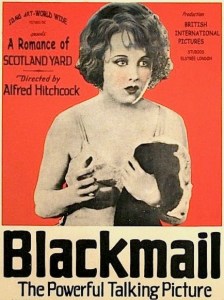
By the latter part of this week, I’d done all of those things and had a new list: Take parcels to post office—Contact dentist—Ring Barbara—Buy vitamin tablets—Blackmail.

Blackmail

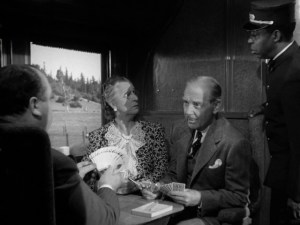
This week in amongst various other activities, I’ve completed Treat Number 41: watching Alfred Hitchcock’s films. A couple are lost but fifty-two have survived and I’ve now seen them all. There’s a wide range: from 1925 to 1976; silent to talkie; black and white to technicolour; horror to musical; British to American; outstanding to relatively forgettable, and Blackmail to Murder! The exclamation mark is Hitchcock’s not mine.

I watched most of these films on my own, often in moments when I should have been doing something else. They felt like stolen treasure. And as so often with treats, this one spread its wings beyond the original idea. I read Peter Ackroyd’s biography of Hitchcock, and went to the cinema to see the recent documentary about the Truffaut interviews. There’s the enjoyment, too, that comes from sharing the enthusiasm with friends. Alan, if you’re reading this, I look forward to continuing the conversation we started last year. I’m now better informed so will have more to say.

The-Wrong-Man-poster

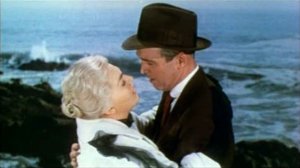
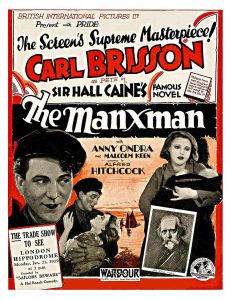
The highs and the lows? Those that made the least impact were Jamaica Inn, Secret Agent, The Paradine Case, Under Capricorn, Juno and the Paycock, and Family Plot. But there were plenty of pleasures amongst the rest. Favourites include The Lady Vanishes (the true star is a steam train which puffs its way through pre-Second World War Europe), The Wrong Man (based on the true story of a decent man who is wrongly convicted of armed robbery and is played impeccably by a dazed Henry Fonda), Shadow of a Doubt (a strong plot and possibly Hitchcock’s own favourite), The Manxman (a powerful silent film about a love triangle) and Sabotage (engaging scenes of pre-war London and a moment that leaves you reeling. Even Hitchcock wondered whether he’d gone too far). But it’s Vertigo that I love best. I went to see it at our local Picturehouse cinema recently and the images, music and plot haunted me for days afterwards.

Vertigo_1958_trailer_embrace

One of the intriguing things about Hitchcock is that he didn’t always provide audiences with feel-good endings. Some of his films have shocking final scenes. Another is his use of suspense. Psycho and The Birds make audiences scream, but in many of his works the hooks are more subtle. In the silent film Easy Virtue, adapted from a Noel Coward play, there’s a scene where the audience knows that a man is phoning his girlfriend in order to propose. Hitchcock chose not to show these characters at this point, but instead filmed a telephonist who listens in on the phone call. Her expression reveals what’s happening and builds suspense while both she and the man wait for the girlfriend to make her mind up.

800px-The_manxman

Like most creative geniuses, Hitchcock had some unusual habits. One of the oddest was that every day on set he would drink his tea and then throw the cup and saucer over his shoulder. He had complex attitudes towards his leading ladies and he almost certainly had crushes on a number of them including, famously, Tippi Hedren. But in spite of that he was devoted to his wife Alma Reville who was just one day younger than him. He trusted her judgement implicitly and she worked on many of his projects as a screenwriter and editor.  They got engaged after he proposed to her during a terrible storm at sea. She was prostrate with seasickness and told their daughter years later that ‘I was too sick to lift my head off the pillow. I groaned, nodded my head, and burped.’ They were married for fifty-three years and she was lost when he died, as he would have been had she gone first.

A number of themes crop up again and again in Hitchcock’s films: trains, dominant mothers, secret lives, likeable criminals, obsession, murder, and blonde women. He also loved dogs so if one of his characters owns a dog it’s a strong clue that they’re of sound character.

Alfred_Hitchcock_cameo_(1963)_The_Birds

And just like Hitchcock, all writers have themes that preoccupy them. Hemingway’s include fear, guilt, betrayal and loss. For Hardy, it’s the damage caused by social constraints, and the role of chance in people’s lives. And JK Rowling’s writing centres around themes of mortality and morality.

The_Birds_original_poster

Within the next fortnight, I shall become a published author too, so I’ve had a think about what my preoccupations might be. At the moment I’d say they are individual differences, coping and the unexpected twists and turns of life. Lists crop up a lot too. 31 Treats And A Marriage will be available through Amazon and other booksellers by the end of the first week in May. My previous post has a link to an audio recording of the prologue. If you’d like some more you can listen to Chapter One. Just click here. I do hope that you enjoy it.

The Politeness of Treats

daffodils

Last week I reached the end of a long walk. The North Downs Way stretches 153 miles from commuter-belt Surrey to the English Channel and I’ve been walking it in stages for over four years. Put like that, I seem a slow walker. But a lot has happened along the way. I’ve not only walked from Farnham to Dover; I’ve walked into a new life.

It was one of the first treats that I started, chosen because it was the nearest of the UK’s fifteen National Trails. I love the mystery of a long walk; you never quite know what’s going to unfold beyond that bend in the distance.  There are plenty of other pleasures, too: the landscape changes constantly; you have to watch out for the direction markers so it’s a bit like a puzzle, and it’s a perfect opportunity to think. Much of the North Downs Way coincides with the ancient Pilgrims’ Way: the route from Winchester to Thomas Becket’s shrine at Canterbury Cathedral. And at times, in the ancient broadleaf woodlands I felt so far removed from modern life that it would have been no surprise to bump into a silent, brown-robed monk.

forest path

I shared some stages with family and friends. These were chatty and companionable. But other stages were solitary and helped me to think my way round some tangled issues. Wordsworth is well-known as a contemplative walker and is estimated to have walked about 180,000 miles. In The Art of Walking, Christopher Morley says that ‘cross-country walks for the pure delight of rhythmically placing one foot before the other were rare before Wordsworth. I always think of him as one of the first to employ his legs as an instrument of philosophy.’ The South West Coastal Footpath is also on my list and providing my knees hold out, I’m hoping for some stunning days of walking around the very edges of Dorset, Devon and Cornwall. There’s much more to be said about walking, but this isn’t the point of today’s post, so I’ll save it for another day. Instead I want to think about the difference between treats and goals.

devon coast

When I made my list, all the stages of the North Downs Way were quite accessible as day trips. But then I moved to another part of the country and it became more of a challenge. I managed some stages last summer, and eventually, there was just the final stretch left. The excuses of the winter came and went and then I got an image in my head of walking through fields with Henry, my younger son, and the English Channel coming into sight. He was happy to join me but finding a day we could both do was the first hurdle, and we postponed several times. When the agreed day finally came, we set off from home at 7.30am and with dire traffic it was midday before we were at the starting point. It was all quite an effort and I began to feel that I was doing it because it was on a list and needed to be ticked off.

checklist

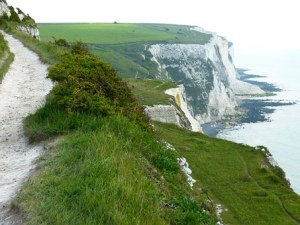
But later as I sat high on the headland with my son, I had a moment of clarity. The Spring sunshine scattered diamonds on the water; the chalky cliffs of Dover were to our left and the transport hub of Folkestone bustled to our right. We ate sandwiches made from Henry’s homemade bread, drank lukewarm coffee, and chatted easily. I realised in that moment exactly what it is about a treat that makes it so different from a goal.dover

Goals are in your face. They’re the kind of guys that spout management jargon and make you feel bad about yourself because you’re never quite up to scratch; qualifications—deadlines—efficiency—success. Goals are necessary to some extent, but they’re voracious feeders. Tick one off to keep it quiet and there’s another one screaming at you. Treats are quite different. They hang back politely in the shadows and defer to the goals. They wait to be granted permission to step forward, and often get neglected. Sometimes they’re just the germ of an idea or desire but give them a chance and they’ll blossom. They’re the things that allow us to express our individuality and to grow into our real selves.

I’ve got many memories from my day of walking with Henry. There was the moment when we stood high on the cliffs above Folkestone and looked down as a train disappeared into the earth at the start of the Channel Tunnel.  It was strangely thrilling to think that it would emerge in a different country. Another moment was realising, when stuck in traffic, that I had my son’s company and so the time was not wasted. And when we arrived in Dover we needed to make our way back to the car. ‘When’s the next train to Folkestone?’ I asked the ticket clerk at the station. ‘September or October,’ she said. We hadn’t heard that the line got swept away in the Christmas storms. So we got a bus instead.

bluebells

I’ve many impressions, too, of other stages of the walk. Dappled woodlands, quiet lanes, steep climbs, streams, lakes, brick viaducts, Neolithic burial chambers, sheep, bulls, thatched cottages, ugly developments, quarries, vineyards, fly tipping, primroses, bluebells, barns, chapels, the noise of the Medway Bridge traffic, cake, being elated, being sad…  On one of my walks I forgot to take any money. Solving that problem gave me confidence, as did walking alone. There were obvious pleasures and benefits but there were subtle, unexpected ones too. It was a multi-layered experience. And a true treat.

henry

Photo: Del Malcolm

A final word – it’s now less than a month until the publication of 31 Treats And A Marriage. You can have a taster if you want—click here for an audio file of the prologue. I hope you enjoy it and that you like the music too. It was specially composed and performed by Henry.

About Time

station clock

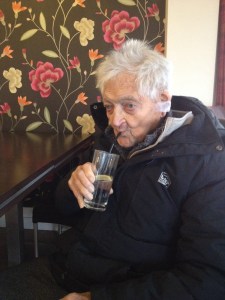
I’ve written several times about Frank, the elderly gentleman who rather unexpectedly came to live with me last summer. And since I mentioned him in Christmas Chemistry he has passed another milestone and is now 96. With increasing age there’s no reduction in his enthusiasm for gin and tonic or chocolate biscuits but both his eyesight and hearing have continued to deteriorate. It’s no longer possible for him to see his clock even with a magnifying glass so we recently bought him a talking watch. He has a love-hate relationship with this well-meaning device. On good days it helps him to pace his way through the daylight hours and the long nights, but there are many occasions when he mishears what it says, and is surprised. His tendency to nod off at regular intervals adds to the disorientation, and his response to being told the time is always a polite but incredulous, ‘Good Heavens’.

We’ve probably all had the experience of coming out of a deep sleep and wondering where we are and what day it is. It happened to me recently when I was having a weekend away in Manchester and for a moment I felt quite panicky. Unlike Frank, though, I was able to reach for my watch and to look out of the window, and this put my position in time and space into perspective.

sleeping cat

I’ve been doing research for my next book recently and one of the many things I’ve been thinking about is time. And I realise how I’ve always taken it for granted. Every March I’ve obediently put my clocks forward and then in October I’ve turned them back again. As though it were decreed by nature. But of course, it’s not and the path to our current consensus on time has been jagged.

When people worked on the land they had little need to organise their lives by the clock. They would rise with the sun and go to bed when it got dark. Time, if it was needed, was measured by a sundial in each town or village. But as soon as people started to work in factories and mills, things changed. Their lives were ruled by the clock. Being late for work could lead to dismissal and they weren’t allowed to go home until the hands on the clock proved that it was the end of the working day. This was not always predictable as many unscrupulous factory managers manipulated time for their own ends, turning the clock back to get more hours out of their exhausted workers.factoryBut the main change in time observation came with the railways. In the beginning there were different local times all over the country. In Norwich, local time was a couple of minutes ahead of London, and in Barrow it was thirteen minutes behind the capital. This hadn’t mattered much in the days of horse-drawn coaches as they travelled relatively slowly but trains carried people around at previously unimagined speeds and now these time differences caused confusion. People risked missing trains and appointments and with train drivers working to different times there was a danger of collisions.

From 1840 the situation began to improve as some railway companies started using ‘London Time’ which was determined by the Royal Observatory at Greenwich. But it took about eight years before all the railway companies were setting their station clocks to this. Also, people were resistant to giving up their local time and so in many places the station clock would have two different minute hands, one displaying the standard time, and the other displaying the local time. Initially stationmasters used books of tables to work out the correct time for the station clock, but from 1852 the problem of standardisation was overcome.The electric telegraph was introduced and could quickly transmit the time from Greenwich to wherever it was needed. In 1880 the chaos was resolved once and for all when the Government passed an act that established a single time zone throughout the country.

steam train.jpg

Daylight saving is another innovation that has affected clocks and William Willett, a builder, is generally credited with promoting this idea in Great Britain. In 1907 he published a pamphlet putting forward his ideas. He argued that bringing the time forward in the Spring and Summer would improve people’s health by giving them more daylight for outdoor recreation, and stressed that the increased opportunities for rifle practice may come to benefit the nation. He also argued that the people of Great Britain could save £2,500,000 a year because they would spend less on electricity, gas, oil and candles. He acknowledged that the changes might cause confusion in our dealings with other countries but with unswerving imperial confidence was sure that when they realised the benefits, they would be quick to copy our example. With daylight saving, he enthused that a man (he didn’t mention women) will have gained two whole years of daylight by the age of fifty.

oil lamps

Willett aimed to gain eighty minutes of daylight and proposed moving the clocks forward by twenty minutes for four Sundays in succession in April each year. These changes would be reversed over four Sundays each September. He urged voters to send postcards to their MPs asking them to back this rather complicated scheme. It took until 1916 for a version of his idea to be adopted but sadly he didn’t live to see it. The system we use now when the clocks change by just one hour, and all in one hit, was introduced as a way of cutting domestic coal consumption leaving more available for the war effort.

As a child I could never remember which way the clocks went but when I was a teenager, an old lady named Phoebe used to say to me, ‘Spring forward, fall back, dear’. It’s a helpful reminder but there was one occasion when it didn’t work. Molly was about three weeks old and the whole household was in a fuddled state of post-baby chaos. Somehow we managed to put the clock forward instead of back and my then-husband set off dutifully for communion. Unfortunately he arrived two hours early and must have seemed very eager as he waited by the church door at 6am.

church door

And now today as daylight saving begins, I know which way to put the clocks. That’s an improvement. However, there’s no improvement in the level of general mayhem in my household. Whatever time it is, the response is likely to be the same—a polite but incredulous, ‘Good Heavens’.

frank drink

Occupational Hazards

european flag

Here in the UK, the news is dominated by whether we should leave the EU, and it’s likely to remain that way until the referendum takes place on June 23rd. Inevitably, we hear a great deal about immigration into Britain. But it’s also the case that there are many Britons who choose to live in other countries within the EU and it’s unclear what will happen to their residency rights if we decide to distance ourselves from Europe.

This problem is likely to affect my elder son, Will, who has lived happily outside the UK for over four years. Currently, he’s based in Riga, the capital of Latvia where he teaches, edits and writes about Eastern European culture, history and politics. The city has a rich heritage and is particularly noted for its Art Nouveau buildings. Before moving to Latvia, Will lived in Tallinn, the capital of Estonia, another Baltic state.

estonian flag

Through this family connection I’ve learned a lot about the Baltic countries. But generally when I tell people where Will lives, the reaction is polite interest and a blank look. Emma, my elder daughter, found the same when she went to visit her brother in Estonia a couple of years ago. She’s a sensible kind of girl and before setting off she rang her bank to let them know she’d be using her card abroad for a few days. ‘I’m going away for the weekend,’ she said. ‘Lovely—’ said the customer service assistant. ‘Where are you going?’ ‘Estonia,’ replied Emma confidently.There was a long silence… ‘Which country is that in?’ asked the assistant. ‘It is a country,’ said Emma, patiently. Another silence—even longer this time. ‘We’re having trouble finding that,’ said the assistant. He was no doubt very proud to work for the bank that has ‘The World’s Local Bank’ as its tagline.

tallinn 1.jpg

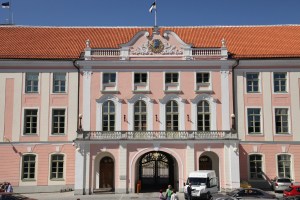
I managed a visit, too, a few months later with my younger daughter, Molly. And I was intrigued to find out how this small country has fared since the Soviet Union collapsed in 1991 and it regained its independence. The Old Town is a World Heritage Site and that’s where we stayed amidst the cobbled streets and red-roofed buildings painted in pale shades of beige, green, blue and yellow. All of the Government buildings and embassies are at the top of a small hill and as we stood outside the Estonian parliament building, I couldn’t help but share Will’s enthusiasm. It is indeed impossible not to warm to a country whose political headquarters are based in a building resembling a pink and white birthday cake.

estonian parliament building

The Old Town is well-preserved and charming but from high above the roof-tops we could see the concrete bulk of the Soviet-era tower blocks. And wherever you go in Tallinn there is no escaping reminders of its brutal history. There’s a museum dedicated to the history of the KGB and Molly suggested innocently that as I’m a careers adviser I might be interested in the Museum of Occupations. The truth, however, is nothing cheerful like the ins and outs of what an ergonomist does, or how an orthotist is different from an orthoptist. Estonia’s history is dark and it has been invaded and occupied so many times that a whole museum is devoted to these traumatic events. Poland, Denmark, Sweden, Germany, and the Russian Tsars have all claimed Estonia at different times and even the name of its capital city translates as ‘Danish town’. A brief, glorious period began in 1920 when it gained its independence and the economy grew strong. Then in 1939 the Soviets crossed the border and it all went wrong again.

estonian forest brother

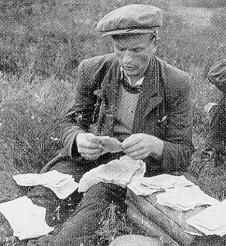
This first year of Soviet occupation was called the Year of Suffering and in one night, ten thousand Estonians were deported to Siberia. One third were children. In 1945 the Russians took formal control, dragging the small country into the Soviet Union. An astonishing number of young men and women took to the woods and lived in underground hideouts. There were about ten thousand in Estonia and more in Latvia and Lithuania. They called themselves the Forest Brothers and their mission was to ambush Russians and fight for freedom. They believed that the West would rescue their country from its plight, but this never happened and the last of the Forest Brothers was captured in 1978. During this period about 70,000 Estonians tried to escape to the West. Many travelled in fishing boats and were drowned. It was another century and another conflict but it’s an all too familiar story of people risking everything for a safer and better life.

Refugees_crossing_the_Mediterranean_sea_on_a_boat,_heading_from_Turkish_coast_to_the_northeastern_Greek_island_of_Lesbos,_29_January_2016

Refugees crossing the Mediterranean – January 2016. Photo by Mstyslav Chernov/Unframe

And this leads into the third link in my chain interview project where each interviewee passes me on to someone that they think is interesting. It’s a surefire way to some fascinating conversations and I’m loving learning about things outside my normal range of experience. Recently I talked to Mala, a young immigration and human rights lawyer. She told me the sobering story of what inspired her to get into this field and describes what it’s like inside a detention centre.

Hoarding Stories

stage

In the past ten years or so, I’ve moved house five times and now it won’t be long until I move again. Several of those moves have involved significant downsizing and each time I’ve pruned my worldly goods a bit harder. But now as I edge into a new phase I’ve become even more ruthless. Unless an object is useful, beautiful or of genuine sentimental value, it goes. I’m trying to rid myself of delusions about what I will use, wear, read, watch or listen to in the future.

moving

Fantasies about what we might be or do are a justification for holding onto things but so is the need to leave a trace. Without tangible reminders then there’s no proof that we ever existed. I’ve been thinking about this a lot recently since my friend, Helen, told me a story. She was helping one of her friends to clear some space and found a whole room full of memory boxes, each labelled with a different year. “Let’s look at this,” said Helen, lifting the lid on the one marked ‘2002’. At the top was a Motorola manual. “Have you still got the phone?” asked Helen. “No,” was the answer “but it might come in handy. I’ll keep that”. Then came several dental appointment cards. There were cinema tickets, too. The name of the film had faded past recognition but the fact that they’d been part of an Orange 2-for-1 deal was still legible. “I’ll hang onto those,” said the friend grabbing them, protectively. Next out of the box was a leaflet for the sexual health clinic. “You surely don’t want that, do you?” enquired Helen. The answer was inevitable.

I’ve found a different way to prove my existence to myself; I’ve written a book. Four and a half years ago I set out to have sixty treats before I was sixty. At that stage it was just a way of reconnecting with life. Many things had been on hold while I’d raised children and dealt with a few tricky blips. Each treat sat in the wings of my list like characters in a play and I didn’t know when they would step on-stage. But very soon after the first character, ‘Tate Liverpool’, spoke up, I realised that these were going to be rich experiences. Each was valuable because they were all things I’d longed to do, and I wanted to find a way to pin them down before they slipped back into the dark corners of the wings from which they’d come.

acropolis

Three hundred years ago, young aristocrats on their Grand Tours of Europe would commission artists to record what they saw. Today we rely on photos. But that was never going to work for me as I’m a haphazard photographer. And even when I remember to point my camera in the right direction, they’re only a partial record. Photos can’t recount stories of the people I met, the information I discovered, the smells and tastes I experienced, and the unscheduled branch lines I darted down. Only words can do that. I mostly eschewed souvenirs too. That’s just a further route to ‘stuffocation’. So, what I did was to make some notes.

Then after six months something unexpected and devastating affected my world and I was thrown off balance. It was a great support to have family and friends but I knew that ultimately I had to create my own path through the chaos. So I turned to the characters who were waiting in the wings and like the best of friends, they revealed hidden depths in a crisis. ‘New York’ was a sassy friend who took me out and provided stimulating distraction. ‘Italian cookery’ cajoled me to eat when everything tasted like cardboard and ‘Riding’ provided a moment when the sheer physicality of being on a horse counterbalanced the unhappiness and I tipped into joy.

horse

Throughout all of this I kept jotting down notes and gradually those notes became a few chapters. And somehow by a miraculous process, those chapters grew into a book. We all have certain things that grate on us and mine are the words ‘feisty’ and ‘suited and booted’. I’ve avoided those. Nor have I said anywhere that I’ve ‘been on a journey’ unless I have physically moved from one place to another. And I’ve been authentic to the best of my ability. Blagging only gets you into trouble as the novelist Ruth Rendell discovered. When she was a young journalist she filed a story about a local tennis club dinner and said that everyone there had thoroughly enjoyed it. The problem was that she’d failed to attend and therefore also failed to mention that the after-dinner speaker had collapsed and died half-way through the speech.

Now, at last after many stages the book is finished and next week I’ll receive the first printed copy complete with illustrations by the talented artist, Jo Dalton. I’d be delighted if some of you would read it when it’s published in May. And if you do then I hope that you’ll find something you can relate to from within the mixed hoard of stories.

31Treats_COVER_RGB

Flirt Like a Rhinoceros

valentine heart

I’m always pleased when I learn a new word and this week it was ‘murmuration’. The BBC News website has a stunning video of an estimated 70,000 starlings soaring and swooping in unison over an Oxfordshire nature reserve. It’s described as aerial ballet and the term murmuration comes from the sound of the birds’ beating wings. No-one knows for sure what triggers this phenomenon but there are probably many reasons including grouping together for safety and warmth, and for exchanging information about feeding areas.

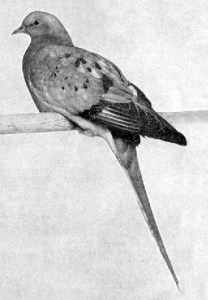
Seeing this video reminded me of the plight of the passenger pigeon. At one time these birds were amongst the most common in North America. The skies above the prairies would turn black and blot out the sun as billions passed overhead. An account from 1855 describes people in Ohio witnessing this event. Children screamed and ran for home, horses bolted and women hurried for the shelter of shops, gathering their long skirts as they ran. Some people knelt down and prayed in fear. Then the seemingly impossible happened: they became extinct—wiped out through shooting, netting and forest fires—with the last one dying in Cincinnati Zoo in 1914.

Passenger_pigeon

I learned about this extraordinary demise from watching David Attenborough’s Life of Birds. This is part of my Life on Earth treat. There are nine series covering all aspects of the natural world from the deepest oceans to the furthest reaches of the Poles and jungles. I wrote about Life in Cold Blood in a previous post—Serpent Tales.

Aside from the passenger pigeon there were a number of other moments that stood out in Life of Birds. As so often happens with treats, they filled in gaps in my knowledge of the world and gave me new things to relate to. Having kept poultry myself, I was particularly pleased to find out about chickens’ eggs. I’d often wondered why they only lay once a day, and now I have my answer. The yolk and the albumen sit in the chicken’s oviduct, and it takes a day for the glands to secrete enough lime to create the hard shell. Then I heard about the kiwi bird whose egg is a quarter of its own body weight; my eyes watered as I imagined giving birth to a baby weighing two and a half stone.

chickens

The grebes were remarkable too. They’re attentive parents and make their chicks eat feathers. These line their little tummies and protect them from being pierced by sharp fish bones.

grebe

The series was filmed in 42 countries and whilst many of the birds seemed unfamiliar and exotic, I was glad that the humble sparrow got a mention. I discovered that they have markings on their feathers, like Army ranks, which denote where they come in the pecking order. There are the privates that have to give way to their superiors, and then there are the colonels with their black bib markings. All ranks defer to them. This finding changed me in one of the small ways that I welcome. Now, whenever I sit at an outdoor table in a café, I’ll enjoy the antics of the sparrows even more by knowing that they’re not as random as they seem.

sparrow

For me, though, the star was the bowerbird, also found in Australia. The male goes to great lengths to attract females. He builds a bower from sticks, positions it vertically, and then decorates the surrounding area with flowers, stones, berries, leaves, and coins or even bits of brightly coloured glass if they’re available. He then spends hours arranging and re-arranging them, whilst various females go from bower to bower, making their choice.

bowerbird

A clip from a different series gives some insight into the romantic preferences of another animal—the rhinoceros. We, the viewers see a male trying his damnedest to win a female whilst she heedlessly ignores him in favour of a bigger animal. She dances about and flirts in a way I don’t normally associate with rhinoceroses. The spurned male disappears for a while and we think it’s all over. Then suddenly there he is again. Back with a set of antelope antlers draped rakishly over his horn. Immediately Ms Rhino is bewitched and she trips off, following him enthusiastically.  I’d like to say that they live happily ever after but unfortunately relationships don’t always work out that way as you’ll see by clicking here.

So, for some that magic ingredient is good taste and possibly wealth. For others it’s individuality.  But if you’re a human looking for a mate then it’s worth bearing in mind an excellent snippet of advice I heard on Radio 4.  Marry someone cheerful. I intend to do that this summer.

Happy Valentine’s Day.

rhino

Animalic Allure

Eddie Redmayne

Eddie Redmayne. Photo by Gordon Correll

Last week I went to see the film, The Danish Girl. It’s based on the true story of the artist Einar Wegener who in 1920’s Denmark became Lili Elbe and had pioneering gender reassignment surgery. Eddie Redmayne gives a superb performance and has been nominated for an Oscar. I hope he wins.

There were many thought-provoking moments in this film and as with all good culture, it changed me. This particular human struggle is one about which I knew very little. Now I know a bit more. And in amongst all of the drama there was a touching scene that made an unexpected impression on me. Lili is working in the perfume department of a smart store in Copenhagen and gives some advice to a customer, clearly relishing that she can at last share in the feminine mysteries of cosmetics. She tells the customer that in Paris, women never apply perfume directly onto their skin. Instead they spray it into the air and walk through it. I’ve taken to doing this ever since and it feels luxurious. It may be a frippery but it’s also a reminder of Lili’s difficult life and of a raw, beautiful film.

Perfume_bottle

I love perfume and don’t feel fully dressed without it. However, I’ve had a few ups and downs in my relationship with various brands. Many years ago when my eldest son, Will, was about six we were in a department store together. As we walked through the perfume section I stopped and casually picked up a tester bottle. It was  plain black glass with the word Poison written clearly in gold across the middle. I was just about to have a quick spray when Will screamed and grabbed my arm. He was already a good reader and had devoured a number of dark fairy tales. ‘Mummy,’ he said bravely and urgently, ‘don’t touch that bottle – it’s got poison in it.’

poison perfume 2

The next perfume blip came a few years afterwards when I was given a bottle of Chanel Allure for Christmas. On Boxing Day I put it on for the first time and my then husband, said in his best flirtatious, husky voice, ‘Darling you smell alluring.’ Unfortunately my hearing is not so good on that lower register so what I heard was the far less flattering, ‘Darling you smell of urine’ but delivered in a perplexingly sexy manner.

Later, when the ‘then husband’ had left and I was on my own I would often wear perfume in bed or spray it on my pillow. Something just for sheer self-indulgence and which made me think of Marilyn who famously said that all she wore in bed was her Chanel No 5.

chanel number 5

Perfume is powerful and transports us to other times and places, uncovering buried emotions and memories. For me, one of the sweetest examples is the smell of grape hyacinths which instantly takes me back to the Spring when I became a mother. I remember the flower arrangement that was sent to me in hospital and I tune in again to those primitive overwhelming feelings of confusion and wonder. A whiff of the clean, powdery sweetness of Johnson’s Baby Bath and once more I’m in a bathroom twenty years ago with black and white tiles, squealing slippery toddlers and damp-kneed jeans. Most people find that smell is better at conjuring up memories than the other senses and the reason for this seems to lie in the anatomy of the brain. Smells are picked up by the olfactory bulb which is inside the nose and extends along the lower part of the brain, connecting with the amygdala and hippocampus.  These are involved in emotion and memory. The information from sight, sound and touch stimuli does not pass through these areas.

muscari

My fascination with smell led to me putting ‘Learn about perfume‘ on my treats list. In common with all the others I had no idea when or how this treat would come to life, but then I came across a rather fabulous young woman who calls herself Odette Toilette. She organises talks about the social history of perfume, and so I signed up for an afternoon of exploring 1930s scent in the basement of a smart perfume shop in Marylebone.

It turned out to be a lot of fun. When I arrived I was handed a glass of pink Prosecco and then in the company of twenty-three women and one man I spent several hours hearing about the aspirational perfumes of the 1930s. These accompanied the new age of cars and planes and were an antidote to the mass poverty of the 1920s. We had a chance to smell many of them too, as Odette buys up old bottles of perfume from house sales and auctions. Provided they’ve been kept in a cool, dark place they can survive well. Tiny tarts and miniature cakes were handed round at regular intervals. My favourite was a mouthful tartlet filled with passion fruit puree.

orange blossom

For several hours in this London basement the talk was of vanilla, jasmine, lavender, rose and orange blossom. These all sounded charming and innocent but in fact many of the perfumes of the era were marketed with decadence in mind. Some were said to give you strange surrealist dreams if you sprayed them on at bedtime. ‘Taboo’ and ‘Can Can’ were best-sellers and the fashion designer Elsa Schiaparelli produced ‘Shocking’. This was inspired by the Lady Gaga of the day; Mae West who drawled, ‘It’s not the men in your life that count. It’s the life in your men.’ And as we munched on our dainty tartlets and minicakes we were introduced to the animalic tones which are derived from ingredients like civet and musk. Odette said they are so naughty that cats and dogs will follow you down the street if you wear them.

civet

Since then I’ve done a couple of Odette’s other Vintage Scent Sessions with friends. Debs Gone Bad was peppered with tales of the perfumes that various debutantes wore whilst shocking polite society and getting embroiled in scandal. The other was about 1960s perfumes including hippie patchouli and the scents favoured by influential men like JFK and Muhammed Ali. They’ve all been very enjoyable but I’ve been careful to avoid wearing Allure. It may or may not make me smell of urine but with all those cats and dogs waiting outside, I’m not taking any chances.

marilyn-monroe

A Postmodern Mystery

sense

This week David Bowie is nowhere and yet he is everywhere. Countless words have been written about his death, his legacy and his life. There have been reminders of his achievements: album sales of 140 million, the creation of his musical alter egos, and the ability to surprise right to the end with an apparent epitaph in the final album. Historic Dutch church bells rang out Space Oddity in a curiously sweet yet grave tribute whilst the video went viral. And there was an unexpectedly comical moment when a Heart FM Radio newsreader announced that David Cameron had died, before quickly correcting herself.

david bowie

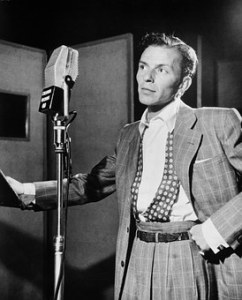
At significant moments there is usually something for those of us who like lists and this was no exception. In amongst ‘David Bowie’s 24 best songs’, his ‘top 100 books’ and ‘the five best David Bowie songs that you’ve never heard’, Glastonbury’s Michael Eavis said that Bowie was one of the three greatest popular artists along with Frank Sinatra and Elvis Presley. The immediate surprise is the omission of the Beatles, but it’s an interesting trio as they represent quite different facets of the twentieth century. You can learn a lot about people’s tastes by asking which they prefer. In my house I was out on a limb. I went for Sinatra, Bowie, Presley. But Bowie, Presley, Sinatra was the favoured ranking.

sinatra

And then there was the comment that made me think more deeply. Will Gompertz, the BBC Arts Editor described David Bowie as ‘the ultimate ever-changing postmodernist’. But what does this mean? Many of the most intelligent people I know, are hazy about postmodernism and Hans Bertens begins his book ‘The Idea of the Postmodern’ with the words: ‘Postmodernism is an exasperating term’. I never had a professional need to get to grips with this particular philosophy so I remained ignorant for many years, getting irritated whenever I heard anyone use the word but never quite summoning the concentration to demystify it. Eventually, though, I worked out that one of the key ideas is that there are many realities within any situation. This contrasts with the previous prevailing belief that science and rationality can explain everything. But even with this simplified explanation, I couldn’t make sense of it. Then I saw an extraordinary theatre production that put at least some aspects into perspective.

crow

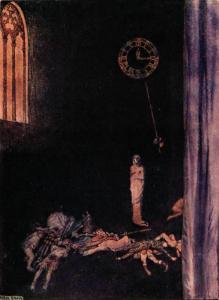
In 2007 the innovative theatre company, Punchdrunk, staged ‘The Masque of the Red Death’. It was based on the short story by Edgar Allan Poe together with several of his other tales. The venue was the rambling Battersea Old Town Hall which was dimly lit and decked out in Gothic style, with sumptuous but faded fabrics, cobwebs and a real inscrutable black cat. Performances took place simultaneously in rooms, corridors and stairways spread over several floors and we, the audience wandered round at will. We dipped in and out of scenes that included a perfumery, opium den, a nineteenth-century music hall, bedrooms and a morgue. The actors moved amongst us and we wore white masks to distinguish ourselves from them. I went with my three eldest children and soon after we arrived, we split up and went in different directions through the building. The result was that we each had a unique experience of the evening. Afterwards we shared our thoughts and realised that our understanding of the production was entirely dependent on which bits we had happened to stumble upon.

masque of the red death

Illustration: Byam Shaw

Suddenly I got what postmodernism was about and its approach seemed applicable to life in so many ways. In any kind of disagreement it’s valuable to remember that each party can only have partial insight into the other’s position. On the one hand this is obvious, but on the other hand it’s all too easy to forget in the heat of the moment.

Postmodernism is also about taking influences from diverse sources and combining them in innovative ways. These influences might be multicultural, historic, fictional or science fictional. This is where the term postmodernist is particularly relevant to David Bowie as he was a mysterious chameleon with a number of incarnations. I may not be a creative genius who can come up with alter egos like Ziggy Stardust, Aladdin Sane or The Thin White Duke but I have gone through a number of selves. We all do. My relatively recent ones have included Animal-Mad Country Mum and Animal-Free Urban Divorcee. I feel significantly different today from the person I was ten years ago, or even three years ago. New experiences and ideas tweak at our identity in subtle ways as we progress through life and we never know ourselves completely because we change. Like David Bowie, we are all mysteries and our reactions are often surprising; not least of all to ourselves. We present different images in different situations and a person, place, book or film that we appreciate at one stage of life may disappoint at another.

david bowie 2

So, in this week when the news has been so full of David Bowie, I’m glad to have revisited my interest in postmodernism and to have got my understanding of it slightly straighter. However, there’s no room for complacency in my philosophical struggles. In reading about it I’ve been dismayed to come across articles like ‘ Postmodernism is Dead’ and worst of all to discover that there’s a new mystery to tackle: after postmodernism comes post-postmodernism. Give me a couple more years and I’ll let you know how I get on with that.

think

Not Guilty

fireworks 2

It’s the beginning of another year and I’ve been wondering what to choose for my New Year resolution. People have been doing this for hundreds of years; the Romans saw it as an opportunity to improve their lives and there was a time when I used to sit down on New Year’s Eve and make eighteen resolutions. Yes—EIGHTEEN—three in each of six categories. Relationships, work, home and health were covered and it’s now so long ago that I can’t remember what the other two were. But I do know that the mere act of creating a list was satisfying; a list brimming with the comforting belief that each item would be addressed comprehensively and effectively. This enthusiasm continues today in the form of my treats list, but looking back now, my resolutions list seems ridiculously earnest and I feel guilty about it.

It was naive, too. A study by psychologist Richard Wiseman looked at the New Year resolutions of 3,000 people and found that 88% didn’t manage to achieve them. These findings echo my own experience as year after year the same general themes would crop up; be a nicer person, be better organised, be more successful, and be thinner and greener. And each year I would review the previous year’s goals and pretty much nothing would have changed.

list

One of the reasons why willpower is so difficult to muster is that we have too many other things to think about. The prefrontal cortex is the part of the brain that deals with purposeful behaviour and an experiment by Stanford University’s Professor Baba Shiv demonstrated how it responds to pressure. He divided 165 undergraduates into two groups and gave them things to remember. One group got two digits while the other group got a sequence of seven digits. They were told to walk down a corridor and go into a room where they were to say these digits out loud. But just before the entrance to the room they were offered a ‘reward’ for their efforts: either a piece of chocolate cake or a bowl of fruit salad. The students who had the longer sequence to remember were more than twice as likely to choose chocolate cake than those who had the simpler task. The fact that this group tended to choose the less healthy food suggests that willpower is significantly compromised by having other things to think about. And with most of us juggling busy lives this has implications for whether we manage to keep to our resolutions.

chocolate cake 5

Perhaps in the past I simply had too many resolutions to work on at once. But I do like the sense of purpose they give and I’m not ready to give up on them yet. This year I’ve resolved to choose just one, so it had better be good and I’ve been racking my brain to think what it could be.

Something health-related is an obvious candidate; I could definitely benefit from a regular exercise programme. This will have to be swimming since I detest getting hot and sweaty and a good resolution would be ‘to swim three times a week’. But on second thoughts I know what will happen. Anyone sensible would make the days go along the lines of ‘swim, no swim, no swim, swim, no swim, swim, no swim’. In my case what will happen is ‘no swim, no swim, no swim, no swim’ and then ‘swim, swim, swim’ all packed into the end of the week. That sounds like a recipe for stress.

Or rather than immersing myself in water, I could decide to drink it instead. We’re constantly being told to stay hydrated but like many things that should be beneficial, I find this difficult. A while ago, I decided to drink two litres of water a day. I kept it up for a couple of weeks and there was no doubt that my skin had more of a glow to it. However, I failed to acquire the promised extra energy as I was exhausted from getting up four times a night to pee.

water

Another resolution could be ‘to have a cleaner, tidier house’. It would be fairly easy to introduce regular dusting into my life. Though, as Molly’s boyfriend pointed out in a recent fit of logic, it should really be called ‘dedusting’. But actually when I think about it, I’m not bothered about a bit of dust and no-one ever said on their deathbed that they wish they’d done more dedusting.

duster

However, there is one thing that I’d like to work on this year. It was prompted by hearing Nigella Lawson on Woman’s Hour, some time ago. She said, ‘Guilt is about me, me, me,’ and I’ve wondered about it ever since. It made me realise that I say, ‘I feel guilty’ about all manner of things like not contacting friends, breaking promises, and being thoughtless. But it’s all too easy to say the words and it doesn’t help anyone, neither the person I say I feel guilty about, nor me. So from now on I’m aiming to avoid this particular sentiment. I’ll try to act on the negative feeling and to be more thoughtful but if I don’t manage it, then that’s just the way it is.

And I take back what I said in that first paragraph above—I no longer feel guilty that I used to make eighteen resolutions. I’ve just done something about it.

happy new year